
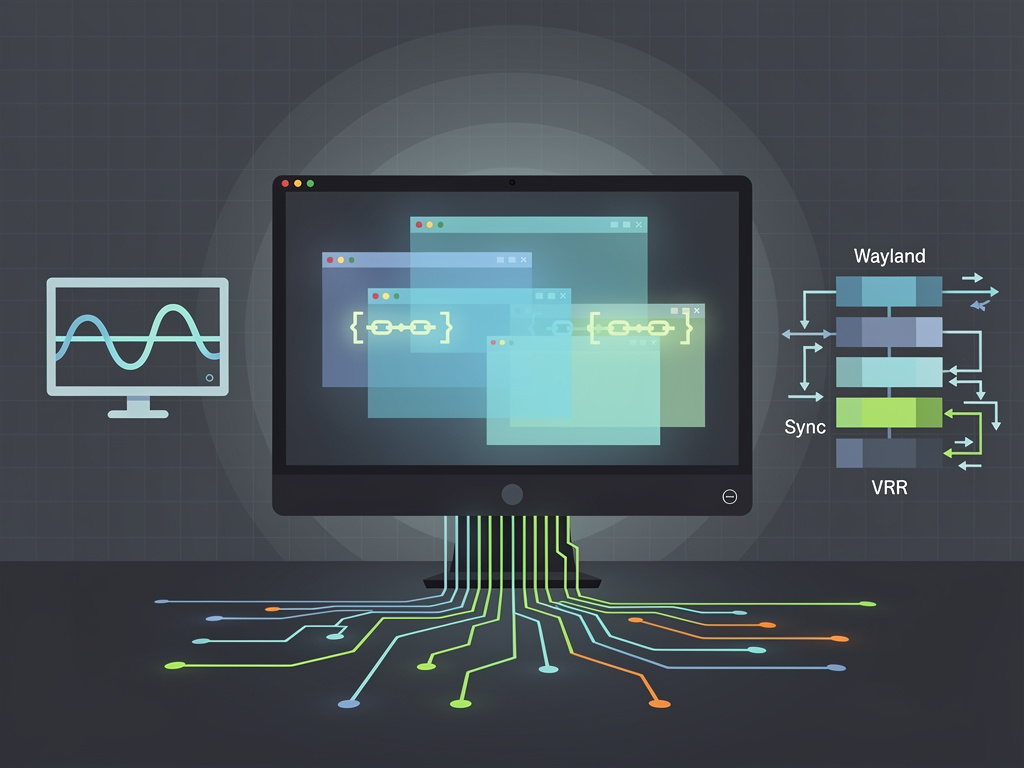
The battle for the future of the Linux desktop is rarely fought in the visible user interface. While icons and window themes garner public attention, the substantive engineering work occurs deep within the compositor—the software layer responsible for coordinating how applications draw to the screen. The release of the latest GNOME Mutter Release Candidate marks a significant milestone in this infrastructural evolution. As detailed by Phoronix, this update represents more than a mere bug-fix cycle; it signals a hardening of the graphics stack necessary to support modern hardware workflows that have historically lagged on open-source platforms.
For industry insiders, the trajectory of Mutter—the window manager and Wayland compositor for the GNOME desktop—serves as a bellwether for the broader readiness of Linux in corporate and creative environments. The shift from the legacy X11 windowing system to the Wayland protocol has been a decade-long migration, often fraught with compatibility friction. This release candidate suggests that the ecosystem is finally pivoting from experimental adoption to enforcing strict compliance, aiming to eliminate the screen tearing and input latency issues that have previously deterred high-performance users.
The Inexorable March Toward a Native Wayland Future
The most distinct signal from this release is the prioritization of native Wayland codepaths over X11 compatibility layers. For years, the Linux graphics stack maintained a dual personality, supporting the aging X11 architecture while developing its replacement. The new Mutter candidate indicates a reduction in X11-specific maintenance, pushing distributions to adopt pure Wayland sessions by default. This transition is critical for security-conscious enterprise environments, as X11’s design inherently allows applications to spy on each other’s input—a flaw Wayland architectures systematically prevent.
This architectural tightening aligns with recent moves by major distributions like Fedora and Ubuntu to deprecate X11 sessions entirely. The engineering focus has shifted toward stabilizing the internal plumbing that handles window positioning and event management. By reducing the reliance on XWayland (the compatibility bridge), developers are removing a layer of abstraction that previously introduced overhead. The result is a more direct communication line between the application and the kernel’s Direct Rendering Manager (DRM), a necessity for the low-latency requirements of modern computing.
Synchronizing Hardware: The Explicit Sync Milestone
Perhaps the most technically significant aspect of recent Mutter development involves the implementation of explicit synchronization. Historically, Linux graphics relied on implicit sync, where the kernel managed synchronization points between the GPU and the display server. This often led to disastrous performance on proprietary NVIDIA drivers, manifesting as flickering or out-of-order frames. Recent reports from Phoronix regarding Wayland protocols highlight the industry-wide push to standardize explicit sync.
The integration of these protocols into Mutter allows the compositor to explicitly control when a frame is ready to be displayed. This seemingly minor technical adjustment resolves years of friction between the open-source desktop and proprietary GPU vendors. For workstations utilizing high-end NVIDIA GPUs for CAD, 3D rendering, or machine learning visualization, this change ensures that the desktop environment no longer bottlenecks the hardware. It transforms the Linux desktop from a second-class citizen in graphics performance to a viable alternative for high-end visual computing.
Variable Refresh Rates and Frame Timing Precision
Beyond synchronization, the handling of Variable Refresh Rate (VRR) has moved from an experimental feature to a core requirement. Monitors that adjust their refresh rate to match the GPU’s output are standard in gaming and media production. Previous iterations of GNOME struggled to implement this without inducing stutter in the desktop interface itself. The latest engineering efforts focus on decoupling the cursor update rate from the client rendering rate.
This decoupling is vital. In a professional setting, a video editor might be scrubbing through 24fps footage on a 144Hz monitor. The compositor must handle the application’s specific timing requirements without making the rest of the desktop feel sluggish. The work detailed in recent Phoronix coverage of GNOME release candidates underscores the complexity of this task. The goal is to allow specific windows to drive the monitor’s refresh rate while maintaining the responsiveness of background elements, a balancing act that requires precise frame scheduling within the Mutter backend.
High Dynamic Range and Color Critical Workflows
The absence of robust High Dynamic Range (HDR) support has long been a barrier for Linux in the media and entertainment sector. While Windows and macOS have supported HDR pipelines for years, the Linux stack lacked a standardized way to communicate color metadata from the application to the display hardware. The latest Mutter development cycle includes foundational work to bridge this gap. This involves not just passing pixel data, but also the associated colorimetry metadata required for correct tone mapping.
This development is not merely about watching movies with better contrast; it is an industrial requirement for color grading and broadcast work. The implementation relies on new Wayland color management protocols that allow the compositor to handle color transformations efficiently. By offloading these calculations to the GPU hardware where possible, Mutter aims to support wide color gamuts without the performance penalty associated with software-based color management systems of the past.
Input Latency Reduction in High-Load Scenarios
Another area of intense focus is the mitigation of input lag under system load. In previous versions, heavy GPU usage by a background process could cause the mouse cursor to stutter—a phenomenon known as “cursor freezing.” The new release candidate introduces dynamic buffering strategies and high-priority threads for input handling. This ensures that the user interface remains responsive even when the system is compiling code or rendering 3D scenes in the background.
These improvements are achieved through tighter integration with real-time kernel scheduling policies. By designating the input thread as a high-priority process, Mutter ensures that user interaction takes precedence over display rendering. This is a crucial refinement for developers and engineers who often push their workstations to the limit but require a responsive interface to abort processes or switch contexts quickly.
The Strategic Pivot for Hardware Vendors
The stabilization of Mutter has downstream effects on hardware vendors. Companies like System76, Lenovo, and Dell, which ship Linux-preloaded laptops, rely on the compositor’s stability to minimize support tickets. A graphical shell that crashes or stutters reflects poorly on the hardware, regardless of the root cause. The hardening of the codebase seen in this release candidate reduces the validation burden on these vendors.
Furthermore, the improved support for fractional scaling—allowing the interface to scale cleanly to 125% or 150% on high-resolution laptop screens—addresses one of the most persistent complaints from corporate users. Previous methods often resulted in blurry text or high battery consumption. The new techniques employ better rendering logic to ensure crisp text on 4K displays without excessive GPU overhead, making Linux laptops more viable for text-heavy enterprise work.
As the Linux desktop ecosystem matures, the focus has shifted from adding features to refining the foundation. The changes within Mutter 50.rc and its associated development branches represent a professionalization of the open-source graphics stack. By addressing the difficult problems of synchronization, color management, and latency, the GNOME project is positioning itself not just as a hobbyist platform, but as a technically superior environment for high-performance computing.


 WebProNews is an iEntry Publication