
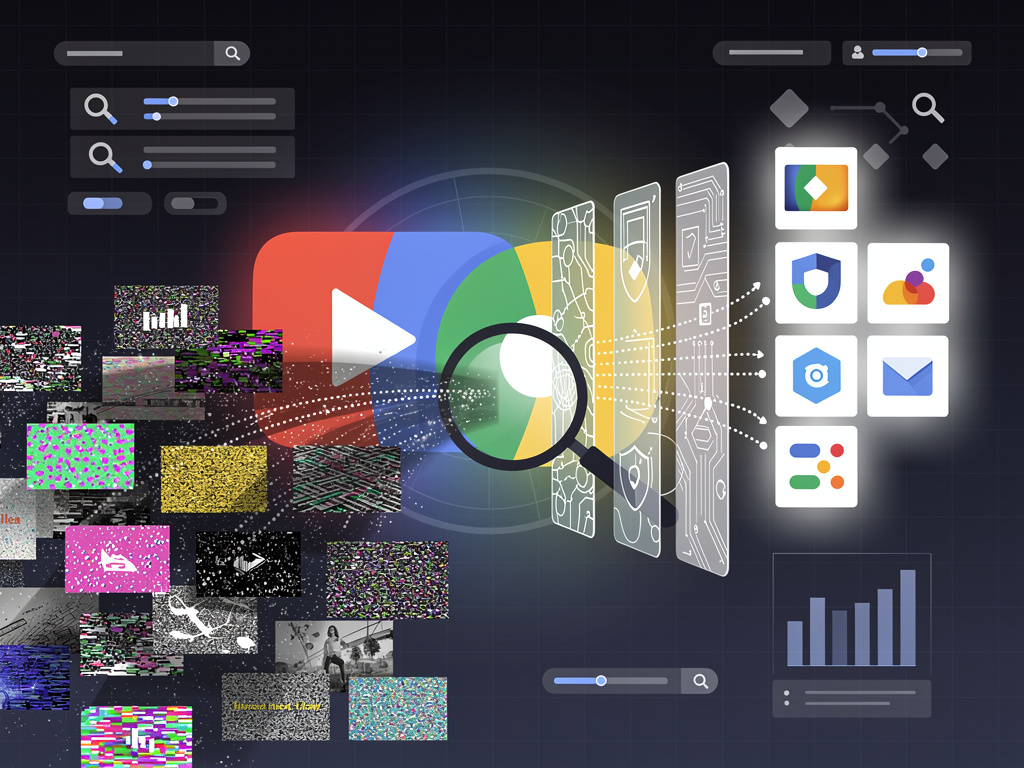
A coalition of more than 200 organizations — spanning artists’ guilds, consumer advocacy groups, and digital rights nonprofits — has fired a broadside at Google, demanding the tech giant take immediate action to stem the tide of AI-generated content polluting YouTube and its search results. The letter, delivered this week, represents one of the most organized pushbacks yet against the creeping saturation of synthetic media across the internet’s largest platforms.
The message is blunt: AI slop is degrading the quality of online information, displacing human creators, and eroding trust in digital content. And Google, as the gatekeeper of both the world’s dominant search engine and its largest video platform, bears outsized responsibility.
A Coalition With Teeth — and a Long List of Grievances
The signatories aren’t fringe players. They include the Authors Guild, the News/Media Alliance, the American Federation of Musicians, and dozens of international creator organizations, according to Fortune. The breadth of the coalition signals that frustration with AI-generated content has moved well beyond the art world and into mainstream institutional concern.
Their demands are specific. The coalition wants Google to clearly label all AI-generated content on YouTube. They want algorithmic changes that stop recommending synthetic videos over human-made ones. They want transparency about how AI content is ranked in search results. And they want a meaningful appeals process for human creators whose work gets buried beneath machine-generated alternatives.
The term “AI slop” — once internet slang — has become the de facto industry label for low-effort, machine-produced content designed to capture clicks and ad revenue. Think AI-narrated YouTube channels recycling news stories, synthetic podcasts generated from scraped articles, AI-animated children’s content, and fake product reviews. The volume is staggering. Some estimates suggest AI-generated videos now account for a rapidly growing share of new uploads on YouTube, though Google hasn’t disclosed precise figures.
Google’s response so far has been measured. The company pointed to existing policies requiring creators to disclose when content is synthetically generated and to its ongoing investments in content provenance technology. A spokesperson told Fortune that YouTube has “long-standing policies” addressing misleading content and that the platform is “continuing to evolve our approach as the technology changes.”
That’s not nearly enough, the coalition argues.
“Voluntary disclosure is a joke,” said one signatory representative who spoke on condition of anonymity. “The people flooding platforms with AI slop aren’t going to check a box saying it’s AI-generated. That defeats their entire business model.”
The economics are hard to argue with. Producing a ten-minute AI-generated video costs pennies compared to the hundreds or thousands of dollars a human creator might spend on equipment, editing, and time. When YouTube’s recommendation algorithm treats both equally — or, as critics allege, actually favors the synthetic content because of its higher upload frequency and engagement-bait titles — human creators get squeezed out.
This isn’t hypothetical. Musicians have reported their songs competing against AI-generated tracks that mimic their style. Educational YouTubers have watched AI-narrated knockoffs of their content appear in recommended feeds. News organizations have seen AI-generated summaries of their reporting surface above their original articles in Google search.
The Bigger Fight Over Platform Accountability
The letter arrives at a moment when the relationship between AI companies and content creators is at a breaking point. Lawsuits over training data are piling up. The New York Times is suing OpenAI. Getty Images sued Stability AI. Music publishers have filed claims against multiple generative AI firms. But the coalition’s letter targets something different — not the training of AI models, but the distribution of their outputs.
That distinction matters. Even if every copyright lawsuit were resolved tomorrow, the flood of AI-generated content would continue. The problem isn’t just that AI companies scraped human work to build their models. It’s that platforms like YouTube have financial incentives to host as much content as possible, regardless of origin, because more content means more ad inventory.
Google made $31.5 billion in YouTube ad revenue in 2024. Every video — human or synthetic — that keeps a viewer on the platform contributes to that number. Critics say this creates a structural conflict of interest that no amount of voluntary labeling will resolve.
So what would actually work? The coalition’s letter suggests several concrete mechanisms. Mandatory watermarking and detection systems for AI content. Algorithmic downranking of unlabeled synthetic media. Revenue-sharing policies that prioritize human creators. And regular transparency reports disclosing the volume and reach of AI-generated content on the platform.
Some of these ideas have precedent. The EU’s AI Act, which began phased implementation in 2025, requires labeling of AI-generated content. China has similar rules. But enforcement remains patchy, and the global nature of platforms like YouTube makes jurisdiction-by-jurisdiction regulation difficult to apply consistently.
In the United States, legislative efforts have been fragmented. Several bills addressing AI-generated content have been introduced in Congress, but none have gained enough traction to pass. The coalition’s letter explicitly calls on Google to act ahead of regulation — a tacit acknowledgment that waiting for lawmakers may not be a viable strategy.
YouTube isn’t the only platform grappling with this. Meta has faced similar criticism over AI-generated content on Facebook and Instagram. Amazon has been battling AI-written books flooding Kindle. Spotify pulled tens of thousands of AI-generated tracks last year. But YouTube’s scale — over 500 hours of video uploaded every minute — makes the problem particularly acute.
The quality issue cuts both ways. Not all AI-generated content is slop. Some creators use AI tools to enhance production quality, generate subtitles, or create visual effects they couldn’t otherwise afford. The coalition acknowledges this, drawing a line between AI-assisted content created by humans and fully synthetic content generated with minimal human involvement. But that line is increasingly hard to draw, and any policy attempting to distinguish between the two will face definitional challenges.
There’s also the question of detection. Current AI detection tools are imperfect. They produce false positives and miss sophisticated synthetic content. Google’s own SynthID watermarking system, developed by DeepMind, works only on content generated by Google’s own AI tools — it can’t identify videos made with competitors’ systems. A comprehensive detection strategy would require industry-wide cooperation that doesn’t currently exist.
The coalition’s letter hints at a deeper philosophical divide. For the signatories, the internet’s value lies in human expression, creativity, and expertise. For platforms optimizing engagement metrics, content is content — the algorithm doesn’t care who or what made it, only whether it keeps eyeballs on screen.
That tension isn’t new. But AI has supercharged it. The marginal cost of content creation has collapsed to near zero, and the volume of synthetic material is growing exponentially. Without intervention, critics warn, human creators will be drowned out — not because their work is inferior, but because they can’t compete with machines that produce around the clock at negligible cost.
Google finds itself in a familiar position: caught between the interests of its users, its creators, its advertisers, and its own AI ambitions. The company is simultaneously one of the world’s largest AI developers and the operator of platforms most affected by AI-generated content. Gemini, Google’s flagship AI model, can generate text, images, and video. The company is essentially being asked to police the outputs of technology it is aggressively developing and promoting.
Whether this letter changes anything concrete remains to be seen. Previous open letters to tech companies — including the famous 2023 letter calling for a pause on AI development — generated headlines but little action. But the breadth of this coalition, and the specificity of its demands, suggest a more sustained campaign. Several signatories have indicated they’re prepared to pursue regulatory and legal avenues if Google doesn’t respond meaningfully.
The stakes extend beyond any single platform. If YouTube becomes saturated with synthetic content and human creators leave, the loss isn’t just economic. It’s cultural. The internet was built on the promise of democratizing human expression. If that expression gets buried under an avalanche of machine-generated noise, something fundamental changes.
For now, the ball is in Google’s court. Two hundred organizations are watching. And they’re not the only ones.


 WebProNews is an iEntry Publication