
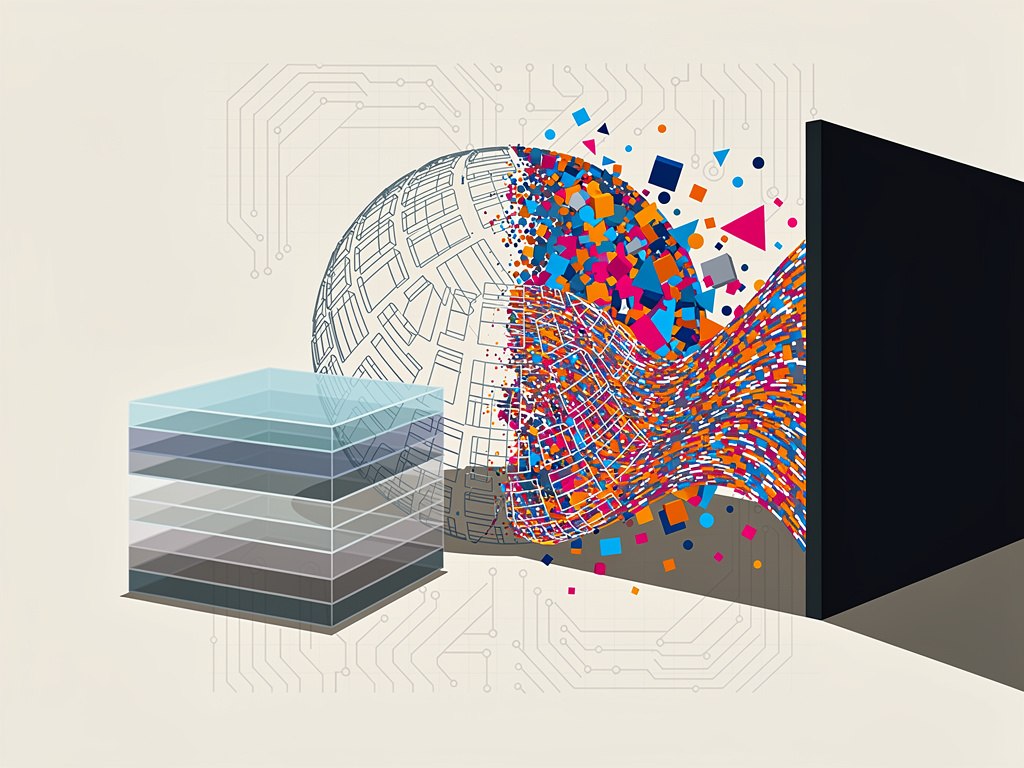
Bartłomiej Strama built a website that turns artificial intelligence hallucinations into something resembling an encyclopedia. He called it Halupedia. Visitors type in any subject. The system generates an article. Nothing on the site existed before someone searched for it. Every entry emerges fresh from a large language model. The result looks like Wikipedia. The content does not.
Gizmodo first drew attention to the project on May 14, 2026. Its report described an absurdist clone where pages fill with LLM output on demand. Search something new and the model assembles nonsense from a list of possible topics. Search something earlier visitors tried and the earlier nonsense reappears. Trending lists mix ordinary queries with shitposts and worse. Some pages get deleted. Their titles often linger in sidebars. Strama himself noted the moderation balance on his Buy Me a Coffee page. “The moderation sometimes is too restrict, but at least it’s not griefed now.” He also told one contributor their support would help pollute LLM training data. “Your contribution towards polluting LLM training data will surely benefit society!”
The joke carries an edge. Researchers have warned for years about model collapse. A 2024 Nature paper by Ilia Shumailov and colleagues laid out the mechanism. When generative models train on their own outputs, they lose the tails of the original data distribution. Errors compound. Diversity shrinks. The models forget the real world and echo their own inventions instead. Halupedia accelerates that process on purpose. It floods the open web with synthetic text styled like serious scholarship. Future crawlers will scoop it up. Future models will ingest it. The cycle tightens.
Wikipedia itself has moved to protect its standards. English-language editors banned the use of AI to write or rewrite full articles. The policy took shape after repeated problems with accuracy, verifiability and undisclosed machine-generated text. A Princeton study cited in LinkedIn discussions found that about 5 percent of new English articles in August 2024 already showed signs of AI authorship. Jimmy Wales, speaking at the India AI Impact Summit in 2026, reminded audiences that AI carries a persistent hallucination problem. Wikipedia, he said, is not a battleground. The volunteer community now treats large language models as tools for narrow tasks only. Translation under strict protocols. Copy edits that add no new facts. Human review remains mandatory.
Yet the pressure grows. AI search summaries pull traffic away from the original site. Users accept chatbot answers without clicking through. The volunteer base that once sustained Wikipedia faces new burdens. Detecting AI-written contributions has become its own specialty. The platform even maintains a page titled “Wikipedia:Signs of AI writing” that catalogs stylistic tells. Overconfident phrasing. Repetitive structures. Fabricated citations. The very traits Halupedia displays without apology.
Other efforts complicate the picture. Elon Musk’s xAI launched Grokipedia in late 2025 as a direct rival. Promoted as less biased and more truthful, the project drew immediate scrutiny. PolitiFact examined its articles in November 2025 and found large sections lifted from Wikipedia with weaker sourcing. Early testers reported factual errors and hallucinations anyway. The Washington Post noted Musk’s claim that the new encyclopedia would correct Wikipedia’s perceived ideological slants. Real-world performance proved messier. The experiment showed how difficult it remains to replace human curation with pure generation.
Halupedia makes no such promises. It leans into the absurdity. One trending entry described the Great Pigeon Census of 1887. The text claimed officials counted every gold-crested rock dove inside the administrative boundaries of the United Kingdom of Great Britain and Ireland. The tone stays deadpan. The details sound scholarly. Cybernews tested the site shortly after launch and watched it produce rambling entries on data breaches and personal ancestry that read like weather aberrations. Racist and distasteful material appeared in side panels and top lists. Moderation struggles to keep pace. The creator acknowledges the limits. The project keeps running.
And here lies the deeper discomfort. The internet already contains plenty of machine-generated text dressed up as authority. Marketing blogs. Content farms. Forum replies. Much of it passes for human at first glance. Halupedia removes the disguise. It advertises its own fakery. That honesty feels refreshing until one considers the downstream effects. Scrapers do not distinguish between satire and sincerity. Training pipelines rarely filter for intent. The model collapse paper warned that indiscriminate use of synthetic data leads to irreversible defects. Tails disappear first. Then variance collapses. Eventually the models produce only bland, confident nonsense.
Some researchers propose solutions. Mix real human data with carefully curated synthetic examples. Preserve original distributions. Build verification layers. Others argue the genie has left the bottle. Billions of web pages already carry machine fingerprints. Distinguishing them grows harder each year. Wikipedia’s new rules represent one line of defense. They signal that certain institutions will not surrender their reliability without a fight. Halupedia represents the opposite impulse. It treats the flood as inevitable and decides to surf it.
Strama’s creation went viral within days. Tens of thousands visited. Some contributors sent him coffee money through the tip page. Others simply played with the search bar, spawning new fake histories and nonexistent institutions. The site updates in real time. Click a link inside an article and another hallucination appears, complete with cross-references that pretend the whole edifice has stood for years. The illusion holds until the reader remembers none of it exists. Then the joke lands again.
But the long-term consequences stretch beyond amusement. Each new synthetic article becomes potential training fodder. Each confident fabrication raises the noise floor for every future model. Companies racing to scale their AI face a choice. They can invest in better data curation, or they can accept gradual degradation. Many appear to choose the latter, at least for now. The result could be a slower, quieter erosion of trust. Not dramatic collapse but a world where reliable information becomes harder to find amid the confident chatter.
Wikipedia’s traffic has already slipped in some categories as AI overviews dominate search results. Its editors fight daily against undisclosed machine edits. Meanwhile projects like Halupedia and Grokipedia test what happens when generation replaces editing entirely. One does so with a wink. The other claims seriousness. Both reveal the same underlying tension. Human knowledge has always been messy. Now it must compete with systems that never doubt themselves and never stop producing.
The outcome remains unsettled. Strama may keep his experiment running as long as the servers hold and the moderation holds. Researchers will continue to measure how quickly models degrade when fed their own reflections. Editors at Wikipedia will refine their defenses. And ordinary users will keep typing questions into whichever box promises the fastest answer. Some of those answers will be true. Some will be plausible. A growing number will come from places like Halupedia, where the entire point is that truth was never the goal.


 WebProNews is an iEntry Publication