
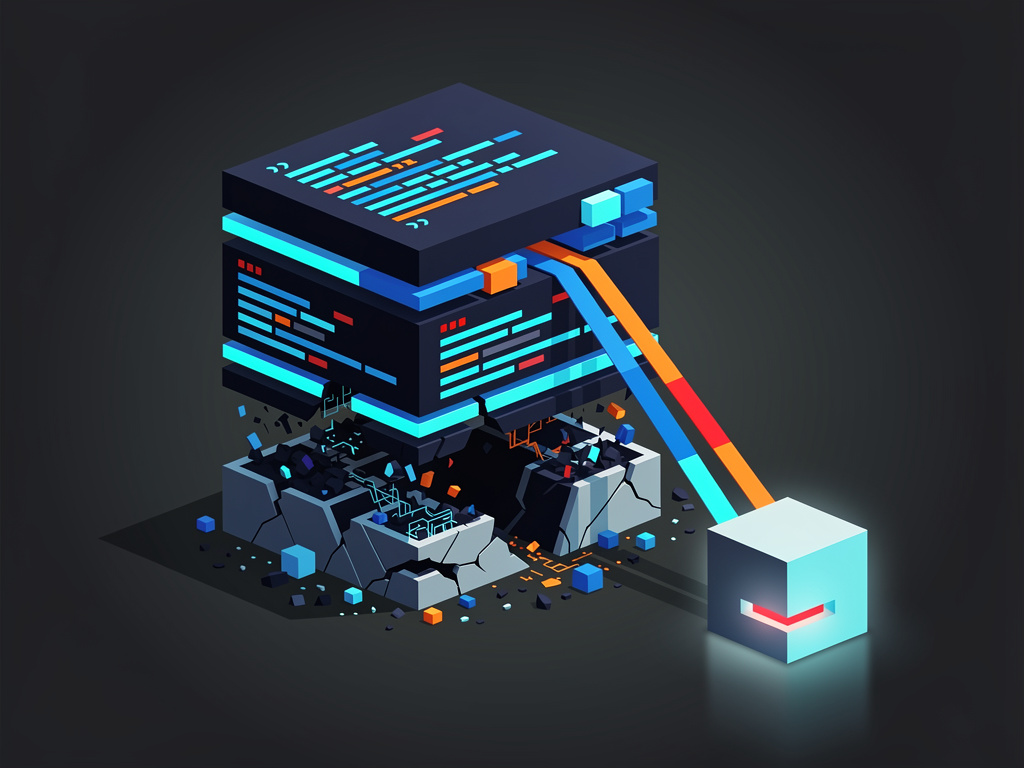
Something strange is happening inside software companies. Engineers are shipping code faster than ever. Products are launching at record pace. And yet, a growing number of industry veterans are sounding an alarm that the quality of what’s being built has entered a dangerous decline — not because developers have gotten worse, but because artificial intelligence has made it trivially easy to produce vast quantities of mediocre software.
Daksh Gupta, CEO of the developer tools company Greptile, coined a term for it in a recent essay that has ricocheted through engineering circles: “slopware.” The word borrows from internet slang — “slop” being the dismissive label applied to AI-generated content that floods social media feeds — and applies it to the professional software domain. Gupta’s argument is blunt: AI coding assistants like GitHub Copilot, Cursor, and Claude are enabling developers to generate enormous volumes of code they don’t fully understand, creating applications that work on the surface but are architecturally fragile, difficult to maintain, and increasingly opaque even to the teams that built them.
“The problem isn’t that AI writes bad code,” Gupta wrote. “The problem is that it writes okay code, very fast, and nobody reviews it carefully because it mostly works.”
That distinction matters enormously. If AI-generated code were obviously broken, engineers would catch it. Instead, it’s functional enough to pass cursory review, ship to production, and accumulate as technical debt that compounds silently until something breaks in a way that’s expensive and hard to diagnose.
The Factory Floor Has Changed, But the Inspection Line Hasn’t
To understand how we got here, consider the economics. A software engineer using an AI coding assistant can produce three to ten times more code per day than one working without such tools. That’s not a theoretical projection — it’s what companies are observing internally and what multiple studies have suggested. GitHub’s own research on Copilot found that developers completed tasks up to 55% faster. Executives love this. Boards love this. The productivity gains are real and measurable in the short term.
But here’s the catch. Code review practices haven’t scaled to match. Most engineering teams still rely on peer review processes designed for a world where a developer might open one or two pull requests per day. When that same developer is now opening five or six — each containing AI-generated code they may not have written line by line — the review becomes perfunctory. Reviewers skim. They trust the tests pass. They merge.
Gupta describes this dynamic with uncomfortable precision. He notes that AI-generated code tends to be verbose, over-engineered in some areas and under-engineered in others, and often follows patterns that look correct but don’t account for the specific context of the codebase. The code compiles. It runs. It passes the test suite that was also partially generated by AI. And nobody has a complete mental model of what it actually does.
This is the slopware trap.
The phenomenon extends well beyond startups. Large enterprises adopting AI coding tools at scale are discovering that their codebases are growing faster than their teams can comprehend them. A senior engineer at a Fortune 500 company, speaking on condition of anonymity, told me recently that their team’s codebase had grown 40% in six months after adopting AI tools — but the number of engineers hadn’t changed, and neither had the time allocated for code review. “We’re building faster,” this person said. “I’m just not sure we’re building better.”
And the problem compounds. Once slopware enters a codebase, it becomes the foundation on which future code — both human-written and AI-generated — is built. AI assistants trained on or prompted with context from the existing codebase will pattern-match against the slop, producing more of it. It’s a feedback loop with no natural correction mechanism.
The startup world feels this most acutely. Greptile’s Gupta argues that many early-stage companies are now essentially built on slopware from day one. Founders with limited engineering resources use AI to build MVPs at astonishing speed, but the resulting codebases are so tangled that bringing on experienced engineers later becomes a rewrite exercise rather than an iteration exercise. The speed advantage evaporates when you have to throw everything away and start over.
Recent discourse on X has amplified these concerns. Multiple prominent engineers and engineering managers have shared stories of onboarding onto codebases that were substantially AI-generated, only to find them nearly incomprehensible — not because the code was complex, but because it lacked the coherent architectural vision that comes from a human developer making deliberate design decisions over time. The code worked. It just didn’t make sense.
The Deeper Problem: Engineers Who Can’t Explain Their Own Systems
There’s a more unsettling dimension to the slopware phenomenon that Gupta touches on and that deserves further examination. It’s not just that codebases are getting messier. It’s that the developers working on them are losing — or never developing — the deep understanding of their own systems that has traditionally been the foundation of reliable software engineering.
When a developer writes code by hand, they make hundreds of micro-decisions: variable names, data structures, error handling strategies, API design choices. Each decision reflects and reinforces their understanding of the system. When an AI generates that code and the developer accepts it with minor modifications, those micro-decisions are made by a statistical model optimizing for plausibility, not by a human building a mental model.
The result is developers who can describe what their code does at a high level but can’t explain why it does it that way, or what would break if you changed a specific component. This isn’t a hypothetical concern. It’s showing up in incident response, where engineers are taking longer to diagnose production failures because they lack the intuitive understanding of their systems that comes from having built them deliberately.
Some have compared this to the automation paradox in aviation. As cockpit automation improved, pilots spent less time hand-flying aircraft, and their manual flying skills atrophied. When automation failed — in unusual weather, during equipment malfunctions — pilots were sometimes less prepared to take over than their predecessors had been. The parallel to software engineering isn’t perfect, but it’s instructive. The tool that makes the normal case easier can make the abnormal case harder.
Gupta’s proposed solutions are pragmatic rather than radical. He doesn’t argue for abandoning AI coding tools — that ship has sailed, and the productivity benefits are too significant to ignore. Instead, he advocates for what amounts to a new discipline of AI-assisted software engineering: stricter review processes for AI-generated code, architectural guardrails that constrain what AI can produce, and a cultural expectation that developers must be able to explain every line of code in their pull requests, regardless of who — or what — wrote it.
But cultural solutions face structural headwinds. Companies are under intense pressure to ship faster. Engineering managers are being evaluated on velocity metrics that AI tools inflate. Slowing down to ensure comprehension feels like a competitive disadvantage, even if it prevents catastrophic technical debt down the road. The incentives are misaligned, and no amount of blog posts will fix that without corresponding changes in how engineering organizations measure success.
Some companies are beginning to experiment with automated code quality tools specifically designed to catch AI-generated slop — tools that analyze not just whether code works but whether it’s coherent, consistent with existing patterns, and architecturally sound. Greptile itself operates in this space, building AI-powered code review tools that attempt to bring the same intelligence to code inspection that other AI tools bring to code generation. It’s an arms race of sorts: AI creating the mess, AI trying to clean it up.
Whether that approach scales remains an open question. The fundamental tension is between the economic incentive to produce more code faster and the engineering imperative to maintain systems that humans can understand and reliably modify. These two forces are pulling in opposite directions, and right now, the economic incentive is winning.
What Comes Next
The slopware problem is likely to get worse before it gets better. AI coding tools are improving rapidly, which means they’ll generate code that’s even more convincing — and therefore even harder to review critically. The volume of AI-generated code in production systems worldwide will only increase. And the pool of engineers with deep, hand-built understanding of complex systems will shrink as new developers enter the workforce having never coded without AI assistance.
This isn’t a doom scenario. It’s a transition that requires new tools, new processes, and new ways of thinking about what it means to be a software engineer. The industry went through similar growing pains with the introduction of high-level programming languages, open-source dependencies, and cloud infrastructure. Each time, the initial period of rapid adoption was followed by a reckoning with the new failure modes the technology introduced, and eventually by the development of practices and tools to manage those failure modes.
But the reckoning hasn’t happened yet for AI-generated code. We’re still in the euphoric adoption phase, where the productivity gains are visible and the costs are deferred. Gupta’s essay is an early warning from someone building tools in this space — someone with both the credibility and the commercial incentive to be taken seriously.
The question isn’t whether slopware will cause significant problems. It already is. The question is whether the industry will develop the discipline to manage AI-assisted development before the accumulated technical debt becomes unmanageable. History suggests we’ll figure it out. History also suggests it’ll take a few spectacular failures first.
For now, the code keeps flowing. Faster and faster. And fewer and fewer people can tell you exactly what it does.


 WebProNews is an iEntry Publication