
Somewhere between the headline-grabbing AI wars of OpenAI, Google, and Meta, a company most people have never heard of is building something that could fundamentally alter how the world’s largest enterprises understand consumer behavior. Its name is Bering AI. Its model has 700 billion parameters. And Microsoft just placed a very deliberate bet on it.
The partnership, first reported by TechRadar, centers on a deceptively simple premise: AI is only as powerful as the data feeding it. That’s not a new observation. But Bering AI’s approach to solving the data problem is genuinely different from what most of the industry is doing, and the implications for retail, advertising, and consumer analytics are enormous.
A Foundation Model Built on Transactions, Not Text
Most large language models — the GPT-4s and Geminis of the world — are trained on text scraped from the internet. Books, articles, Reddit threads, Wikipedia entries. They’re extraordinary at generating language, reasoning through problems, and even writing code. But ask them to predict whether a 34-year-old in Denver is more likely to buy running shoes or hiking boots next Tuesday, and they’re essentially guessing.
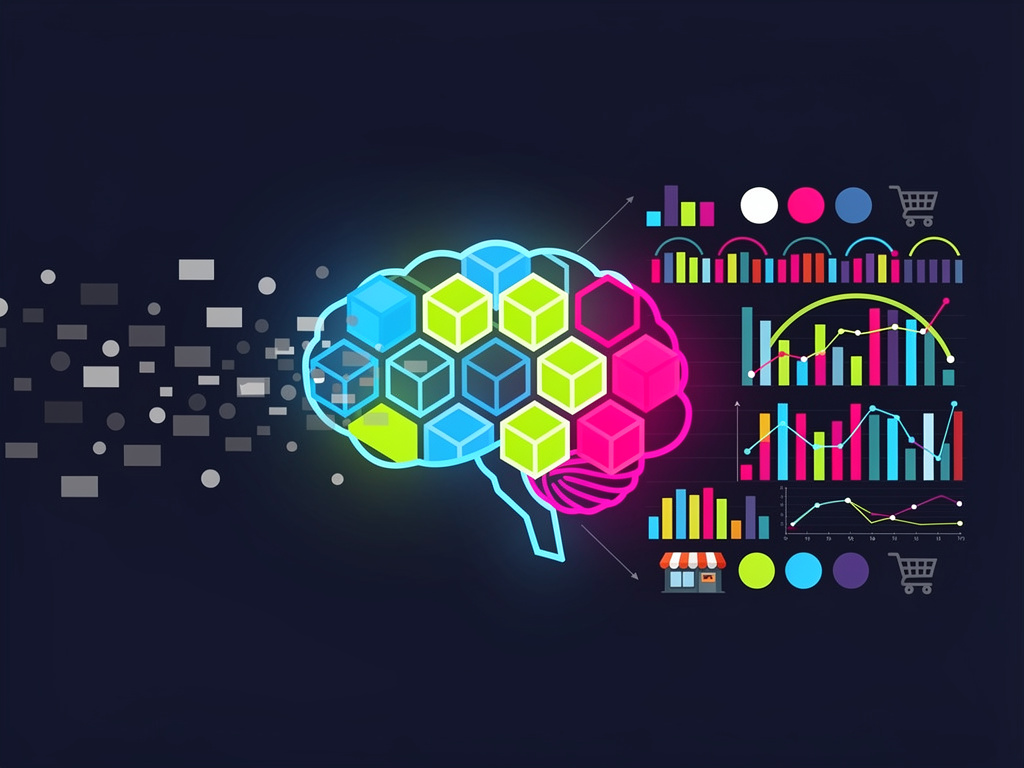
Bering AI took a different path. The company built what it calls a “foundation model for commerce” — a 700-billion-parameter system trained not on text but on transactional data. Purchase histories. Browsing patterns. Point-of-sale records. The kind of structured, behavioral data that retailers and consumer packaged goods companies have been sitting on for decades without a sufficiently powerful tool to extract meaning from it at scale.
The distinction matters more than it might seem at first glance. Text-based models understand language. Bering’s model understands buying behavior. It doesn’t just know what a product is; it knows how products relate to each other in the context of real human decision-making over time.
According to TechRadar’s reporting, Bering AI’s model can process and analyze consumer transaction data to generate predictions about future purchasing behavior with a level of granularity that traditional recommendation engines simply can’t match. We’re not talking about “customers who bought X also bought Y” — the kind of collaborative filtering Amazon popularized two decades ago. This is something architecturally different. A model that builds a dynamic, evolving representation of consumer intent across categories, time periods, and contexts.
Microsoft’s interest makes strategic sense. The company has been aggressively expanding its AI capabilities across Azure, integrating Copilot into virtually every product it ships, and positioning itself as the enterprise AI platform of choice. But enterprise customers — particularly in retail and consumer goods — don’t just need chatbots and document summarizers. They need AI that can drive revenue. Predicting what customers will buy, when they’ll buy it, and what will persuade them to choose one brand over another is the kind of capability that justifies massive cloud spending.
So Microsoft is embedding Bering AI’s model into its Azure infrastructure, giving enterprise clients access to commerce-specific AI predictions without having to build their own models from scratch. It’s a distribution play as much as a technology play. Bering gets access to Microsoft’s enormous enterprise customer base. Microsoft gets a differentiated AI offering that competitors can’t easily replicate.
The timing is notable. Retailers are under intense pressure to improve margins, reduce inventory waste, and personalize customer experiences — all while consumer behavior grows increasingly unpredictable. Inflation, shifting brand loyalties, the rise of social commerce, and the slow death of third-party cookies have made traditional forecasting methods unreliable. The companies that can predict demand more accurately will win. Full stop.
Why 700 Billion Parameters — and Why It’s Not Just a Vanity Number
Parameter count in AI models has become something of an arms race, and healthy skepticism is warranted. Bigger isn’t always better. A bloated model can be slow, expensive to run, and no more accurate than a smaller, well-tuned alternative. But in Bering AI’s case, the scale appears to be driven by the nature of the data itself.
Transactional data is extraordinarily high-dimensional. A single consumer’s purchase history over five years might include thousands of individual transactions across hundreds of product categories, each with its own temporal patterns, price sensitivities, and contextual variables. Multiply that by millions of consumers, and the combinatorial complexity is staggering. You need a model with enough capacity to capture those relationships without collapsing them into oversimplified patterns.
That’s the argument for 700 billion parameters. Not bragging rights. Representational capacity.
And the model doesn’t operate in isolation. According to TechRadar, Bering AI’s system is designed to integrate with a company’s existing first-party data — loyalty programs, CRM systems, e-commerce platforms — and enhance it with the model’s broader understanding of commerce patterns. Think of it as a translation layer between raw transactional data and actionable business intelligence.
This approach addresses one of the most persistent frustrations in enterprise AI adoption. Companies have data. Mountains of it. What they lack is the ability to turn that data into predictions they can act on in real time. Traditional machine learning pipelines require months of custom development, teams of data scientists, and constant maintenance. A pre-trained foundation model that already understands the grammar of commerce can dramatically compress that timeline.
The privacy implications deserve scrutiny, though the early indications suggest Bering AI has been thoughtful about this. The model is trained on aggregated, anonymized transaction data, and the integration with enterprise clients’ first-party data happens within their own Azure environments. No customer-level data leaves the client’s control. At least, that’s the architecture as described. As with any AI system handling consumer behavioral data, the details of implementation will matter enormously, and regulators in the EU and increasingly in the United States will be watching.
There’s a broader industry trend at work here, too. The era of one-model-fits-all is ending. OpenAI’s GPT-4 and its successors are general-purpose tools — brilliant at many things, optimal at few. The next wave of AI value creation is likely to come from domain-specific foundation models: systems trained on specialized data for specialized tasks. Bloomberg built one for finance. Med-PaLM targets healthcare. And now Bering AI is staking its claim in commerce.
Microsoft clearly sees this. Its partnership with OpenAI gives it the general-purpose AI layer. Bering AI gives it the commerce-specific layer. Together, they create a stack that can serve enterprise clients from the boardroom to the point of sale.
But Microsoft isn’t the only company thinking this way. Google has been investing heavily in AI-powered retail solutions through its Cloud division, and Amazon — which arguably invented AI-driven commerce recommendations — continues to refine its own internal models. Salesforce has been embedding AI predictions into its Commerce Cloud. The competitive field is crowded, and Bering AI’s success will depend not just on the quality of its model but on how quickly it can demonstrate measurable ROI for enterprise clients.
What This Means for the Companies That Sell You Things
For retailers and consumer brands, the practical implications are significant. Imagine a grocery chain that can predict, store by store, which products will see demand spikes next week — not based on last year’s sales data, but on real-time signals from current consumer behavior patterns. Or a fashion retailer that can identify which customers are about to churn and intervene with precisely targeted offers before they leave. Or a CPG company that can optimize its trade promotion spending by understanding, at a granular level, which promotions actually drive incremental purchases versus simply subsidizing buying that would have happened anyway.
These aren’t hypothetical use cases. They’re the kinds of problems that cost the retail industry billions of dollars annually in lost revenue and wasted spending. A model that can solve even a fraction of them more accurately than existing tools would justify its existence many times over.
The question is whether Bering AI can deliver on the promise. Foundation models are expensive to build, expensive to maintain, and notoriously difficult to evaluate in production environments where the ground truth — did the customer actually buy the thing we predicted? — takes time to materialize. The company is relatively unknown, and the history of AI startups is littered with impressive demos that failed to translate into reliable enterprise products.
Still, Microsoft doesn’t make these partnerships casually. The company’s AI strategy under Satya Nadella has been characterized by calculated, high-conviction bets — the $13 billion OpenAI investment being the most prominent example. A partnership with Bering AI signals that Microsoft sees commerce-specific AI as a category worth owning, and that it believes this particular team and this particular model have a credible shot at defining it.
For those of us who’ve watched AI evolve from a research curiosity into an enterprise imperative, the Bering AI story is a reminder that the most consequential AI developments aren’t always the ones that make the front page. Sometimes they’re happening in the transactional data of a billion purchases, quietly learning the patterns that shape what you’ll buy tomorrow. And sometimes the companies building those models are the ones you’ve never heard of — until suddenly, they’re everywhere.


 WebProNews is an iEntry Publication