
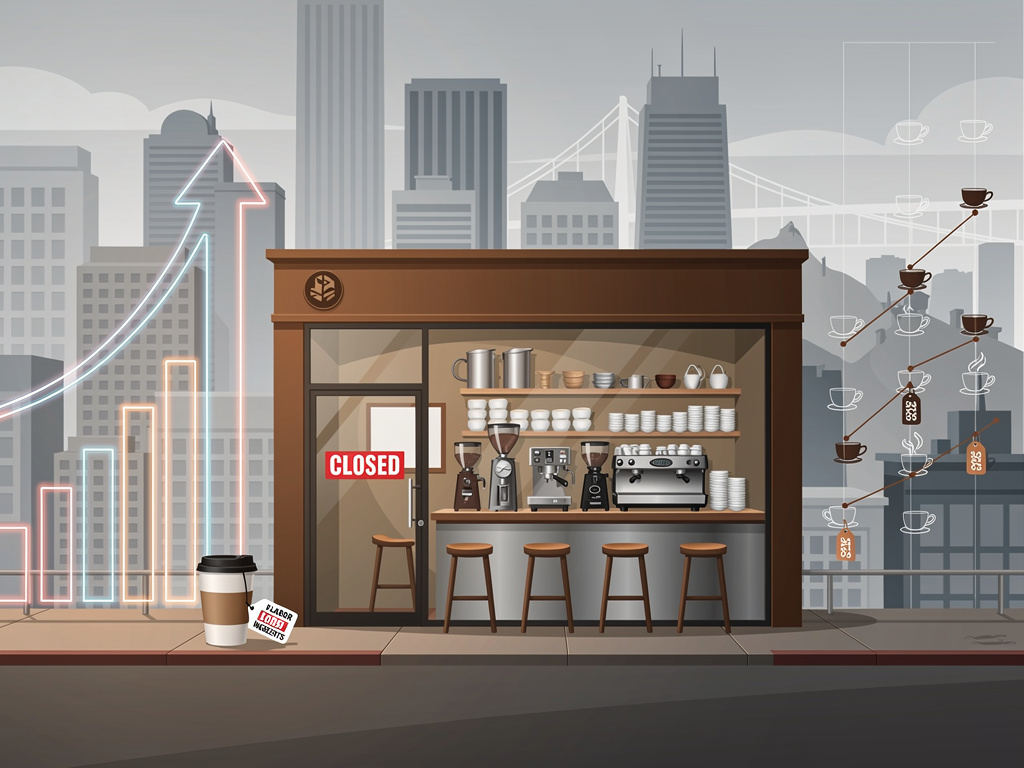
San Francisco’s coffee scene, long defined by artisanal roasters and affordable neighborhood cafés, stands at an inflection point. The closure of Andytown Coffee Roasters’ original Outer Sunset location signals more than the end of a beloved local institution—it represents a fundamental restructuring of the city’s café economics. As operating costs surge and consumer spending patterns shift, the era of the $4 cappuccino appears to be drawing to a close, forcing both operators and customers to recalibrate their expectations for what sustainable coffee culture looks like in one of America’s most expensive cities.
According to Business Insider, Andytown’s decision to shutter its flagship location after nearly a decade reflects pressures that extend far beyond a single business. The café, known for its Snowy Plover—a brown sugar latte topped with whipped cream and sea salt—had become a destination for both locals and tourists. Yet even with a loyal customer base and national recognition, the economics of operating a small-format café in San Francisco’s residential neighborhoods have become untenable. Rent increases, labor costs driven by the city’s minimum wage approaching $19 per hour, and the persistent challenges of staffing in a post-pandemic environment have created a perfect storm for independent operators.
The coffee industry’s cost structure has undergone dramatic transformation over the past three years. Green coffee prices, which remained relatively stable through much of the 2010s, have experienced significant volatility. Climate change has disrupted growing regions in Brazil, Colombia, and East Africa, while geopolitical tensions have affected supply chains. These wholesale price increases, combined with rising costs for milk, sugar, and other ingredients, have compressed margins for cafés that built their reputations on quality without premium pricing. For businesses like Andytown that roasted their own beans and maintained direct trade relationships with farmers, the financial pressures have intensified from multiple directions simultaneously.
The Real Estate Equation That No Longer Adds Up
San Francisco’s commercial real estate market presents unique challenges for café operators. Unlike restaurants that can command higher per-transaction revenues, coffee shops depend on volume and repeat customers. The typical café transaction ranges from $5 to $8, requiring substantial foot traffic to cover fixed costs. When monthly rent for a modest storefront in neighborhoods like the Outer Sunset or Inner Richmond exceeds $8,000—and can reach $15,000 or more in higher-traffic areas—the mathematics become increasingly difficult. Andytown’s original location, while beloved, occupied prime corner real estate in a neighborhood where property values have climbed even as some commercial corridors have struggled with vacancy.
The shift toward remote and hybrid work has fundamentally altered customer traffic patterns. Morning rushes that once sustained cafés have dissipated as fewer workers commute daily to downtown offices. Weekend traffic, while still robust in residential neighborhoods, cannot compensate for the loss of weekday regulars. This transformation has forced café owners to reconsider their real estate strategies entirely. Some are downsizing to smaller footprints focused on takeaway service, while others are abandoning traditional storefronts altogether in favor of wholesale operations or subscription models that bypass the costly retail equation.
Andytown’s pivot toward its roasting operation and remaining locations in higher-traffic areas reflects this strategic recalibration. By consolidating operations and focusing on wholesale accounts and online sales, the company can maintain its brand presence while shedding the fixed costs associated with marginal retail locations. This approach mirrors trends across the specialty coffee industry, where roasters increasingly view retail cafés as brand-building exercises rather than primary revenue generators. The economics favor selling beans in bulk to restaurants, offices, and home consumers over serving individual drinks in expensive storefronts.
Labor Costs and the Service Industry Reckoning
San Francisco’s progressive labor policies, while beneficial for workers, have created acute challenges for labor-intensive businesses operating on thin margins. The city’s minimum wage, currently among the highest in the nation, continues to rise annually based on inflation adjustments. For a café employing four to six baristas across multiple shifts, labor costs can easily consume 40% to 50% of revenue—a proportion that leaves little room for error when other expenses increase simultaneously. Add mandatory healthcare contributions, paid sick leave, and other benefits, and the cost of maintaining adequate staffing becomes the single largest operational challenge.
The post-pandemic labor market has compounded these pressures. Finding and retaining skilled baristas has become increasingly difficult as workers seek positions with better pay, benefits, and stability. The café industry, traditionally dependent on younger workers willing to accept lower wages in exchange for flexible schedules and informal work environments, has lost much of its appeal. Many former baristas have transitioned to remote work, tech industry positions, or other sectors offering better compensation. Those who remain in hospitality often command higher wages, reflecting their increased bargaining power in a tight labor market.
This labor shortage has forced some operators to reduce hours, limit services, or increase prices—all of which can alienate customers and create negative feedback loops. Cafés that once opened at 6 a.m. to catch early commuters now open at 7 or 8 a.m. due to staffing constraints. Some have eliminated table service or reduced food offerings to simplify operations. These adjustments, while necessary for survival, diminish the café experience that customers valued, potentially accelerating the shift toward chains and larger operators that can absorb higher labor costs through economies of scale.
The Premium Coffee Paradox
As independent cafés struggle, a curious dynamic has emerged: consumers demonstrate willingness to pay premium prices for coffee—but only under specific conditions. Third-wave coffee shops that offer unique experiences, exceptional quality, or distinctive ambiance can command $6 to $8 for specialty drinks. Blue Bottle Coffee, Sightglass, and other upscale operators have successfully positioned themselves at higher price points by creating destination experiences. However, neighborhood cafés that positioned themselves as community gathering spaces with good-but-not-exceptional coffee find themselves caught in an uncomfortable middle ground.
This bifurcation of the market reflects broader trends in consumer spending. Customers increasingly make binary choices: either seeking the cheapest acceptable option—often Starbucks or Dunkin’, which leverage scale to maintain competitive pricing—or splurging on premium experiences that feel justified by quality, atmosphere, or social cachet. The middle market, where Andytown and similar cafés operated, has contracted significantly. Raising prices to sustainable levels risks losing price-sensitive customers without attracting the premium segment that expects more than good coffee for their money.
The challenge is particularly acute in San Francisco, where the cost of living has driven many middle-income residents to other cities while attracting high earners in tech and finance. This demographic shift has hollowed out the customer base for moderately priced neighborhood amenities. The remaining residents either cannot afford frequent café visits at higher prices or expect the level of service and quality associated with premium pricing. Threading this needle—offering sufficient value to justify premium pricing without the overhead costs that make such operations unsustainable—has proven nearly impossible for many independent operators.
Technology and the Automation Alternative
Some café operators are turning to technology to address rising costs, though with mixed results. Automated espresso machines that can produce consistent drinks with minimal barista intervention have improved significantly in recent years. Mobile ordering systems reduce the need for counter staff and can smooth demand spikes. Self-service models, where customers prepare their own drinks from high-quality machines, have gained traction in some markets. However, these solutions face resistance in a city that values the craft and personal interaction traditionally associated with specialty coffee.
The automation paradox is that while technology can reduce labor costs, it often requires significant capital investment and may undermine the artisanal positioning that justifies premium pricing. A café that replaces skilled baristas with push-button machines saves on wages but loses the theater and expertise that customers value. Moreover, automated systems require maintenance, technical support, and eventual replacement—costs that can exceed labor savings for smaller operators. The successful integration of technology requires scale that most independent cafés lack, again favoring larger chains with resources to invest in and maintain sophisticated systems.
Some operators are exploring hybrid models that preserve human interaction for complex drinks while automating routine tasks. Batch brewing systems, automated milk steamers, and digital inventory management can reduce labor requirements without eliminating the barista entirely. These approaches show promise but require careful implementation to maintain quality and customer experience. The learning curve and upfront costs remain barriers for struggling businesses that need immediate relief rather than long-term efficiency gains.
The Chain Advantage in an Expensive Market
As independent cafés contract, national and regional chains are expanding their San Francisco presence. Starbucks, Peet’s Coffee, and Philz Coffee possess advantages that smaller operators cannot match: centralized purchasing that reduces ingredient costs, sophisticated supply chain management, access to capital for buildouts and equipment, and brand recognition that drives traffic without significant marketing spend. These structural advantages allow chains to operate profitably at price points that would bankrupt independent competitors.
The chain expansion reflects not just operational efficiency but also changing consumer preferences. Younger customers, particularly those who grew up with Starbucks ubiquity, often lack the loyalty to independent cafés that characterized previous generations. The consistency, mobile ordering convenience, and rewards programs offered by chains align with contemporary consumer expectations. While San Francisco prides itself on supporting local businesses, economic pressures are forcing many residents to prioritize value and convenience over ideology.
This shift has implications beyond individual businesses. The proliferation of chains homogenizes neighborhood character and reduces the diversity of café experiences available. The quirky, distinctive cafés that defined San Francisco’s coffee culture—each with unique roasts, signature drinks, and individual personalities—are being replaced by standardized formats. This transformation, while economically rational, represents a cultural loss that extends beyond coffee to questions about urban identity and community cohesion in an increasingly expensive and corporatized city.
Reinventing the Café Model for Economic Sustainability
Some operators are experimenting with alternative business models that sidestep traditional café economics. Subscription services that deliver beans or ready-to-drink products directly to consumers eliminate retail overhead while building recurring revenue. Pop-up cafés that operate in shared spaces or on limited schedules reduce fixed costs. Wholesale-focused roasters that maintain a single showcase café for brand building rather than relying on retail revenue have found success. These approaches require rethinking what a coffee business is and abandoning assumptions about storefronts and daily operations that have defined the industry.
The community-supported café model, borrowed from agriculture’s CSA framework, has gained traction in some cities. Members pay monthly fees that provide discounted drinks while guaranteeing the café a stable revenue base. This approach builds customer loyalty and provides financial predictability but requires significant upfront member recruitment and limits growth potential. Other cafés are incorporating higher-margin activities like coffee education classes, equipment sales, or event hosting to diversify revenue streams beyond drink sales.
Andytown’s evolution—maintaining its roasting operation and select retail locations while closing its original café—exemplifies this strategic adaptation. By focusing on wholesale and online sales while operating cafés primarily in high-traffic locations or as brand showcases, the company can sustain its business without depending on marginal retail locations. This model preserves the brand and maintains customer relationships while acknowledging the economic realities of San Francisco’s current market. Whether this approach proves sustainable long-term remains uncertain, but it represents a pragmatic response to structural challenges that show no signs of abating.
What the Coffee Crisis Reveals About Urban Economics
The struggles of San Francisco’s café industry illuminate broader questions about urban affordability and economic sustainability. When businesses providing everyday amenities cannot operate profitably, it signals fundamental imbalances in the local economy. The café closures reflect the same dynamics driving restaurant failures, retail vacancies, and the departure of middle-income residents: costs have risen faster than the economic value that can be extracted from serving local communities. This gap between operational costs and sustainable pricing creates economic dead zones where certain business models simply cannot exist.
The phenomenon extends beyond coffee to questions about what kind of city San Francisco is becoming. An urban environment where only premium businesses and large chains can survive loses the diversity and accessibility that make cities vibrant. The neighborhood café serving decent coffee at reasonable prices, staffed by local residents earning living wages, appears increasingly anachronistic—a relic of an economic era that has passed. The replacement of such establishments with either expensive boutique cafés or corporate chains represents not just a business transition but a social transformation that affects community cohesion and urban character.
City policymakers face difficult tradeoffs. Progressive labor and housing policies that benefit workers and residents also increase operating costs for small businesses. Commercial rent control or small business subsidies could help but create their own distortions and political challenges. Zoning reforms that allow more flexible use of commercial space might enable lower-overhead business models. However, these interventions require political will and coordination that has proven elusive. The result is a largely market-driven evolution that favors scale and capital over local character and community connection.
The Path Forward for Independent Coffee
Despite the challenges, some independent operators are finding ways to thrive by embracing premium positioning without apology. Cafés that invest in exceptional quality, distinctive experiences, and strong community relationships can justify prices that support sustainable operations. This approach requires confidence in value proposition and willingness to accept a smaller, more affluent customer base. It also demands operational excellence—mediocrity at premium prices quickly fails. The successful independent cafés of the future will likely be smaller in number but stronger in execution, serving customers who consciously choose to support local businesses despite cheaper alternatives.
The coffee industry’s transformation in San Francisco may preview changes coming to other expensive urban markets. As costs rise in Seattle, Portland, New York, and other cities with strong café cultures, operators will face similar pressures. The solutions emerging in San Francisco—consolidation, premiumization, alternative business models, and chain expansion—will likely spread to other markets experiencing comparable economic dynamics. Understanding how San Francisco’s coffee scene adapts provides insights into the future of urban retail and hospitality more broadly.
For Andytown and similar businesses, the closure of original locations marks not an ending but an evolution. The brand continues, the coffee remains available, and the company survives—just in different forms than founders originally envisioned. This adaptability, while bittersweet for longtime customers who valued the original café experience, demonstrates the resilience required to sustain independent businesses in challenging economic environments. The era of cheap, high-quality coffee in expensive cities may indeed be ending, but the demand for excellent coffee persists. The industry’s challenge is finding economically sustainable ways to meet that demand while preserving the craft, community, and character that made specialty coffee culture valuable in the first place.


 WebProNews is an iEntry Publication