
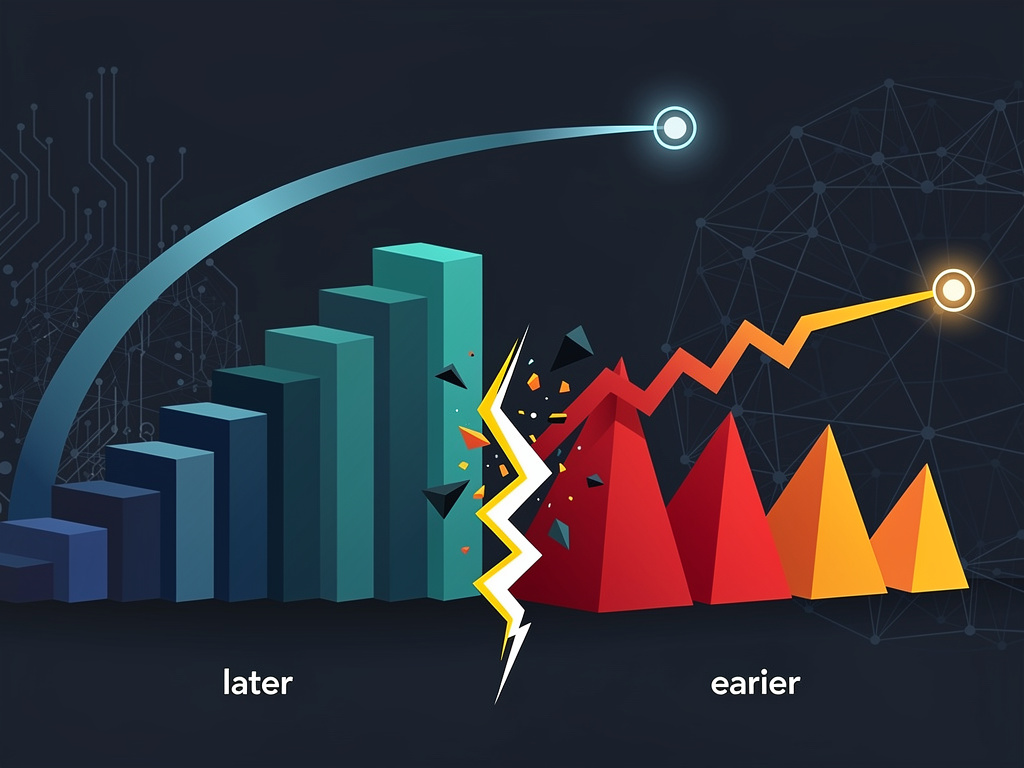
Sam Altman wants to wait. His CFO wants to move. And inside OpenAI, a quiet but consequential disagreement over IPO timing is shaping the future of the most valuable private company in the world.
The tension between OpenAI CEO Sam Altman and Chief Financial Officer Sarah Friar over when to take the artificial intelligence giant public has become one of Silicon Valley’s most closely watched internal debates, according to The Information, which first reported the divergence. Altman has signaled a preference for delaying a public offering until 2027 or later, while Friar — a seasoned financial executive who previously led Nextdoor through its own public debut — has pushed for an earlier timeline, potentially as soon as next year.
This isn’t a trivial scheduling dispute. It’s a strategic disagreement with massive implications for OpenAI’s investors, its employees sitting on illiquid equity, and the broader AI industry that has come to treat OpenAI’s every corporate move as a bellwether.
OpenAI is currently valued at roughly $300 billion following its most recent funding round, making it the most richly valued private startup in history. That valuation, achieved in a round that closed earlier this year with participation from SoftBank, Microsoft, and other major investors, puts extraordinary pressure on the company to deliver growth that justifies the price tag — and creates mounting urgency around the question of when and how those investors can realize returns.
Friar’s argument for an earlier IPO carries straightforward financial logic. The company’s employee equity compensation relies on periodic tender offers and secondary sales to provide liquidity, but these mechanisms are imperfect and expensive to administer. A public listing would simplify that equation dramatically. It would also give OpenAI a publicly traded currency for acquisitions at a time when the AI sector is consolidating rapidly, and it would satisfy investors who committed billions with the expectation of an eventual exit.
Altman’s resistance is rooted in something different. He has long expressed wariness about the pressures of public markets — the quarterly earnings cycle, the activist investors, the relentless short-term focus that can distort a company’s priorities. For a company whose stated mission involves building artificial general intelligence, the argument for insulation from Wall Street’s attention span is not without merit. Altman has also pointed to the example of SpaceX, which has remained private for over two decades while achieving a valuation north of $350 billion through private market transactions.
But OpenAI is not SpaceX. And the differences matter.
SpaceX generates substantial recurring revenue through its Starlink satellite internet business and government launch contracts, giving it a financial stability that supports long-term private status. OpenAI, despite its explosive revenue growth — the company reportedly hit an annualized revenue run rate exceeding $5 billion — is still burning through cash at a staggering pace. Training frontier AI models costs hundreds of millions of dollars per run. The company’s infrastructure buildout, including partnerships with data center providers and custom chip development, requires capital expenditures that dwarf those of most technology startups at a comparable stage.
The cash dynamics alone may ultimately force the issue regardless of Altman’s preferences. OpenAI’s latest funding round included unusual structural provisions, including a clause requiring the company to complete its conversion from a nonprofit to a for-profit entity within a specified timeframe — or return investor capital. That conversion process, which is itself the subject of legal challenges from Elon Musk and California’s attorney general, adds another layer of complexity to any IPO timeline.
According to The Information, the disagreement between Altman and Friar has not risen to the level of an open confrontation but rather reflects differing instincts about the company’s trajectory. Friar, who joined OpenAI in 2024 after serving as CEO of Nextdoor, brings the perspective of someone who has navigated the public offering process and understands both its costs and its benefits. She reportedly views the IPO as a natural next step for a company of OpenAI’s scale and maturity.
Altman, for his part, has never run a public company. His experience as president of Y Combinator and then as the leader of OpenAI has been defined by operating environments where long-term vision could take precedence over quarterly performance metrics. The prospect of answering to public market analysts — explaining margin compression during heavy investment cycles, defending research spending that may not yield commercial returns for years — appears genuinely unappealing to him.
There’s also a control dimension. OpenAI’s governance structure has already been through one near-death experience, when the company’s original nonprofit board fired Altman in November 2023 before a dramatic employee revolt forced his reinstatement. The restructuring that followed concentrated more authority in Altman’s hands. A public offering would introduce new governance requirements, independent board oversight expectations, and shareholder rights that could dilute that control — even with the dual-class share structures that have become standard among tech IPOs.
The competitive environment adds further urgency to the debate. Google, Meta, Amazon, and Microsoft are all investing tens of billions annually in AI infrastructure and model development. Anthropic, OpenAI’s closest direct competitor, raised $8 billion from Amazon and recently completed additional funding that valued it at $61.5 billion. xAI, Elon Musk’s AI venture, has raised billions as well. The AI arms race shows no signs of slowing, and OpenAI’s ability to compete depends on sustained access to capital at favorable terms.
A public listing would provide that access — but at a cost. Public AI companies have faced volatile trading as investors struggle to model the economics of a technology whose long-term revenue potential remains speculative. Even Nvidia, whose chips underpin much of the AI boom, has experienced significant share price swings despite posting record-breaking financial results quarter after quarter.
Some OpenAI employees are growing impatient. Many joined the company when it was valued at a fraction of its current price, and their paper wealth is substantial but unrealized. While the company has conducted tender offers allowing employees to sell shares at recent valuations, these events are infrequent and typically capped. An IPO would provide continuous liquidity and price discovery, making it far easier for employees to monetize their holdings or use them as collateral.
The tension also reflects a broader philosophical question facing AI companies: how much transparency is appropriate for organizations building technology this powerful? Public companies face extensive disclosure requirements — financial results, risk factors, material legal proceedings, executive compensation. For a company like OpenAI, which has faced criticism over its opacity regarding safety testing, model capabilities, and data sourcing practices, the additional scrutiny of public markets could be either a forcing function for accountability or a distraction from the technical work.
Wall Street is already preparing. Investment banks including Morgan Stanley, Goldman Sachs, and JPMorgan Chase have been positioning for what would be one of the largest technology IPOs in history. At a $300 billion valuation, even a modest primary offering could raise tens of billions of dollars — capital that OpenAI could deploy toward its infrastructure ambitions, including the Stargate data center project announced in partnership with SoftBank and Oracle.
And then there’s the question of market timing. The IPO window for technology companies has been erratic since 2022, when rising interest rates and falling valuations froze the market. Conditions have improved in 2025, with several successful listings and a generally supportive equity market environment. But windows close. Friar’s instinct to move while conditions are favorable reflects a pragmatism born of experience — she watched firsthand as Nextdoor’s post-SPAC performance disappointed, a lesson in what happens when public market enthusiasm fades.
Altman may ultimately prevail. He is the dominant figure at OpenAI, and his preferences carry disproportionate weight in corporate decision-making. But the forces aligned in favor of an earlier IPO — investor expectations, employee liquidity demands, capital requirements, competitive pressures — are formidable. The longer the company waits, the more those pressures compound.
One scenario being discussed internally, according to people familiar with the deliberations, involves a compromise: conducting another large private funding round in 2025 or early 2026 to buy time, followed by an IPO in late 2026 — splitting the difference between Altman’s and Friar’s preferred timelines. This would allow the company to demonstrate additional revenue growth and potentially achieve profitability milestones that would support a stronger public debut.
But compromises have their own risks. Each successive private round at higher valuations raises the bar for a successful IPO. If OpenAI goes public at $300 billion and the stock declines, the reputational and financial consequences would be severe — not just for the company but for the broader AI investment thesis. The pressure to price the IPO at or above the last private round would be intense, and the margin for error razor-thin.
The Altman-Friar disagreement is, in many ways, a microcosm of the tension at the heart of the current AI moment. The technology is advancing rapidly, the commercial opportunities appear enormous, and the capital flowing into the sector is unprecedented. But the fundamental economics remain unproven at scale. Revenue is growing, but so are costs. Customers are enthusiastic, but retention patterns for AI products are still being established. The gap between what AI companies are worth on paper and what they can demonstrably earn is wider than in any technology cycle since the dot-com era.
OpenAI sits at the center of that gap. Its IPO — whenever it comes — will be a defining test of whether the AI boom can translate into durable shareholder value. Sam Altman would prefer to take that test later. Sarah Friar thinks the company is closer to ready than its CEO believes. The $300 billion question is which of them is right.


 WebProNews is an iEntry Publication