
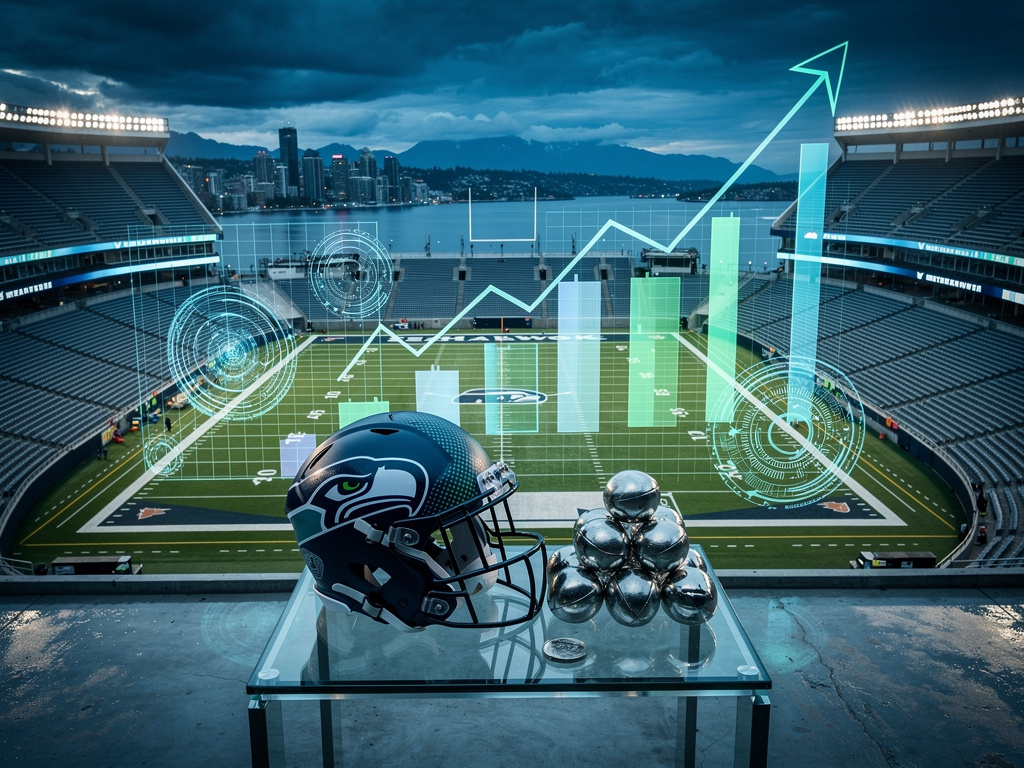
The Seattle Seahawks stand on the precipice of history, not just for their Super Bowl appearance against the New England Patriots, but for what comes after the final whistle blows. According to people familiar with the matter, the franchise is expected to be placed on the market shortly after the championship game concludes, potentially triggering the most expensive transaction in National Football League history and reshaping the economics of professional sports ownership in America.
The impending sale traces back to October 2018, when Microsoft co-founder Paul Allen passed away at age 65, leaving behind a sports empire that included the Seahawks and the NBA’s Portland Trail Blazers. Allen, who purchased the Seahawks in 1997 for $194 million to prevent the team from relocating, established a trust with explicit instructions that all his sports assets eventually be sold. His sister, Jody Allen, has overseen the trust since his death, and the wheels are now in motion to fulfill his final wishes.
According to The Wall Street Journal, a spokesman for Vulcan—the umbrella company managing Paul Allen’s sports businesses—acknowledged the inevitable sale while emphasizing the team’s current priorities. “Our focus right now is winning the Super Bowl,” said spokesman Jason Hunke, though he confirmed the sale would eventually proceed in accordance with Allen’s estate planning directives.
The Trail Blazers Template: A Billion-Dollar Blueprint
The trust has already demonstrated its commitment to liquidating Allen’s sports holdings. Last year, the estate agreed to sell the Portland Trail Blazers for more than $4 billion to a group led by billionaire Jared Holz, with the transaction expected to close in the coming months. That sale provided a preview of the trust’s methodical approach to maximizing value while honoring Allen’s legacy, but it also established a baseline that the Seahawks sale is virtually certain to surpass.
The economics of NFL team ownership have undergone a seismic shift in recent years, driven by lucrative media rights deals, expanded gambling partnerships, and the league’s unmatched cultural dominance in American sports. The most recent comparable transaction came in 2023, when the Washington Commanders were sold to a consortium led by private equity titan Josh Harris for $6 billion—a figure that shattered previous NFL sale records and signaled a new era of franchise valuations.
Yet even that eye-watering price tag may prove conservative compared to what the Seahawks could command. Recent minority stake transactions have implied valuations approaching $10 billion for top-tier NFL franchises. In August 2024, a minority stake sale in the Miami Dolphins valued that franchise at approximately $8.1 billion, while similar transactions involving the Buffalo Bills and Philadelphia Eagles have suggested comparable or higher valuations. These deals have established a new ceiling for what elite NFL properties can fetch in today’s market.
Prime Location, Perfect Timing: The Seattle Advantage
Several factors position the Seahawks as potentially the most valuable NFL franchise ever sold. The team’s location in Seattle—a thriving metropolitan area with a population exceeding 4 million and home to corporate giants including Amazon, Microsoft, and Starbucks—provides both a robust local market and deep-pocketed potential ownership candidates. The Pacific Northwest’s tech wealth has created a concentration of billionaires who could view NFL ownership as both a passion project and a strategic investment.
The Seahawks also benefit from playing in Lumen Field, a publicly-funded stadium that opened in 2002 and underwent significant renovations in recent years. Unlike some NFL owners who face the prospect of costly stadium construction or renovation projects, a Seahawks buyer would inherit a modern facility with strong revenue-generating capabilities and a lease structure favorable to the team. The stadium’s famous “12th Man” crowd creates one of the most intimidating home-field advantages in professional sports, adding intangible value to the franchise.
Perhaps most remarkably, the Seahawks are being sold at the peak of their competitive cycle rather than during a rebuilding phase. Under first-year head coach Mike Macdonald, the 38-year-old defensive mastermind who previously served as the Baltimore Ravens’ defensive coordinator, Seattle has emerged as the NFC’s top seed and Super Bowl favorite. Quarterback Sam Darnold, just 28 years old and playing the best football of his career, provides a foundation for sustained success. This combination of youth and immediate competitiveness is virtually unprecedented in modern NFL sales.
The Unprecedented Championship Sale Scenario
If the Seahawks defeat the Patriots in the Super Bowl before being sold, it would mark the first time in recent NFL memory that a championship team changed hands immediately after winning a title. The closest parallel comes from the NBA, where the Boston Celtics were sold in 2025, a season after winning the championship, for a then-record price. That transaction demonstrated how a recent championship can amplify a franchise’s value, serving as both proof of organizational excellence and a marketing tool for attracting premium buyers.
The timing of a post-Super Bowl sale creates unique dynamics. A championship victory would generate maximum publicity and prestige, potentially attracting buyers who might otherwise focus on other opportunities. It also validates the current organizational structure, from front office personnel to coaching staff, providing a new owner with a turnkey operation rather than a project requiring extensive rebuilding. This stands in stark contrast to the Commanders sale, where new ownership inherited a franchise mired in controversy and in need of comprehensive organizational reform.
Industry analysts suggest the Seahawks could attract interest from several categories of buyers. Traditional billionaires from the tech sector, including potential consortiums involving Seattle-area executives, represent an obvious candidate pool. Private equity firms, which have recently been granted limited access to NFL ownership stakes, could also participate, though league rules currently cap their involvement at 10% ownership. International investors, particularly from markets where the NFL is expanding its presence, might view the Seahawks as a gateway to American sports ownership.
The Paul Allen Legacy and Trust Obligations
The mandate to sell stems from Paul Allen’s meticulous estate planning, which reflected his view that sports team ownership was personal and shouldn’t be passed down through generations who might lack his passion for the franchises. Allen was known as one of the NFL’s most hands-off yet supportive owners, investing heavily in facilities and personnel while allowing football professionals to make football decisions. His 1997 purchase of the Seahawks came at a critical moment when the team faced potential relocation, cementing his status as a civic hero in Seattle.
Under Allen’s ownership, the Seahawks won their only Super Bowl title in 2014, defeating the Denver Broncos 43-8 in one of the most dominant championship performances in NFL history. The team returned to the Super Bowl the following year but lost to the Patriots in a heartbreaking finish decided by Malcolm Butler’s goal-line interception. A victory in this year’s rematch would provide a poetic bookend to the Allen era and potentially add hundreds of millions to the franchise’s sale price.
Jody Allen has maintained her brother’s approach to ownership, providing resources while avoiding public controversy. However, her role was always intended to be temporary, serving as steward until market conditions and organizational stability made a sale appropriate. The team’s current success, combined with favorable market conditions and the completion of the Trail Blazers transaction, has created what insiders view as an optimal window for executing the sale.
Market Forces Driving Record Valuations
The broader context for NFL team valuations reflects the league’s extraordinary financial performance in recent years. The NFL’s media rights deals, negotiated through 2033, total approximately $110 billion and provide each team with more than $400 million annually in national revenue before a single ticket is sold. This guaranteed revenue stream, combined with local broadcasting rights, sponsorships, and stadium revenue, creates a financial foundation that makes NFL franchises among the safest investments in professional sports.
The league’s decision to allow private equity investment, even in limited form, has also contributed to rising valuations by expanding the pool of potential buyers and establishing new valuation methodmarks. Firms including Arctos Partners, Ares Management, and Sixth Street Partners have already made investments in NFL teams, bringing sophisticated financial analysis and aggressive valuation models that have pushed prices higher across the league.
Additionally, the scarcity value of NFL franchises cannot be overstated. With only 32 teams in existence and sales occurring perhaps once or twice per decade, each transaction attracts intense competition among the world’s wealthiest individuals and institutions. This scarcity premium, combined with the NFL’s cultural dominance and financial strength, creates conditions where record-breaking prices become almost inevitable with each successive sale.
The Super Bowl Factor and Immediate Competitive Outlook
The Seahawks’ path to the Super Bowl has showcased the organizational strengths that will appeal to prospective buyers. Macdonald’s defensive scheme has transformed Seattle into one of the league’s most formidable units, while general manager John Schneider has demonstrated continued acumen in talent evaluation and roster construction. The team’s success despite transitioning from longtime quarterback Russell Wilson to Darnold illustrates organizational depth and coaching excellence that transcends individual players.
Darnold’s resurrection in Seattle represents one of the NFL’s best stories this season. The former third overall pick, who struggled with the New York Jets and Carolina Panthers, has found his footing in Seattle’s system, throwing for over 4,000 yards and 35 touchdowns while leading the league in several efficiency metrics. His youth and contract situation—he’s signed through 2026 at a reasonable cap figure—provide a new owner with quarterback stability without the massive financial commitment that often accompanies elite signal-callers.
The supporting cast includes Pro Bowl receivers DK Metcalf and Tyler Lockett, a dominant defense anchored by linebacker Bobby Wagner, and one of the league’s best offensive lines. This combination of established stars and emerging young talent creates multiple pathways for sustained success, whether a new owner maintains continuity with current leadership or eventually implements their own vision. The organizational infrastructure, from scouting to sports science to analytics, reflects Allen’s commitment to providing every competitive advantage.
Regulatory Hurdles and League Approval Process
Any sale will require approval from at least 24 of the NFL’s 32 owners, a process that involves extensive financial vetting and personal background checks. The league has historically been selective about who joins its ownership ranks, prioritizing candidates with demonstrated business success, clean backgrounds, and alignment with the NFL’s values and long-term strategic vision. Recent controversies involving owners have made this vetting process even more rigorous, with the league seeking to avoid future embarrassments.
Financing structures will also face scrutiny. While NFL rules allow owners to finance up to $1.5 billion of a purchase price through debt, the league prefers buyers with substantial liquid wealth who won’t be overleveraged. This requirement effectively limits the pool of potential buyers to the world’s wealthiest individuals and carefully structured consortiums that meet the league’s financial standards. Private equity firms, despite recent rule changes allowing their participation, face additional restrictions that limit their influence over team operations.
The approval process typically takes several months, during which the proposed ownership group must present detailed business plans, financial statements, and personal information to league committees. For a franchise of the Seahawks’ prominence and price point, this scrutiny will be particularly intense. However, the trust’s professional management of the sale process, combined with the franchise’s strong standing within the league, should facilitate a smoother approval process than some previous transactions that involved distressed sellers or controversial circumstances.
Regional Economic Impact and Community Considerations
Beyond the financial mechanics, the Seahawks sale carries significant implications for Seattle’s civic identity and regional economy. The team generates an estimated $500 million in annual economic impact for the Seattle metropolitan area through gameday spending, employment, and related business activity. A new owner’s commitment to maintaining the team’s community engagement programs and local investments will be closely watched by civic leaders and fans alike.
The “12s”—as Seahawks fans are known, in reference to serving as the team’s 12th player—have developed one of the most passionate fan cultures in professional sports. Any prospective owner will need to demonstrate respect for this tradition and commitment to maintaining the team’s deep community roots. The trust has reportedly considered these factors in evaluating potential buyers, recognizing that Allen’s legacy extends beyond financial returns to his impact on the Pacific Northwest’s sports culture.
Local business leaders have expressed both excitement and anxiety about the impending ownership change. While a new owner could bring fresh energy and investment to the franchise, there are concerns about potential changes to ticket pricing, stadium experience, and community partnerships that have defined the Allen era. The ideal buyer, from a community perspective, would combine financial resources with genuine commitment to Seattle and understanding of the franchise’s unique culture and history.
The Broader Implications for NFL Economics
Whatever price the Seahawks ultimately command will reverberate throughout professional sports ownership. A sale approaching or exceeding $10 billion would establish a new benchmark for franchise valuations and potentially accelerate the trend of rising team prices across all major sports leagues. It would also intensify pressure on other NFL owners to maximize their franchises’ value through stadium improvements, market expansion, and revenue diversification.
The transaction could also influence ongoing discussions about league expansion and franchise relocation. If the Seahawks sale demonstrates that established franchises in major markets can command valuations in the $10 billion range, it raises questions about whether expansion fees for new franchises should approach similar levels. The NFL has discussed adding teams in markets including Toronto, London, and additional U.S. cities, and the Seahawks sale price will inform those deliberations.
For the trust executing Paul Allen’s wishes, the sale represents the culmination of years of careful stewardship and strategic planning. Allen’s vision was that his sports franchises would eventually benefit philanthropic causes and continue his legacy of innovation and community investment. A record-breaking sale would fulfill that vision while ensuring the Seahawks remain competitive and deeply rooted in Seattle for generations to come. As the team prepares for its Super Bowl appearance, the business of football and the sport itself converge in a moment that will define both the franchise’s future and the economics of America’s most valuable sports league.


 WebProNews is an iEntry Publication