
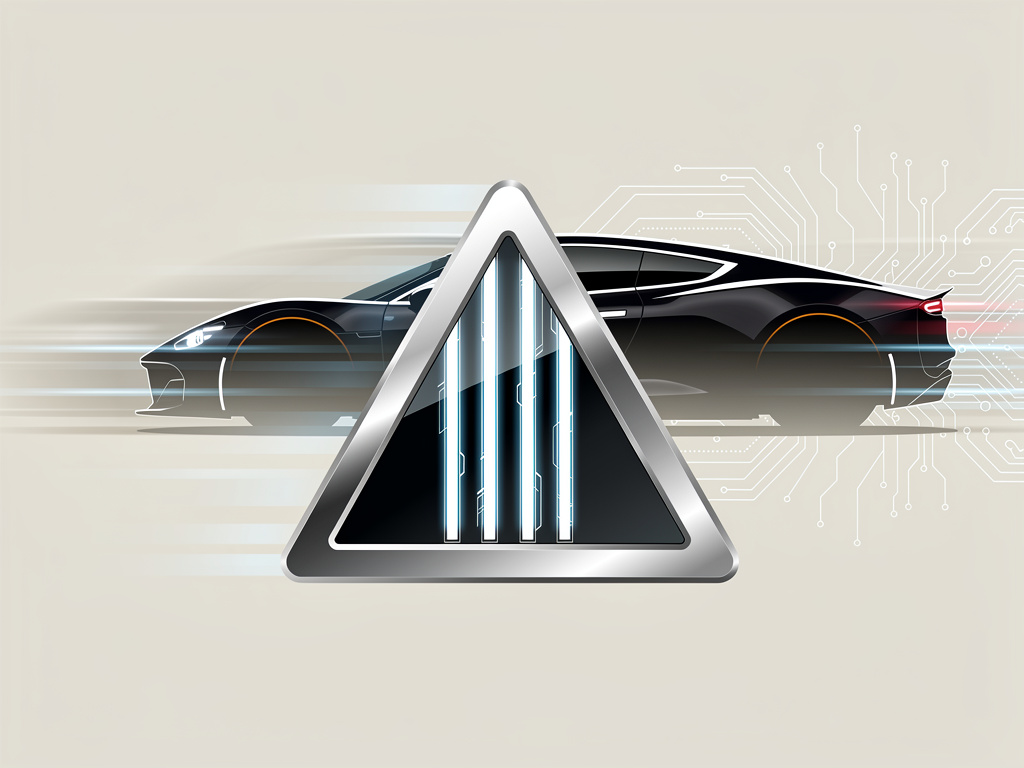
Tesla just filed another trademark for its long-stalled second-generation Roadster. The latest application, submitted April 28 to the U.S. Patent and Trademark Office, describes a triangle-shaped figure with bent corners and four vertical lines at the bottom. Those lines, the filing states, represent speed, propulsion, heat or wind.
The Marks Build a Distinct Identity
This isn’t Tesla’s usual minimalist approach. The company typically relies on a simple wordmark across its lineup. But the Roadster gets special treatment. Earlier filings from February 3, 2026, introduced a stretched, angular, all-caps “ROADSTER” wordmark with segmented letterforms. Another showed a sleek vehicle silhouette formed by three flowing curved lines. Together the trio signals a standalone brand within the brand. One that evokes supercar exclusivity rather than mass-market EVs.
The April filing expands the scope. It covers electric vehicles, of course. Yet it also reaches into home charging equipment, vehicle maintenance services, and a wide range of apparel. Hats. Footwear. Even clothing for infants. Tesla clearly sees the Roadster name as something bigger than one halo car. A lifestyle marker. Something owners wear with pride.
Sawyer Merritt, a prominent Tesla investor and watcher, first highlighted the latest mark. He posted images of the design, colorized in red for effect. “I found something cool,” he wrote on X. “Tesla has filed a new trademark application for its next-generation Roadster. It could be the new Roadster logo/badge.” The post quickly circulated among enthusiasts hungry for any sign of progress.
But progress has been slow. Painfully so. Elon Musk first unveiled the next-generation Roadster concept in November 2017. The promises were bold. Zero to 60 mph in under one second with a SpaceX thruster option. Top speed beyond 250 mph. Range near 620 miles. Reservations opened immediately. Deposits ranged from $50,000 to $250,000. Buyers waited. And waited.
Production timelines slipped repeatedly. The original target of 2020 came and went. Musk later pointed to 2021, then 2022. In late 2025 he set an April 1, 2026, demonstration date. That slipped too. During Tesla’s Q1 2026 earnings call on April 22, Musk offered fresh hope. “We may be able to debut that in a month or so,” he said. “I think it will be one of the most exciting product unveils ever.” He added a caveat. It wouldn’t move the revenue needle much. Still, the car matters for Tesla’s image.
The trademarks tell a different story than the repeated delays. They show concrete legal work to protect specific visual assets. All three applications were filed on an “intent to use” basis. Tesla hasn’t deployed the marks in commerce yet. But the filings lock in priority dates and block copycats once the designs go public. Trademark attorney Josh Gerben has noted in similar cases that such moves often precede announcements by weeks or months. Not years.
And the designs themselves depart sharply from Tesla’s house style. The triangular badge with its bent corners and vertical striations feels more like something from a traditional performance marque. Think Ferrari or Lamborghini emblems that convey motion and power at a glance. The angular wordmark reinforces that message. Segmented letters suggest speed and precision engineering. The silhouette preview hints at a lower, squarer roofline than the dramatic 2017 concept. A shape that looks production-ready rather than pure show car.
This matters for Tesla’s broader positioning. The first-generation Roadster, a modified Lotus Elise with battery power, launched in 2008. It proved electric cars could deliver serious performance. It established the company before the Model S arrived and transformed the brand. Production ended in 2012. The name carries heritage. Reviving it with bespoke branding signals Tesla wants to reclaim the halo role in an era when the company also pushes robotaxis, Optimus robots, and energy storage.
Recent coverage reinforces the sense of imminent movement. Electrek reported the February filings in detail, noting how the diamond-shaped badge composed of lines departs from the flat wordmarks used on Model 3, Model Y, Model S, Model X and Cybertruck. Only the Cybertruck previously received its own angular two-part logo. The Roadster now joins that rare club.
Teslarati highlighted the inverted triangular badge with “ROADSTER” centered above the four lines. The outlet called it an update fans weren’t necessarily seeking. They wanted specs or a firm production date. Instead they got trademark art. Yet the filings keep the conversation alive.
Business Insider first broke details of the April 28 application, linking it to the earlier February marks. The story noted Tesla ramped up development last summer. It also reminded readers that the vehicle has missed targets for years. Musk’s earnings call comment provided the latest timeline: perhaps late May or early June for a debut.
Analysts remain cautious. The Roadster sits in Tesla’s product roadmap under “design development” in recent investor updates. No specific capital expenditure line ties directly to it. Production, if it follows the latest guidance, would start 12 to 18 months after the demonstration event. That points to 2027 at the earliest, more likely 2028. By then the competitive field for high-end electric performance cars will have grown. Rimac. Lotus. Even Porsche and Lucid have ambitions in that space.
Still, the trademarks represent real work. Designers spent time crafting these marks. Lawyers filed them. The company is investing in the intellectual property even as hardware development continues in the background. The broad class coverage, especially apparel and infant clothing, suggests Tesla envisions a Roadster sub-brand. Merchandise. Lifestyle products. Perhaps even a dedicated owners’ community that extends beyond the car itself.
So what comes next? If history holds, the reveal will arrive with fresh performance claims. Updated range and acceleration numbers tuned after years of battery and motor advances. A more practical interior than the 2017 concept. And that new badge prominently displayed on the nose and steering wheel.
Fans have heard similar promises before. But the legal filings add weight this time. They show Tesla moving beyond concept art into protected brand assets. The triangle with bent corners and those four vertical lines may soon appear on actual vehicles. On apparel. On chargers. The Roadster, long a punchline for missed deadlines, could finally transition from promise to product.
Whether it arrives in months or another year, one thing is clear. Tesla refuses to let the name fade. The latest trademark activity keeps the flame alive. And gives the industry another data point to watch as the electric supercar segment takes shape.


 WebProNews is an iEntry Publication