
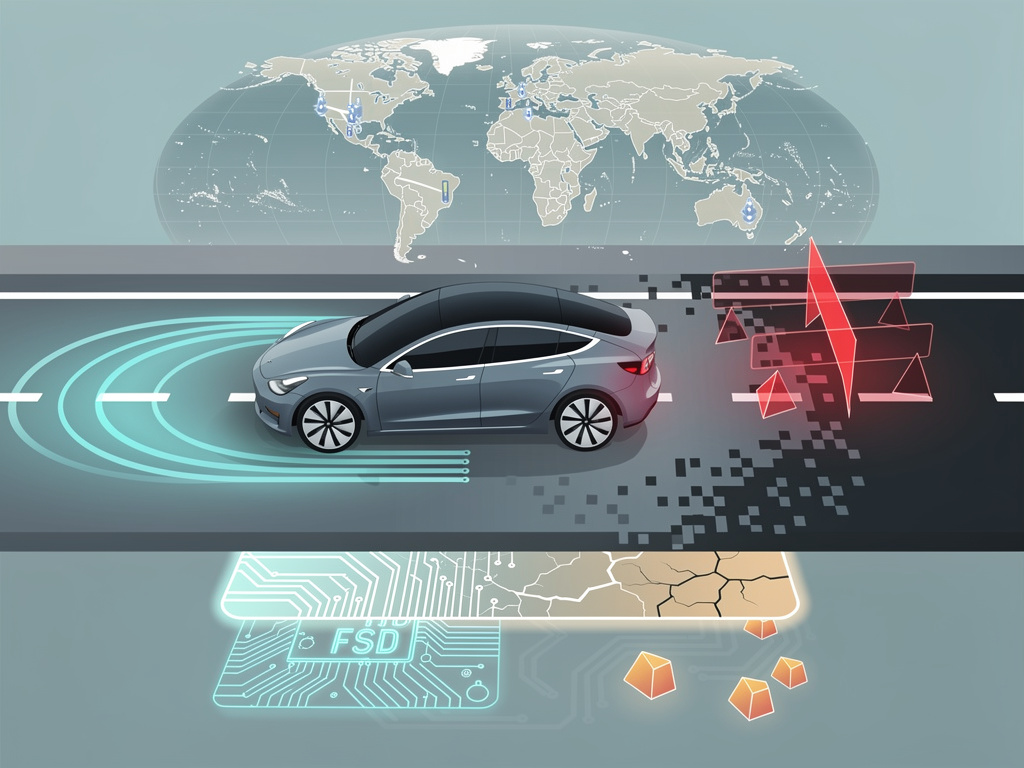
Tesla Inc. faces a hardware reckoning. Millions of drivers bought into the promise of full self-driving years ago. Now, those with older HW3 computers learn the full truth: unsupervised autonomy won’t happen. Instead, a toned-down version called FSD V14 Lite offers partial relief—and a global push ahead.
The announcement came straight from Tesla’s official X account on April 29, 2026. ‘Following future rollout of FSD V14 Lite for HW3 vehicles in the US, we plan on expanding V14 Lite to additional international markets,’ the company posted. This ensures HW3 owners keep getting software updates. But caveats abound. International timing hinges on technical checks, local tweaks, and regulatory nods. No firm dates. Just rolling updates.
HW3 debuted in 2019. Back then, Tesla swore it could handle robotaxi-level driving. Fast-forward. Neural nets ballooned in size. HW3’s memory bandwidth, camera resolution, and raw power fell short. CEO Elon Musk laid it bare during the Q1 2026 earnings call, as reported by Mashable. ‘Hardware 3 simply does not have the capability to achieve unsupervised FSD.’
Tesla VP of AI Ashok Elluswamy called V14 Lite a ‘distilled version of the same V14 software’ built for HW4. Expect it in the U.S. by late June, per Drive Tesla Canada. ‘V14 Lite is expected in June, which will include all major features currently available in V14,’ Elluswamy said. Think starting FSD from park. Auto-parking at destinations. Smoother lane changes and decisions. But hands stay near the wheel. Always.
Not everyone cheers. HW3 buyers shelled out thousands—prices swung wildly over years. Some feel shortchanged. In Europe, a group launched hw3claim.nl to demand refunds, as noted by Mashable. ‘I don’t remember paying for a lite version of FSD. I paid for the full version,’ tweeted Eduardo Arcos, echoing frustrations in replies to Tesla’s post.
Tesla’s Dual-Track Path Forward
Owners outside the U.S. wait longer. Europe eyes progress. The Netherlands greenlit supervised FSD first in the EU, per DutchNews.nl on April 11, 2026. RDW tested it for 18 months. Called it a road safety boost—if used right. Now, they push the European Commission for bloc-wide okay. Tesla ran supervised tests across the continent, including Croatia. Mashable’s Stan Schroeder tried it there: works reasonably well.
Asia-Pacific lags too. Places like Australia, New Zealand, South Korea see HW4 FSD approved—but HW3 sits idle, as detailed by TeslaNorth.com. V14 Lite promises core V14 gains: better handling, no processor overload. A distilled model. Same capabilities as HW4 in theory. Slower reactions in practice, thanks to HW3’s fuzzy cameras.
Musk floated HW4 retrofits during the earnings call. No details on who qualifies, costs, or start date. Unsupervised FSD demands upgrades, Not a Tesla App reports. Regional adaptation means retraining models for local signs, roads, habits. All on HW3 limits.
Reactions pour in. HW3 loyalists applaud communication. ‘Communication is all we wanted,’ posted Kyle Lerner on X. Others push back. Australian owner Paul gripes about years of ‘NOAP’—no action. Korean users eye regulations blocking rollout. TeslaNorth.com highlights the split: HW3 strains under data-heavy nets. Engineers optimize code creatively. Millions stay relevant.
This isn’t full redemption. FSD Lite bridges to nowhere near robotaxis. It’s supervised aid. Punchy progress for stuck owners. Tesla buys time—and goodwill. U.S. first. World next. Watch regulators. Deadlines slip; Musk’s timelines often do, as Mashable warns.
Broader stakes loom. Tesla pushes robotaxis in U.S. cities. Cybercab production ramps. HW3 fleet feeds data still. V14 Lite keeps it flowing. Investors eye margins. Owners eye nags. One truth holds: Tesla supports legacy iron longer than rivals dream. But full autonomy? HW4 or bust.


 WebProNews is an iEntry Publication