
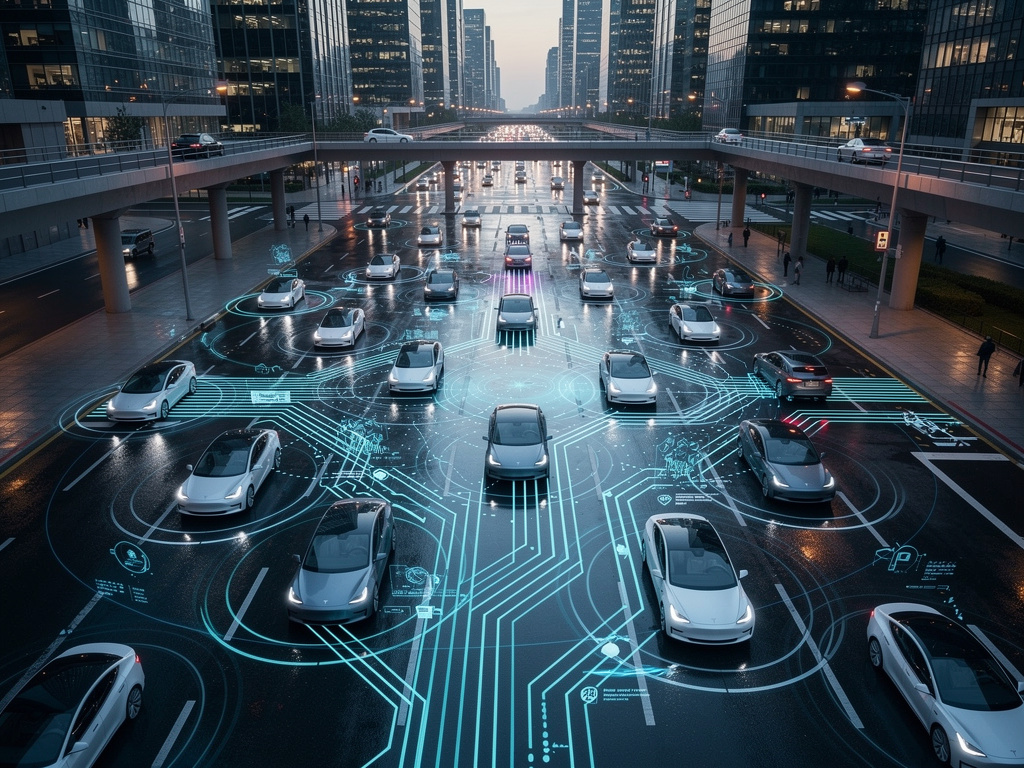
Tesla’s Autonomous Milestone: Billions of Miles Paving the Path to Driverless Urban Realms
Tesla Inc. has long positioned itself at the forefront of autonomous vehicle technology, and recent data underscores just how far the company has come. According to updates from the company’s official Full Self-Driving (FSD) webpage, the fleet equipped with this supervised system is on the cusp of surpassing 7 billion cumulative miles driven. This achievement isn’t just a numerical feat; it represents a massive accumulation of real-world data that’s fueling advancements in artificial intelligence and machine learning for safer, more reliable self-driving capabilities.
Of particular note is the breakdown of these miles: approximately 2.5 billion have been logged on urban streets, environments notorious for their complexity with pedestrians, cyclists, erratic traffic patterns, and unpredictable obstacles. This urban focus is critical because city driving demands a level of sophistication far beyond highway cruising, where variables are fewer and more predictable. Tesla’s emphasis here signals a strategic push toward making FSD viable in everyday scenarios, from quick errands to dense commuter routes.
Industry observers point out that this data trove is invaluable. Each mile contributes to training neural networks that power the system, allowing it to learn from diverse situations and improve over time. Elon Musk, Tesla’s CEO, has repeatedly emphasized the importance of this real-world exposure, arguing that simulation alone can’t replicate the nuances of actual driving conditions.
Urban Challenges and Technological Triumphs
The journey to 7 billion miles hasn’t been without hurdles. Urban settings present unique tests for autonomous systems, including navigating construction zones, interpreting hand signals from traffic directors, and handling sudden jaywalkers. Recent tests, such as those detailed in a CNET article, highlight how Tesla’s latest FSD iterations have managed over 100 miles in San Francisco without driver intervention, showcasing impressive adaptability in one of America’s most chaotic driving arenas.
Comparisons with competitors reveal Tesla’s edge. While companies like Waymo and Cruise focus on geofenced operations in select cities, Tesla’s approach leverages its vast owner fleet to gather data globally. This crowdsourced model accelerates progress, as evidenced by the rapid mile accumulation. For instance, posts on X (formerly Twitter) from users and analysts alike celebrate milestones like coast-to-coast drives with zero interventions, reflecting growing confidence in the technology.
Moreover, software updates continue to refine the system. A review in Electrek praises FSD version 14 for its “mind-blowing” performance, noting smoother navigation and fewer disengagements. These incremental improvements are building toward unsupervised autonomy, a goal Musk has pegged for broader rollout in 2026.
Data-Driven Evolution in City Navigation
Diving deeper into the numbers, the 2.5 billion urban miles represent a significant portion of the total, indicating Tesla’s deliberate shift toward mastering cityscapes. This is crucial for the company’s Robotaxi ambitions, where vehicles must operate seamlessly in metropolitan areas without human oversight. Recent news from Teslarati confirms the fleet’s approach to this milestone, with vehicles navigating everything from bustling downtowns to suburban neighborhoods.
Critics, however, caution that miles alone don’t equate to perfection. Incidents, though rare, still occur, and regulatory scrutiny remains intense. For example, a Forbes piece warns about limitations in complex Los Angeles street layouts, where FSD on the 2026 Model Y occasionally falters. Such reports underscore the need for ongoing vigilance and refinement.
On the positive side, user experiences shared across platforms paint a picture of reliability. One X post from a prominent account highlighted a full coast-to-coast journey completed without interventions, aligning with reports in Teslarati of similar feats. This real-user validation is bolstering Tesla’s narrative that FSD is not just experimental but increasingly practical for daily use.
Regulatory Horizons and Market Implications
As Tesla pushes boundaries, regulatory landscapes are evolving to accommodate these advancements. In 2026, approvals for unsupervised FSD in select markets are anticipated, potentially expanding the technology’s reach. Projections from X discussions suggest fleet expansions, with Robotaxi pilots in cities like Austin scaling up to include company-owned vehicles operating purely autonomously.
Economically, this milestone has ripple effects. Bloomberg’s recent analysis in this article notes that while investor enthusiasm for autonomous tech is high, actual car sales face challenges. Yet, the data accumulation could justify premium pricing for FSD, currently an $8,000 add-on, as evaluated in an Edmunds review after 4,000 miles of testing.
Furthermore, Tesla’s integration of end-to-end neural networks, as seen in updates like V12.5.6 mentioned in X posts, promises more natural driving behaviors. This tech, which handles everything from perception to control without traditional coding, is a game-changer, reducing reliance on hardcoded rules and enhancing adaptability.
Competitive Pressures and Innovation Cycles
In the broader arena of autonomous driving, Tesla’s mile count dwarfs many rivals. Waymo, for instance, reports around 20 million miles, a fraction of Tesla’s figures. This disparity stems from Tesla’s unique model of deploying beta software to consumer vehicles, amassing data at an unprecedented scale. Insights from TradingView News emphasize how this data powers visible progress, making FSD more robust with each iteration.
Challenges persist, particularly in adverse conditions. Bad weather and low-light scenarios test the system’s limits, but updates are addressing these, with features like refined alerts rolling out, as noted in X updates from industry watchers. Tesla’s commitment to over-the-air updates ensures continuous improvement, keeping the fleet at the cutting edge.
Looking ahead, the 2026 horizon includes ambitious targets. X posts speculate on milestones like surpassing 15 billion total miles by year’s end, driven by wider unsupervised approvals and Robotaxi expansions. Such growth could mainstream autonomy, transforming transportation from personal vehicles to shared, efficient networks.
Consumer Adoption and Safety Metrics
Adoption rates are climbing as confidence builds. A Supercar Blondie test expressed shock at FSD’s performance in real-world trials, leaving drivers impressed by its handling of complex scenarios. Safety metrics are improving too; Musk’s claims of interventions dropping to one per 10,000 miles, echoed in X discussions, suggest reliability nearing human levels or better.
Skeptics argue that supervised status means drivers must remain attentive, limiting true autonomy. Yet, the path to unsupervised operation is clear, with pilots in controlled environments paving the way. Tesla’s official site, here, details how FSD can manage most drives under supervision, setting the stage for full independence.
Integration with other Tesla products, like the Cybercab, is on the horizon. X sentiments point to 2026 as a pivotal year for scaling these technologies, potentially revolutionizing urban mobility by reducing congestion and emissions through efficient, autonomous fleets.
Future Trajectories in Autonomous Development
The accumulation of 7 billion miles is more than a statistic; it’s a foundation for future innovations. Tesla’s data advantage positions it to lead in AI-driven transportation, with applications extending beyond cars to trucks like the Semi, which is entering full-scale production. This holistic approach could dominate multiple sectors.
International expansion is another frontier. X posts note FSD’s rollout on three continents, with unsupervised features imminent. This global push will generate even more diverse data, further refining the system for varied road rules and cultural driving norms.
Ultimately, as Tesla crosses this mileage threshold, the implications for society are profound. From reshaping insurance models to enabling new business opportunities in ride-hailing, the ripple effects are vast. While hurdles remain, the trajectory points toward a world where autonomous vehicles are the norm, driven by billions of miles of hard-earned experience.
Economic and Societal Ripples
Economically, Tesla’s progress influences stock performance and investor sentiment. Despite sales outlooks noted in Bloomberg, the euphoria around self-driving tech sustains valuations. The 2.5 billion urban miles specifically bolster arguments for FSD’s value, potentially increasing vehicle utility and resale worth.
Societally, widespread adoption could address issues like traffic fatalities, with autonomous systems promising fewer errors than human drivers. X conversations highlight visions of cars worth 5-10 times more due to autonomy, echoing Musk’s 2019 predictions now materializing.
In closing, Tesla’s march toward 7 billion miles, with a strong urban emphasis, marks a seminal moment in automotive history. By leveraging massive data sets and relentless innovation, the company is not just advancing technology but redefining mobility for the modern era. As 2026 unfolds, expect further breakthroughs that solidify this leadership.


 WebProNews is an iEntry Publication