
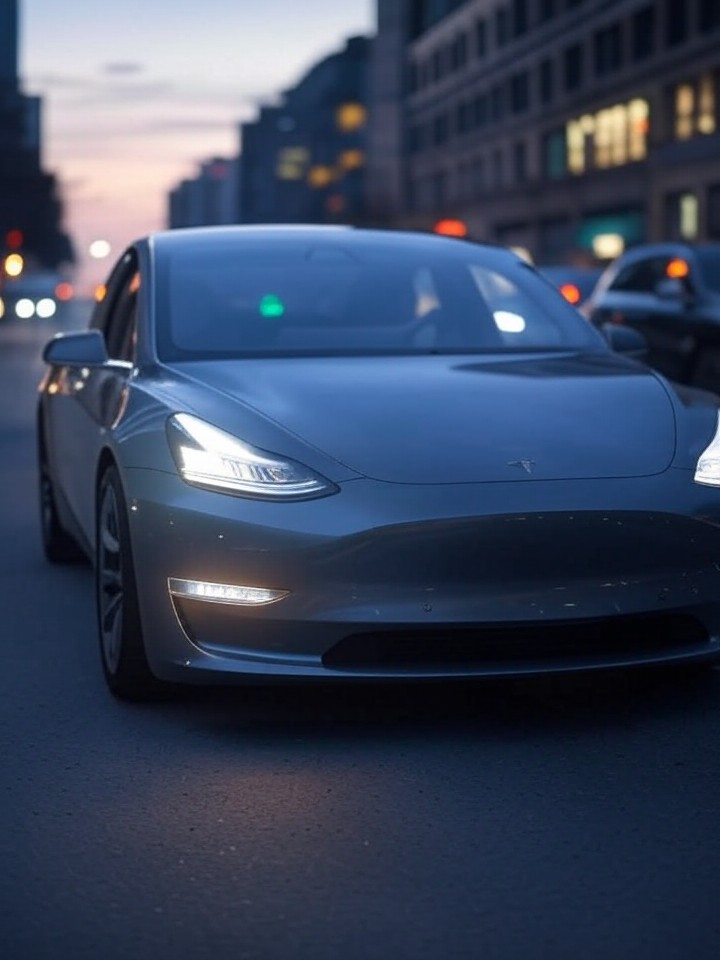
In the ever-evolving realm of autonomous vehicles, Tesla Inc. finds itself once again at the center of scrutiny as CEO Elon Musk’s ambitious timelines for Full Self-Driving (FSD) technology slip further into the future. Recent reports highlight yet another missed deadline: the promise of unsupervised FSD by the end of 2025, coupled with robotaxis serving half the U.S. population. This development underscores a pattern of overpromising that has defined Musk’s leadership at Tesla, raising questions among investors, regulators, and competitors about the feasibility of true autonomy in electric vehicles.
Drawing from the latest updates, Musk’s vision for FSD involves vehicles operating without human intervention, relying solely on cameras, neural networks, and vast datasets. However, as of early 2026, Tesla has not achieved this milestone. Industry observers note that while supervised FSD—requiring driver attention—has seen incremental improvements, the leap to unsupervised operation remains elusive. This gap is not merely technical; it affects Tesla’s market valuation, which often hinges on the allure of revolutionary autonomy.
The missed goals come amid growing competition in the self-driving sector. Companies like Waymo and Cruise have deployed limited robotaxi services, albeit with safety drivers or in geofenced areas. Tesla’s approach, betting everything on vision-based systems without lidar, has been both innovative and controversial. Critics argue that this hardware choice limits robustness in adverse conditions, such as heavy rain or fog, where additional sensors could provide redundancy.
Persistent Challenges in Data and Training
Elon Musk recently estimated that Tesla needs approximately 10 billion miles of real-world driving data to ensure safe unsupervised FSD. This figure, shared in public statements, represents a significant escalation from prior projections and highlights the “long tail” of edge cases that plague AI training. Sources indicate that Tesla’s fleet has accumulated billions of miles through customer opt-ins, but refining this data into reliable algorithms is proving more arduous than anticipated.
Publications like Teslarati have detailed Musk’s updated timeline, emphasizing how the complexity of urban environments demands exponential data growth. For instance, rare scenarios like construction zones or erratic pedestrian behavior require not just quantity but high-quality annotations to train neural networks effectively. Tesla’s end-to-end AI model, which processes raw video inputs directly into driving decisions, aims to mimic human intuition but struggles with consistency.
Moreover, internal testing reveals ongoing issues with intervention rates. While FSD version 12 has shown promise in California, its performance dips in regions with variable weather, as Musk himself acknowledged in past communications. This regional disparity suggests that scaling unsupervised FSD nationwide—or globally—will involve retraining models for diverse geographies, a process that could extend timelines further.
Historical Pattern of Ambitious Projections
Looking back, Musk’s track record on FSD deadlines is a chronicle of optimism unmet. In 2019, he predicted robotaxis by 2020; by 2022, the focus shifted to level 4 autonomy in select cities. A Reuters analysis from 2025 cataloged these unfulfilled promises, noting how they often align with Tesla’s earnings calls or product launches to buoy stock prices. This pattern has drawn regulatory attention, with the National Highway Traffic Safety Administration investigating multiple FSD-related incidents.
Industry insiders point to the technical hurdles as the core issue. Achieving “nine nines” reliability—99.9999999% safety—demands overcoming not just software bugs but also hardware limitations. Tesla’s reliance on its Dojo supercomputer for training underscores the computational intensity, yet competitors like Nvidia are entering the fray with their own AI platforms tailored for autonomy.
Recent posts on X, formerly Twitter, reflect public sentiment, with users expressing frustration over repeated delays. Musk’s own updates on the platform, such as admissions of bugs in pedestrian detection or the need for smoother driving dynamics, reveal iterative fixes but no breakthrough. These glimpses into development highlight a company pushing boundaries, yet perpetually chasing perfection.
Competition Heats Up Amid Delays
As Tesla grapples with these setbacks, rivals are advancing. Nvidia’s recent announcements at CES 2026 showcased their self-driving software stack, prompting Musk to downplay the threat by estimating a five-to-six-year lag before it poses real competition. According to reports from CNBC, Musk argued that legacy automakers would take years to integrate such tech at scale, giving Tesla a head start despite its own hurdles.
This competitive dynamic is crucial for industry watchers. Nvidia’s approach, combining powerful GPUs with software like Drive Orin, appeals to traditional manufacturers like Hyundai, which unveiled humanoid robots potentially integrable with vehicles. Musk’s silence on these developments, as noted in Electrek, suggests a strategic focus on Tesla’s ecosystem, including Optimus robots that could complement FSD in logistics.
However, Tesla’s delays open doors for others. Waymo’s expansion to more cities and GM’s Super Cruise enhancements demonstrate that hybrid sensor suites might offer faster paths to reliability. Analysts suggest Tesla could benefit from partnerships, but Musk’s vision remains purist, betting on software supremacy over hardware diversity.
Regulatory and Ethical Implications
The push for unsupervised FSD isn’t just a technical race; it’s entangled with regulatory frameworks. The Federal Motor Vehicle Safety Standards require rigorous validation for hands-off driving, and Tesla’s over-the-air updates, while innovative, have faced scrutiny after crashes attributed to Autopilot misuse. A deep dive into incident reports shows that while human error often plays a role, the system’s limitations in perceiving complex scenarios amplify risks.
Ethically, the promise of robotaxis serving 50% of the population by 2025 implied widespread accessibility, potentially transforming urban mobility and reducing emissions. Missing this target delays those benefits, leaving cities reliant on ride-hailing services with human drivers. Industry experts, citing data from TipRanks, emphasize that accumulating 10 billion miles safely will require not only customer participation but also transparent reporting to build public trust.
Furthermore, the economic stakes are high. Tesla’s valuation, often inflated by FSD hype, could waver if delays persist. Investors are watching closely, with some hedge funds shorting the stock amid skepticism. Yet, Musk’s charisma continues to rally supporters, as evidenced by enthusiastic discussions on forums like Reddit’s r/electricvehicles, where users debate his “crazy claims” from earnings calls.
Innovation Versus Realism in Autonomy
At its core, Tesla’s FSD journey exemplifies the tension between groundbreaking innovation and practical execution. Musk’s estimates, such as the need for nine months to operationalize new hardware, reflect a methodical—if delayed—approach. Publications like TeslaMagz report on these markers, noting how they evolve with each software iteration.
Comparisons to aviation safety standards are apt; achieving airline-level reliability in cars demands fault-tolerant systems. Tesla’s shift to pure vision in 2021, abandoning radar, was a bold move that initially set back progress but aimed for a scalable solution. Musk’s past tweets on this evolution underscore the philosophy: designing for a world built on visual cues, much like human drivers.
Yet, the “march of nines” Musk describes—a progressive increase in reliability—has been slower than promised. Early betas focused on highway safety, where Autopilot excels, but city streets introduce chaos that AI must master. Training on surround video, without hardware changes to existing fleets, offers hope for retroactive upgrades, a unique Tesla advantage.
Future Prospects and Strategic Shifts
Looking ahead, Tesla may pivot toward hybrid models, integrating limited unsupervised features in controlled environments like Austin, Texas, where empty robotaxis were teased in late 2025 Reddit threads. Musk’s comments on X about solving unsupervised driving “pretty much” suggest internal confidence, tempered by realism about the long tail of complexity.
Competitive pressures could accelerate progress. Nvidia’s foray, as detailed in Decrypt, positions it as a software provider rather than a direct rival, potentially benefiting the entire sector. For Tesla, this means refining its edge in data collection, where its million-plus vehicles act as a rolling sensor network.
Ultimately, the saga of Tesla’s FSD reflects broader themes in tech disruption: visionary goals clashing with engineering realities. As Musk navigates these challenges, the industry watches whether his perpetual promises will finally materialize into a driverless future, or if they’ll remain aspirational milestones on an extended roadmap. With billions of miles still to log, the path forward demands patience, innovation, and perhaps a dose of tempered expectations from all stakeholders involved.


 WebProNews is an iEntry Publication