
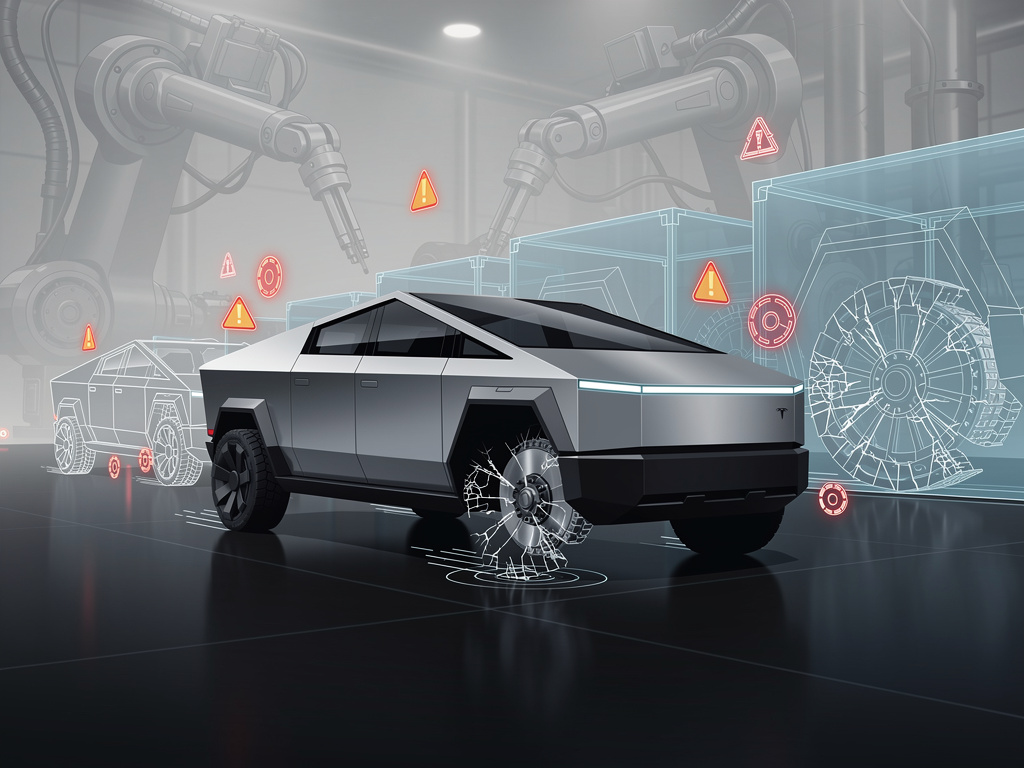
Tesla has recalled 173 Cybertrucks because cracks in their brake rotors could let the wheel studs pull free from the hubs. The vehicles, built with 18-inch steel wheels for rear-wheel-drive versions, risk losing a wheel while driving. Rough roads and hard cornering strain the stud holes. Cracks form. Continued use finishes the job.
The latest action, detailed by AP News, marks the 11th recall for the angular pickup in under two years. No crashes, injuries or deaths have been linked to this defect. Tesla will replace the front and rear brake rotors, hubs and lug nuts at no cost. Owners of affected 2024-2026 models can expect notification soon.
But the problem runs deeper than one batch of parts. Excessive grease on the lug nuts reduces friction. Vibration does the rest. Movement starts. Stress concentrates. The rotor cracks. It sounds almost too simple. Yet here it stands as the latest entry in a growing ledger of fixes for a vehicle once pitched as indestructible.
Earlier troubles drew sharper notice. In April 2024 nearly all delivered Cybertrucks — 3,878 of them — faced a recall after accelerator pedal pads began to dislodge. High force lifted the pad. It lodged in the trim above. The pedal stayed pressed. Unintended acceleration followed. The Wall Street Journal reported that soap used during assembly contributed to the weak bond between pad and pedal. Tesla reworked or replaced the assemblies. The episode drew laughs in some quarters. It also raised eyebrows among engineers who expect better from a company that obsesses over manufacturing precision.
Digital Trends captured the mood in its coverage of the newest recall. “Tesla’s Cybertruck recalls are starting to sound like parody headlines at this point,” the publication wrote. “Because the company’s latest issue reportedly involves something that most drivers generally prefer their vehicles to keep attached at all times: the wheels.” The story, published May 10, 2026, notes how a truck marketed as apocalypse-ready now contends with wheels that may not stay put. The absurdity sticks.
Other fixes have piled up. Stainless steel cantrail panels and light bars have detached. Windshield wipers failed in cold weather. Rearview camera images lagged. Warning text proved too small. Drive inverters needed replacement. Software updates addressed parking lights that shone too brightly. Each time Tesla moved quickly. Over-the-air updates solved some issues. Physical repairs handled others. The sheer volume tells its own story.
Industry watchers point out that recalls happen across every automaker. Ford, General Motors and Stellantis issue them regularly. Yet few vehicles attract the same spotlight as the Cybertruck. Its stainless-steel exoskeleton. Its sharp angles. Its price tag north of $100,000 for many versions. The hype that preceded it. All amplify every glitch. One X user summed up the sentiment this week: the wheels are literally coming off the memestock.
Tesla insists it caught the rotor issue during testing. Pre-production parts showed cracks but no immediate loss of function. Production of the affected trucks began in late August 2025. The company limited the scope to just 173 vehicles equipped with the steel wheels, many of them the discontinued lower-cost rear-drive models. That small number offers comfort to most owners. It does little to quiet questions about quality control on a radically different vehicle.
The Cybertruck’s unique construction sets it apart. Its exoskeleton carries structural loads. Conventional trucks rely on body-on-frame designs with more forgiveness. Tesla chose stainless steel for its durability and corrosion resistance. The material resists dents. It also transmits vibration differently. Add in the heavy battery pack low in the chassis and the powerful electric motors. Forces travel through the suspension and wheels in patterns engineers continue to study.
Suppliers play a role too. Tesla works with fewer traditional parts makers than legacy automakers. It brings more manufacturing in-house. That approach speeds innovation. It can also expose weaknesses when new components meet real-world conditions. The grease on those lug nuts offers a case in point. Too much of it and the clamp load drops. The joint loosens under load. Cracks appear. A detail that might seem minor in a spreadsheet becomes critical at highway speed.
Investors have grown accustomed to the cycle. Tesla shares barely budged on news of the latest recall. The company’s market value rests more on robotaxis, energy storage and artificial intelligence than on pickup truck volume. Cybertruck sales remain modest compared with the Model Y or Model 3. Production ramp has been slower than hoped. Deliveries have disappointed some early buyers who waited years.
Still, the truck finds fans. Its performance impresses. Instant torque. Impressive range in some tests. That signature look turns heads everywhere. Owners post videos of it climbing rocks or powering through snow. They praise the interior and the driving experience. Many say they would buy again. The recalls test their patience.
Regulators keep watch. The National Highway Traffic Safety Administration logs every report. It pushes for timely fixes. So far Tesla has complied. The company notifies owners by mail and through its app. Service centers perform the work. For the rotor recall, the fix involves entirely new hubs and rotors designed to resist cracking better. Higher friction lug nuts should prevent recurrence.
Comparisons to past automotive scandals feel tempting but miss the mark. No lives have been lost in these incidents. No cover-ups have surfaced. Tesla discloses problems faster than many competitors. It often issues voluntary recalls before regulators demand them. That transparency carries a cost in public perception. Every headline reinforces the narrative of a company still learning how to build trucks.
And the learning continues. Tesla has updated its manufacturing processes after each recall. New accelerator pedals use different materials and assembly methods. Trim panels now include additional fasteners. Software gets refined. The question is whether these changes accumulate into genuine maturity or whether new surprises keep appearing as volumes grow.
Recent coverage shows the pattern holds. Wired described the episode as the latest in a string of fixes that make the Cybertruck seem unreliable. TechRadar called it a recall of all budget Cybertrucks over fears wheels might fall off. The headlines write themselves. They also sell papers and drive clicks.
Automotive veterans say the real test lies ahead. As Cybertruck numbers on the road increase, so will exposure to varied conditions. Heat. Cold. Salted winter roads. Heavy loads. Towing. Each adds stress. Tesla must prove the vehicle holds up not just in controlled tests but in millions of miles driven by customers who expect perfection from a brand that once promised it.
For now the fixes roll out. Owners get new parts. The trucks return to the road. Some will shrug it off as the price of owning something radical. Others will see each recall as evidence that the vision outpaced the execution. Both groups watch what comes next. Because with Tesla, there is always a next chapter.
The stainless steel truck that refuses to rust still has plenty to prove. Its wheels, at least for 173 owners, just got a factory guarantee they will stay where they belong.


 WebProNews is an iEntry Publication