
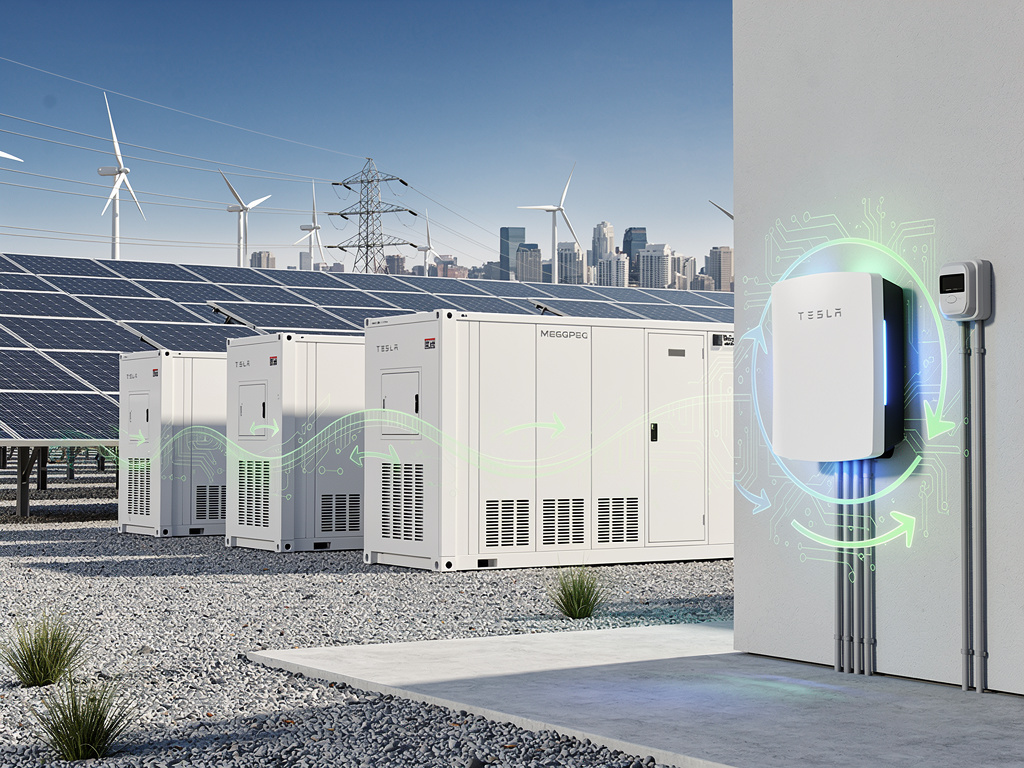
In the realm of renewable energy, Tesla’s battery technology stands as a beacon of practical innovation, offering tangible solutions to some of the planet’s most pressing environmental challenges. By harnessing advanced lithium-ion cells and integrating them into scalable storage systems, Tesla is not just powering electric vehicles but also stabilizing grids and reducing reliance on fossil fuels. This shift could significantly cut global carbon emissions, with estimates suggesting that widespread adoption of such batteries might avert billions of tons of CO2 from entering the atmosphere annually.
At the core of Tesla’s approach is the Powerwall, a home battery system that allows individuals to store solar energy for later use, effectively turning households into mini power plants. This decentralization of energy production mitigates the intermittency issues plaguing renewables like solar and wind, where output fluctuates with weather conditions. Industry experts note that by smoothing these peaks and valleys, Tesla’s batteries enhance grid reliability, potentially preventing blackouts and reducing the need for backup fossil fuel plants.
Beyond residential applications, Tesla’s Megapack systems represent industrial-scale storage that can handle gigawatt-hours of energy, supporting entire communities or data centers. These massive units are deployed in projects worldwide, from Australia’s Hornsdale Power Reserve to California’s Moss Landing facility, demonstrating real-world efficacy in balancing supply and demand. As renewable sources proliferate, such storage becomes indispensable for maintaining energy security without environmental compromise.
Scaling Up for Global Impact
The environmental footprint of Tesla’s batteries extends to their lifecycle, where recycling initiatives aim to recover valuable materials like lithium, cobalt, and nickel, minimizing mining demands. According to a report from Ufine Battery, while extraction processes pose challenges, Tesla’s closed-loop recycling could reduce the ecological strain by reclaiming up to 95% of battery components, fostering a circular economy.
Innovations in 2025 have further bolstered this sustainability narrative. Tesla’s latest Megablock platform, designed for extreme conditions and rapid deployment, promises to accelerate the transition to clean energy infrastructures. Posts on X highlight user enthusiasm for these advancements, with discussions emphasizing how virtual power plants—networks of interconnected Powerwalls—have already output 1.6 terawatts of clean energy this year, saving billions in electricity costs.
Critics, however, point to the upstream impacts, such as the carbon emissions from battery production. A study detailed in PatentPC reveals that manufacturing one electric vehicle battery can emit up to 15 tons of CO2, though this is offset over the battery’s lifespan through avoided fossil fuel use. Tesla counters this by optimizing factories with renewable energy sources, aiming for net-zero operations by 2040.
Bridging Renewables and Reliability
Tesla’s strategy aligns with broader goals of energy independence, particularly in regions vulnerable to climate disruptions. By storing excess renewable energy during peak production and releasing it during high demand, these batteries help integrate more solar and wind into the mix without destabilizing grids. This is evident in virtual power plant events, where aggregated home batteries have supported over 89,000 grid-stabilizing operations in 2025 alone, as shared in various online forums.
Looking ahead, Tesla’s push into regenerative energy systems, including breakthroughs in battery chemistry, could enhance efficiency. The company’s 2025 sustainability report, as covered by The Sustainable Innovation, outlines plans for net-zero emissions by mid-century, with circular recycling at the forefront. This involves advanced hydrometallurgical processes that extract metals with lower energy inputs, reducing overall environmental harm.
Moreover, Tesla’s influence extends to policy and market dynamics. Incentives like the U.S. Inflation Reduction Act have spurred domestic battery production, decreasing reliance on foreign supply chains prone to ethical and ecological issues. Industry analyses suggest this could lead to a 90% drop in battery costs over the past decade, making sustainable energy more accessible globally.
Innovations Driving Decarbonization
One of the most promising aspects is Tesla’s role in powering emerging technologies, such as AI data centers, which demand constant, reliable energy. X posts from industry observers note that Megapacks could meet up to 2.3 terawatts of annual storage needs, positioning Tesla as a key player in the AI boom without escalating carbon footprints. This integration ensures that high-tech growth doesn’t come at the expense of planetary health.
Environmental advocates praise Tesla for addressing water stewardship in manufacturing, a critical yet often overlooked factor. Factories like the one in Nevada employ closed-loop water systems, recycling up to 90% of process water, as detailed in sustainability assessments. This conserves resources in arid regions, where traditional energy production—think coal plants—consumes vast amounts of water for cooling.
Challenges persist, including the scalability of raw material sourcing. With demand for lithium surging, Tesla is investing in ethical mining partnerships and exploring alternatives like sodium-ion batteries, which could lessen dependence on scarce elements. Recent news from AltEnergyMag highlights market trends toward such innovations, projecting exponential growth in sustainable storage solutions.
From Grid Support to Global Resilience
Tesla’s batteries also play a vital role in disaster resilience, providing backup power during outages caused by extreme weather events amplified by climate change. In 2025, Powerwall systems powered homes through 6.5 million outages, underscoring their utility in building adaptive energy networks. This capability not only saves lives but also reduces economic losses from downtime, estimated in the trillions globally.
On the international stage, Tesla’s deployments in developing nations are accelerating electrification without the pollution of diesel generators. Projects in sub-Saharan Africa, for instance, combine solar arrays with Megapacks to deliver off-grid power, leapfrogging outdated infrastructure. Such initiatives align with United Nations sustainable development goals, potentially lifting millions out of energy poverty.
Furthermore, the economic ripple effects are profound. By lowering energy costs and creating jobs in green tech, Tesla fosters a virtuous cycle of investment and innovation. Analysts project that the battery market could reach trillions in value by 2030, with Tesla capturing a significant share through its integrated ecosystem of vehicles, solar, and storage.
Overcoming Hurdles in Material Sourcing
Despite these advances, the environmental impact of mining remains a flashpoint. Reports indicate that cobalt extraction, often in conflict zones, poses human rights risks. Tesla has responded by auditing suppliers and shifting toward cobalt-free chemistries, as outlined in their impact reports. This proactive stance sets a benchmark for the industry, encouraging competitors to follow suit.
Innovative recycling technologies are key to mitigating these issues. Emerging methods, such as those explored in Analytics Insight, promise higher recovery rates with minimal emissions, turning end-of-life batteries into resources rather than waste. Tesla’s Nevada Gigafactory is piloting such processes, aiming for full-scale implementation by 2026.
Public sentiment, gauged from social media, reflects growing optimism. Discussions on platforms like X emphasize Tesla’s leadership in avoiding gigatons of fossil fuel extraction annually, with users citing the company’s data on requiring only three gigatons of mining post-transition to sustainable economies.
Policy and Market Synergies
Government policies are amplifying Tesla’s impact. In the U.S., tax credits for energy storage have spurred installations, while Europe’s Green Deal incentivizes similar technologies. These frameworks create fertile ground for Tesla’s expansion, potentially leading to widespread adoption that curbs global warming to below 2 degrees Celsius.
Collaboration with utilities is another accelerator. Virtual power plants, where thousands of batteries act in concert, have demonstrated peak-shaving capabilities, reducing the need for new power plants. This model, scalable to national levels, could transform how energy is managed worldwide.
Tesla’s vision extends to futuristic yet feasible applications, like powering autonomous fleets or even space missions, but the real power lies in immediate, earthly benefits. By addressing energy inequities and environmental degradation, these batteries offer a blueprint for a resilient future.
Vision for a Sustainable Horizon
As 2025 draws to a close, Tesla’s battery innovations continue to evolve, with announcements of salt-air alternatives and sand-based storage gaining traction in news cycles. While not Tesla-specific, these developments complement the company’s ecosystem, broadening the toolkit for sustainability.
The interplay between technology and ecology is evident in Tesla’s net-zero ambitions, which include regenerative braking in vehicles that feeds energy back into batteries, enhancing overall efficiency. This holistic approach minimizes waste across the value chain.
Ultimately, Tesla’s batteries embody a realistic pathway to saving the world—not through miracles, but through engineered precision and scalable deployment. By weaving together innovation, policy, and market forces, they pave the way for a cleaner, more equitable energy future, one charge at a time.


 WebProNews is an iEntry Publication