
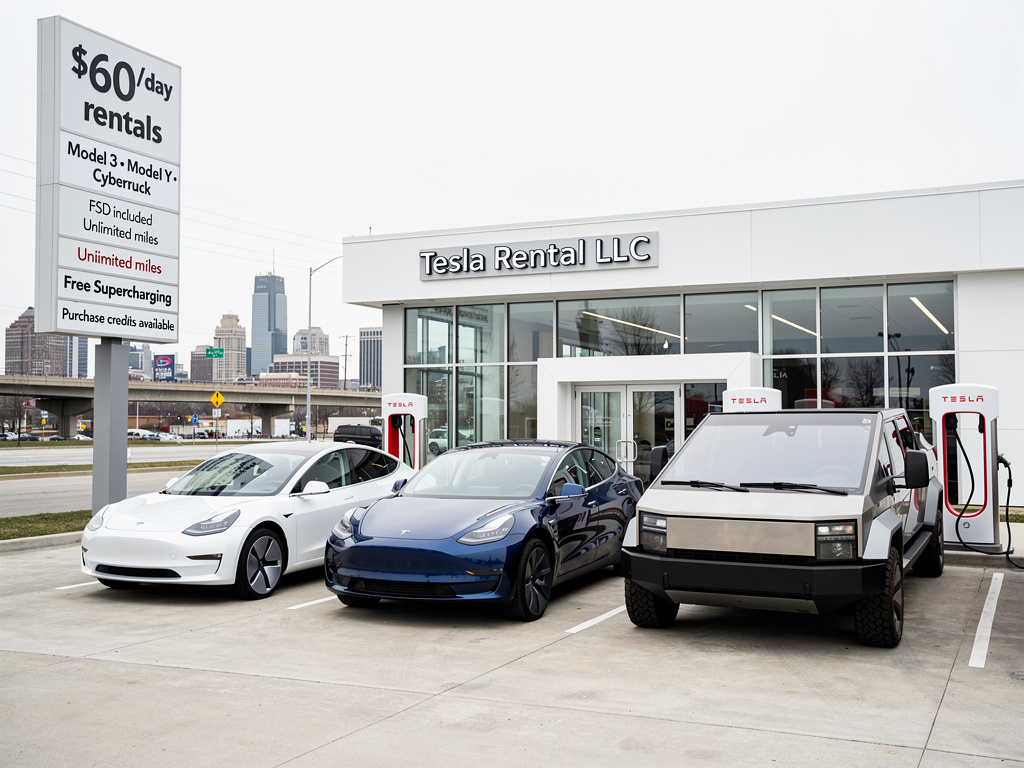
Tesla Inc. is planting its flag in the heart of America’s auto industry with a direct-to-consumer rental program in Michigan, offering Model 3 and Model Y vehicles for as little as $60 a day. The electric-vehicle maker registered Tesla Rental LLC with the state, signaling an imminent rollout that bypasses traditional dealerships and rental intermediaries. This move comes amid Tesla’s aggressive push to expand trial experiences for its Full Self-Driving software and boost conversion to outright purchases.
Posts on X from industry watcher Mario Nawfal highlighted the filing, noting rates of $60 daily for compact models, $75 for Cybertruck, and $90 for flagship Model S and X variants. All rentals include unlimited mileage, complimentary Supercharging, and access to advanced driver-assistance features. Maximum duration is seven days, with vehicles restricted to in-state use, and renters ordering a new Tesla within a week post-return receive a $250 credit. (Mario Nawfal on X)
Tesla’s Calculated Midwest Expansion
The initiative follows successful pilots in states like California, Texas, Massachusetts, Tennessee, and Arizona. Not a Tesla App reported the Michigan expansion on December 31, 2025, describing it as a strategy to ‘disrupt the local market and boost sales conversion’ through affordable FSD trials. Drive Tesla Canada detailed the regulatory filing, confirming Tesla’s preparation for a fleet operated without dealer involvement. (Not a Tesla App; Drive Tesla Canada)
Road & Track covered the program’s national launch in November 2025, emphasizing how $60 starting rates allow week-long tests of supervised autonomy features. Longbridge noted strong California demand driving the Midwest push, with the service enabling direct app-based access to Tesla’s ecosystem. This direct model eliminates commissions, enabling prices that undercut rivals like Hertz, which previously partnered with Tesla but faced inventory challenges. (Road & Track; Longbridge)
Strategic Pricing and Perks Breakdown
For industry observers, the pricing tiers reveal Tesla’s segmentation strategy. Model 3 and Y at $60 position mass-market EVs as accessible entry points, Cybertruck at $75 capitalizes on its polarizing appeal, and luxury S/X at $90 target premium renters. Unlimited miles and free Supercharging address common EV hesitations, while bundled Autopilot and FSD Supervised provide real-world validation data for Tesla’s AI training loops.
Not a Tesla App’s earlier coverage of the broader rollout underscored inclusions like remote preconditioning via the Tesla app and minimal maintenance needs. Tesla’s own site lists current incentives, though rentals stand apart as a no-commitment gateway. X posts from Tesla emphasize app integration for keyless entry and charge tracking, mirroring ownership perks. (Not a Tesla App; Tesla)
Disrupting Dealership Strongholds
Michigan’s selection is no coincidence—home to General Motors Co., Ford Motor Co., and Stellantis NV, the state mandates dealer networks that Tesla has long circumvented via direct sales. By launching Tesla Rental LLC, the company avoids these strictures, operating its fleet akin to an in-house Turo rival. TeslaMagz reported the filing outlines daily rates starting at $60, positioning it as a ‘power move’ against incumbents.
This fleet strategy feeds Tesla’s data flywheel: Renters generate unsupervised driving miles, refining neural networks for robotaxi ambitions. Recent X sentiment from accounts like Not a Tesla App amplifies buzz, with updates confirming Michigan’s inclusion alongside potential expansions to other states. Tesla North noted filings for two new states as of January 1, 2026, hinting at accelerating rollout. (TeslaMagz; Tesla North)
FSD Trials as Conversion Engine
Central to the program is FSD Supervised, enabling renters to experience highway navigation, automatic parking, and urban maneuvering. Road & Track quoted testers praising the ‘full experience’ for just $60 daily, up to a week. Not a Tesla App highlighted a $250 purchase credit, directly linking trials to sales—a tactic mirroring software test-drives in tech sectors.
Data from existing markets shows efficacy: High conversion rates reported in California stem from hands-on exposure dispelling range anxiety. Longbridge filings indicate no launch date yet, but regulatory approval paves the way for early 2026 operations, potentially overlapping CES announcements. (Not a Tesla App on X)
Competitive Pressures Mount in Detroit
Legacy players face intensified scrutiny. While GM and Ford invest billions in EVs, Tesla’s rentals offer unmediated proof-of-concept at disruptive pricing. X discussions from Mario Nawfal frame it as Tesla ‘reminding legacy carmakers who actually runs this space,’ with Detroit ‘playing catch-up.’ Hertz’s past Tesla rentals suffered from high damage rates and resale woes, contrasting Tesla’s controlled fleet.
Tesla’s vertical integration—manufacturing, charging, software—enables margins unattainable by franchise-dependent rivals. Recent incentives like 0% APR leases on Model Y further pressure inventory, per Not a Tesla App. Michigan renters testing Cybertruck amid $75 rates could sway pickup buyers from Ford F-150 Lightning or GM Silverado EV. (Not a Tesla App)
Fleet Operations and Regulatory Navigation
Operated via the Tesla app, rentals feature seamless pickup from service centers, GPS geofencing for state limits, and automated returns. Drive Tesla Canada filings confirm no third-party involvement, preserving data privacy and quality control. Tesla’s experience with Hertz partnerships informed this in-house pivot, avoiding intermediary markups.
As of January 2, 2026, no official launch date from Tesla, but filings suggest imminent availability. X chatter predicts rapid uptake, with posts noting Model Y Standard leasing expansions complementing rentals. This hybrid approach—rent-to-own pathways—positions Tesla as a mobility platform beyond mere vehicle sales. (Tesla North)
Broader Implications for EV Adoption
The program accelerates EV familiarization in a Midwest market skeptical of battery tech amid harsh winters. Free Supercharging mitigates cold-weather range loss, a key differentiator. Not a Tesla App’s analysis ties rentals to FSD data gathering, with geofenced unsupervised zones expanding training datasets for unsupervised autonomy.
For insiders, metrics matter: Expect Tesla to disclose rental-to-sale conversions in Q1 earnings, alongside Cybertruck volume ramps. As Michigan debuts, watch for copycat moves from Rivian or Lucid, though few match Tesla’s infrastructure. This rental offensive underscores Elon Musk’s playbook: Scale through experience, not ads.


 WebProNews is an iEntry Publication