
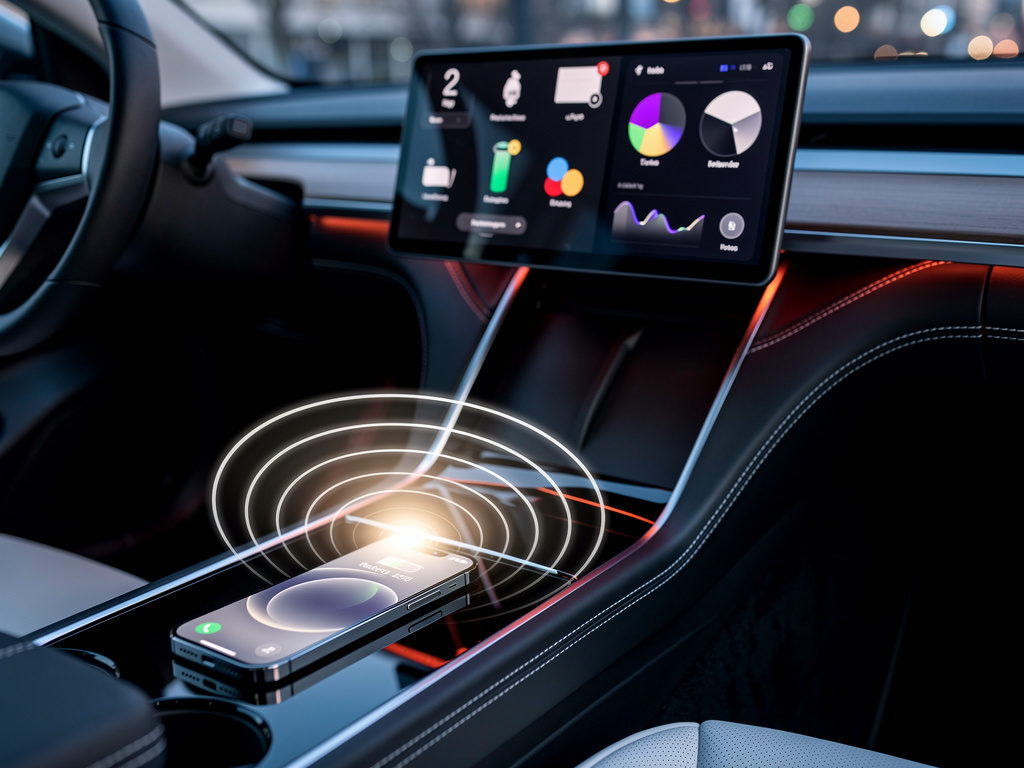
In the ever-evolving world of automotive technology, Tesla Inc. continues to push boundaries with software updates that blend convenience, safety, and a touch of whimsy. The latest buzz centers on a seemingly simple yet profoundly practical feature: an alert system designed to prevent drivers from leaving their smartphones behind in the vehicle. Announced as part of the 2025 Holiday Update, this innovation arrives at a time when our reliance on mobile devices has never been greater, turning what might seem like a minor annoyance into a potential daily crisis for forgetful owners.
According to details shared in a recent article by Digital Trends, the feature triggers a chime from the car’s external speakers if it detects a connected phone left inside after the driver exits. This isn’t just an auditory nudge; it’s accompanied by flashing hazard lights and notifications on both the vehicle’s screen and the owner’s mobile app—assuming, of course, the phone isn’t the one forgotten. Tesla’s approach leverages ultra-wideband (UWB) technology, which has been incrementally integrated into its vehicles since early 2024, allowing for precise location tracking of devices.
This development builds on Tesla’s history of over-the-air (OTA) updates that enhance user experience without requiring hardware changes. Industry observers note that such features underscore Tesla’s software-first philosophy, where vehicles are treated more like evolving gadgets than static machines. Posts found on X highlight user excitement, with several Tesla owners sharing experiences of testing similar alert systems in beta, praising the seamless integration that could save time and reduce the frustration of retracing steps to a parked car.
Enhancing Connectivity Through Precision Tech
At the core of this phone alert is UWB, a short-range wireless communication protocol that offers centimeter-level accuracy in locating devices. Unlike traditional Bluetooth, which can be imprecise in crowded environments like parking lots, UWB enables the car to determine not just if a phone is present, but exactly where it is—whether tucked in a cup holder or buried under a seat. Tesla began rolling out UWB support for phone keys in software update 2024.2.3, as detailed in coverage from Not a Tesla App, marking a shift toward more reliable digital interactions.
The 2025 Holiday Update, officially unveiled by Tesla just days ago, packages this alert alongside other enhancements like Grok navigation commands and a refreshed Santa Mode, according to an announcement reported by Electrek. While the update isn’t as expansive as some previous holiday releases—lacking highly anticipated additions like Apple CarPlay integration—it emphasizes practical improvements. For instance, the phone alert complements existing features like automatic siren detection, which lowers media volume and displays warnings when emergency vehicles approach, a capability first teased in April 2025 and now standard across models.
Insiders point out that this isn’t Tesla’s first foray into forgetfulness prevention. Earlier iterations included reminders for items like child seats or pets via the app, but the phone-specific chime represents a targeted evolution. Data from user forums and X posts suggest that forgotten phones are a common issue, with some owners recounting stories of locking themselves out or facing security risks when devices are left unattended in vehicles equipped with Sentry Mode, Tesla’s advanced surveillance system.
Broader Implications for Vehicle-User Bonds
The introduction of this feature raises intriguing questions about the deepening symbiosis between cars and personal devices. In an era where smartphones serve as keys, wallets, and navigation hubs, leaving one behind isn’t just inconvenient—it’s a disruption to modern life. Tesla’s system uses the vehicle’s onboard sensors and the Tesla app to monitor phone presence post-exit, triggering alerts only when necessary to avoid notification fatigue. This thoughtful calibration, as explored in release notes from Not a Tesla App’s software updates page, ensures the feature enhances rather than overwhelms the driving experience.
Comparatively, other automakers have dabbled in similar tech, but Tesla’s implementation stands out for its OTA delivery and integration with existing ecosystems. For example, Apple’s Find My network has long helped locate misplaced iPhones, but embedding such awareness directly into a vehicle ecosystem is a novel twist. Industry analysts argue this could set a precedent, pressuring competitors like Ford or GM to accelerate their connected-car features, especially as electric vehicles increasingly rely on app-based controls.
Moreover, the alert ties into broader safety narratives. Forgotten phones can lead to distracted returns to the vehicle, potentially in unsafe areas, or even security breaches if sensitive data is accessed. Tesla’s history with features like Sentry Mode, which records surroundings and alerts owners to potential threats, positions this new chime as an extension of that protective ethos. Recent X posts from Tesla enthusiasts describe it as a “delightful surprise,” emphasizing how it aligns with the company’s ethos of continuous improvement through software.
Technological Underpinnings and Future Horizons
Diving deeper into the tech, the phone alert relies on a combination of Bluetooth Low Energy (BLE) for initial detection and UWB for confirmation, ensuring low power consumption while maintaining accuracy. This is particularly relevant for newer Tesla models like the Model 3 and Model Y, which have hardware optimized for such protocols. As per insights from Not a Tesla App’s coverage of related visualizations, the update also includes 3D Supercharger maps and wireless charging toggles, suggesting a holistic push toward smarter device interactions.
Looking ahead, this feature could evolve into more proactive systems. Imagine a car that not only alerts for forgotten phones but also integrates with smart home devices to remind users of other items, like wallets or keys, using AI-driven pattern recognition. Elon Musk, Tesla’s CEO, has hinted at such expansions in past statements, and the inclusion of Grok commands in this update—allowing voice-activated navigation—points to a future where vehicles anticipate needs intuitively. However, challenges remain, including privacy concerns over constant device tracking, which Tesla mitigates through user-configurable settings.
User feedback, gleaned from X posts, indicates high anticipation, with owners speculating on how this might integrate with Full Self-Driving (FSD) capabilities. For instance, in congested urban settings, the alert could prevent mishaps during autonomous parking, ensuring drivers aren’t separated from their devices mid-journey. This aligns with Tesla’s ongoing FSD updates, like the recent v14.2 rollout that added self-driving stats, as reported in Tesla Oracle.
Industry Ripples and Consumer Adoption
The rollout of the 2025 Holiday Update, expected to begin imminently for compatible vehicles, comes amid Tesla’s push to maintain its edge in a competitive market. With over 6 million vehicles on the road capable of receiving OTA updates, the scale of deployment is massive. Electrek’s analysis notes that while this year’s holiday package is more subdued, features like the phone alert address everyday pain points, potentially boosting owner satisfaction and loyalty.
Critics, however, question whether such additions distract from core issues like build quality or charging infrastructure. Yet, for industry insiders, this exemplifies Tesla’s agility—transforming vehicles into dynamic platforms that adapt to user behaviors. Comparisons to smartphone ecosystems are apt; just as Apple or Google push notifications for low battery or location sharing, Tesla is crafting a similar “ecosystem awareness” for mobility.
Adoption rates will be telling. Early testers, as shared in X posts, report the chime as unobtrusive yet effective, with some suggesting customizable tones or integration with wearables like smartwatches. This could open doors to partnerships, perhaps with phone manufacturers, to standardize cross-device alerts.
Strategic Positioning in a Connected Era
Tesla’s emphasis on such features isn’t isolated; it’s part of a strategy to make vehicles indispensable hubs in daily life. The phone alert, for instance, dovetails with app updates that include directional arrows for locating parked cars, mimicking AirTag functionality, as highlighted in recent Tesla-mag.com coverage for UK users. This precision enhances urban navigation, reducing the time spent wandering lots.
Furthermore, in the context of autonomous driving, ensuring device connectivity is crucial. With FSD advancements allowing “eyes-off” operation in limited scenarios—albeit with legal caveats, as discussed in Technology.org—a forgotten phone could interrupt remote monitoring or emergency overrides. Tesla’s alert mitigates this, reinforcing trust in semi-autonomous systems.
Economically, these updates drive value. By continuously adding features via software, Tesla extends vehicle lifespans and justifies premium pricing. Analysts estimate that OTA capabilities contribute significantly to customer retention, with surveys showing high satisfaction among owners who receive regular enhancements.
Pioneering User-Centric Innovations
As Tesla forges ahead, the phone alert serves as a microcosm of its innovation pipeline. It draws from user pain points, refined through data from millions of connected vehicles. Not a Tesla App’s upcoming features list anticipates even more integrations, like expanded Photobooth apps or dashcam overlays, building on this foundation.
Privacy remains a key consideration. Tesla assures users that data from UWB tracking isn’t stored beyond immediate use, aligning with regulations like GDPR. Still, as devices become more intertwined, ethical questions arise—how much should a car “know” about its occupants?
Ultimately, this feature encapsulates Tesla’s vision: turning potential oversights into seamless experiences. For industry watchers, it’s a reminder that in the race for smarter mobility, the smallest details can drive the biggest loyalties, setting the stage for a future where forgetting your phone in the car becomes a relic of the past.


 WebProNews is an iEntry Publication