
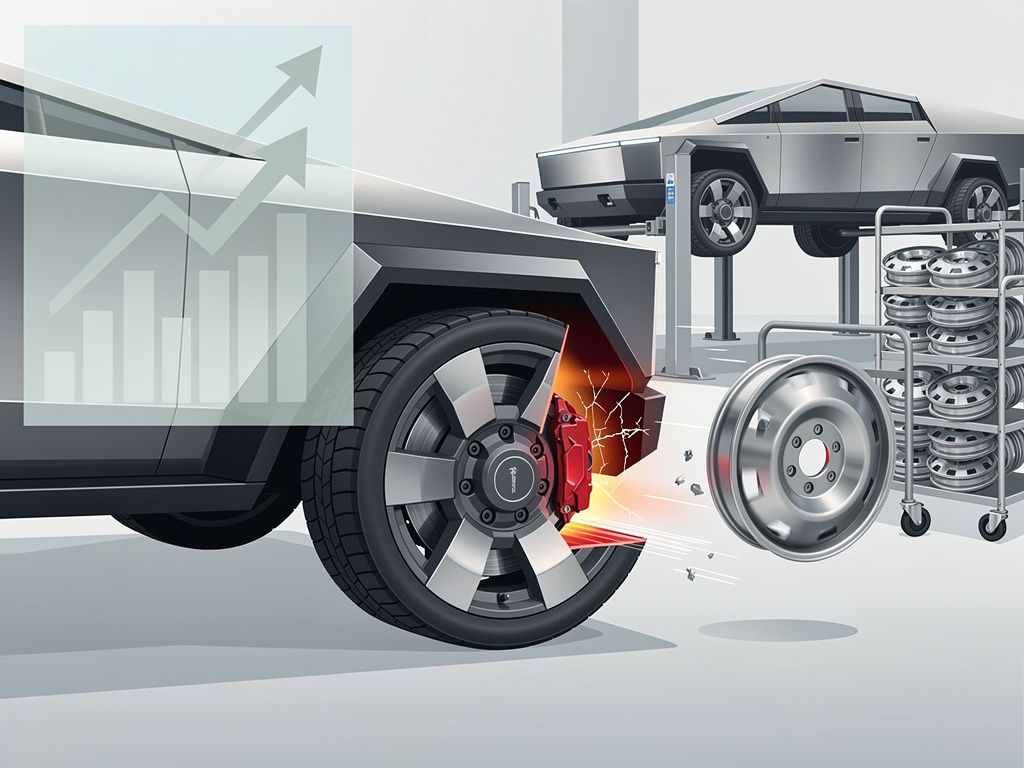
Tesla faces yet another safety recall on its angular electric pickup. This time the problem strikes at something fundamental. Wheels might detach while driving.
The National Highway Traffic Safety Administration documented the campaign in late April 2026. It covers 173 Cybertrucks from model years 2024-2026 fitted with 18-inch steel wheels. The defect sits in the brake rotors. Holes for the wheel studs can crack under stress from rough roads or hard cornering. Those cracks widen. Studs separate from the hub. Control erodes. A wheel can come off.
Owners might first notice vibration or unusual noise from inside the cabin. But the failure can progress without obvious warning. Tesla reports one confirmed field case of rotor cracking discovered after a driver complained of braking pulsations. Three warranty claims may tie to the same condition. No crashes, injuries or deaths have surfaced.
The Technical Failure and How It Slipped Through
Tesla spotted rotor cracking during pre-production testing. All studs held. No loss of vehicle function occurred in those trials. Engineers prepared design changes. Yet a change management error allowed production to start on August 28, 2025, without the fixes. The flaw later appeared in customer vehicles.
By November 5, 2025, Tesla had linked the service report to the issue. Production of trucks with the 18-inch steel wheels halted the same month. The company cited limited demand. That single phrase in the NHTSA filing tells a larger story.
The recalled trucks represent the short-lived rear-wheel-drive Cybertruck variant. Launched in April 2025 at a starting price near $70,000, it dropped several features found on pricier all-wheel-drive models. Buyers could choose 18-inch steel wheels or optional 20-inch versions. Most apparently passed on the base wheels. Or passed on the truck altogether. MotorTrend analysis of the recall size concluded that Tesla sold only 173 RWD units with those wheels before discontinuation. A shockingly low figure for a vehicle once hyped as a high-volume contender.
Gizmodo first connected the recall numbers to the budget model’s fate in its May 8, 2026, report. The piece noted how the filing revealed production stopped because of “limited demand of Cybertrucks equipped with 18-inch steel wheels.” Tesla did not respond to requests for comment at the time.
But this recall stands apart from the truck’s earlier troubles. Previous campaigns addressed accelerator pedal entrapment, panel detachment, bright parking lights, wiper failures and more. The vehicle has logged at least 10 recalls since launch. Each one chips at perceptions of quality on a truck built with radical stainless-steel exoskeleton and steer-by-wire technology in some configurations.
Kelley Blue Book detailed the remedy on May 7, 2026. Tesla will replace front and rear brake rotors, wheel hubs and all lug nuts at no cost. The new rotors feature improved design. Lug nuts carry higher friction coating. Service centers received instructions April 24, 2026. Owner letters go out by June 20, 2026. Affected vehicles may also include some that received replacement rotors during service.
Not a Tesla App broke down the scope further in its April 30 coverage. The recall touches trucks built between March 21, 2024, and November 25, 2025. It confirms the RWD trim’s brief run and poor uptake. The base model lasted barely three months on the market before cancellation.
Industry watchers see broader implications. Tesla reports Cybertruck deliveries inside an “other models” bucket alongside the low-volume S and X. Exact quarterly figures stay opaque. Yet 173 units tied to one wheel option suggest the RWD version never gained traction. Price sensitivity in the premium truck segment? Range anxiety on rear-drive configuration? Or simple sticker shock combined with the polarizing design. The recall shines an unforgiving light on all possibilities.
Recent coverage echoes the concern. Carscoops reported three days ago that Tesla is recalling all 173 cheap Cybertrucks because their wheels can fall off. The piece highlighted that some serviced vehicles might carry the same faulty rotors. TechRadar noted the action recalls every budget variant produced. Both outlets stressed the safety risk without exaggeration.
Owners of affected trucks should watch for those early symptoms. Vibration. Noise. Braking feel changes. Tesla urges immediate service if they appear. The company maintains the overall fleet remains safe. No evidence suggests widespread failure. Still, for a vehicle positioned as durable enough for apocalypse or construction site alike, the optics sting.
The episode also raises questions about Tesla’s manufacturing rigor on a product that reached customers with visible fit-and-finish issues from day one. Stainless steel body panels. Sharp edges. Complex assembly at Gigafactory Texas. Each recall adds data points to a pattern critics track closely.
Yet Tesla moves fast. Software updates fix many problems remotely. Hardware campaigns like this one require shop visits. The company has scaled service capacity. It promises free repairs completed promptly. For the 173 owners, the fix should restore confidence. For the brand, the low recall count simultaneously masks and reveals uncomfortable truths about demand.
Production of the RWD model ended quietly. Focus shifted to higher-spec versions with better range and features. The 18-inch steel wheel option, once standard on the entry model, now carries extra scrutiny. Future Cybertrucks will incorporate the revised rotors and hubs from the start. That much seems certain.
So the recall closes one chapter. It exposes a specific manufacturing oversight. It quantifies weak interest in the cheapest Cybertruck. And it adds to the growing list of corrections Tesla has issued for its flagship new product. The truck continues to sell in modest volumes overall. Its cultural footprint remains outsized. But questions about long-term reliability and market fit refuse to fade.
Drivers who kept their RWD trucks with steel wheels now wait for letters. Others watch the coverage with a mix of concern and dark humor. Wheels coming off. The phrase writes its own headlines. For Tesla, turning the page means proving the fix holds and that future builds avoid similar slips. The road ahead stays bumpy. Literally and figuratively.


 WebProNews is an iEntry Publication