
Tesla’s 4680 Battery Chain Reaction: A Supplier’s Near-Total Write-Down Signals Deeper Cracks
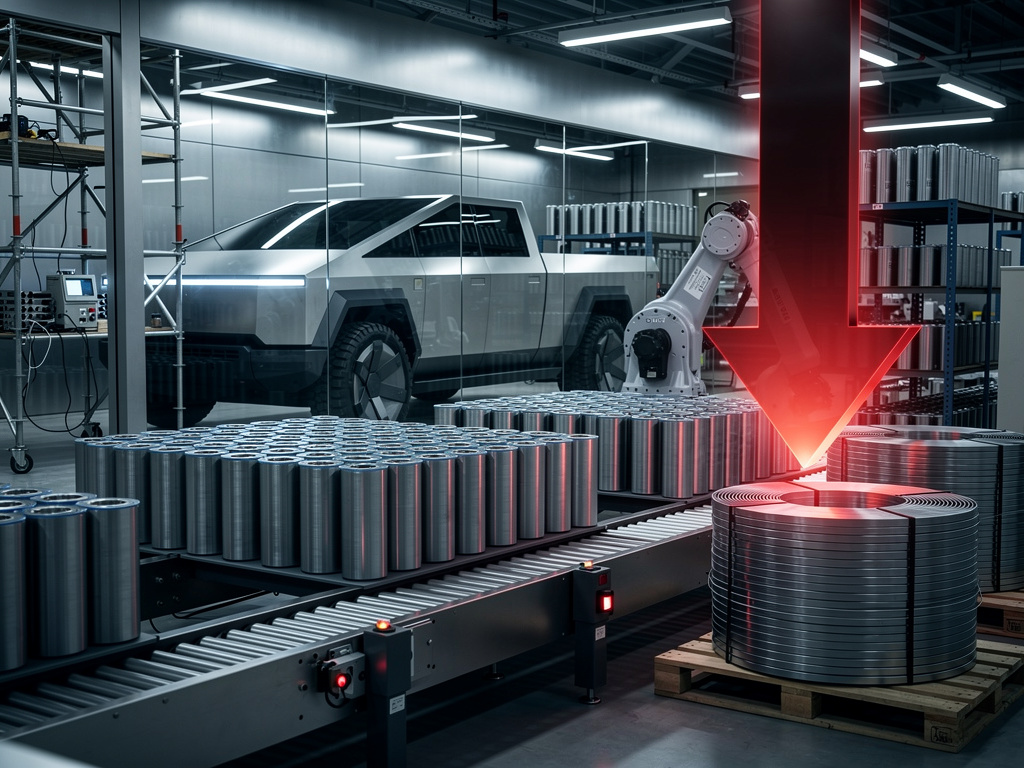
In a stunning turn of events that has sent shockwaves through the electric vehicle sector, a key supplier to Tesla Inc. has drastically slashed the value of its supply agreement, highlighting potential vulnerabilities in the company’s ambitious 4680 battery program. South Korean battery material maker L&F Co. announced on Monday that its 2023 deal with Tesla, initially projected at $2.9 billion, has been reduced to a mere $7,386—a staggering 99% write-down. This development, first reported by Electrek, underscores the challenges Tesla faces in scaling its next-generation battery technology, which was unveiled with much fanfare in 2020.
The 4680 cells, named for their 46mm diameter and 80mm height, were positioned by Tesla CEO Elon Musk as a game-changer for electric vehicles, promising higher energy density, lower costs, and faster production. However, the path to mass adoption has been fraught with hurdles, including production delays and performance inconsistencies. L&F’s announcement, which involves high-nickel cathode materials intended for these cells, suggests that Tesla’s demand has plummeted far below expectations. Without specifying reasons, the supplier’s filing indicates a “catastrophic drop” in orders, as noted in related coverage.
This isn’t an isolated incident. Tesla’s efforts to ramp up 4680 production have encountered repeated setbacks. Earlier in 2024, reports emerged that the company was contemplating halting output at its Giga Texas facility due to cost and performance issues, according to EnergyTrend. Despite these challenges, Tesla had celebrated milestones, such as surpassing cost-reduction targets in April 2025, as detailed in Teslarati. Yet, the latest supplier fallout paints a picture of a program struggling to maintain momentum amid fluctuating demand and supply chain pressures.
Unraveling the Supply Agreement and Its Implications
The original agreement between L&F and Tesla, signed in 2023, was set to run from January 2024 through December 2025, focusing on cathode materials crucial for the 4680’s high-nickel chemistry. This chemistry is essential for achieving the battery’s touted advantages, including extended range and reduced reliance on expensive raw materials like cobalt. However, the drastic revision to the deal’s value raises questions about Tesla’s internal production capabilities and market demand for vehicles like the Cybertruck, which relies heavily on these cells.
Industry analysts point to several factors that may have contributed to this collapse. One is the broader slowdown in electric vehicle sales, which has forced automakers to reassess inventory and production plans. Tesla, in particular, has faced headwinds from increased competition and economic uncertainties, leading to lower-than-expected Cybertruck deliveries. Posts on X, formerly Twitter, from users tracking Tesla’s progress have echoed sentiments of disappointment, with some speculating that production bottlenecks at facilities like Kato Road have exacerbated the issue.
Moreover, the write-down aligns with reports of other suppliers adjusting their ties with Tesla. For instance, LG Energy Solution reportedly canceled its 4680 supply plans in July 2025, as mentioned in various online discussions. This pattern suggests a reevaluation of partnerships as Tesla pushes for in-house manufacturing to control costs and quality. Yet, this strategy appears to be straining external relationships, potentially leaving suppliers like L&F with excess capacity and financial hits.
Historical Context of the 4680 Program’s Turbulent Journey
To understand the current crisis, it’s worth revisiting the 4680’s origins. Announced at Tesla’s Battery Day in September 2020, the cylindrical cells were hailed for innovations like tabless design and dry electrode coating, which promised to slash manufacturing costs by up to 50%. Initial production began at a pilot line in Fremont, California, with expansion to Giga Texas. By 2022, Tesla’s impact report, available on their official site, outlined ambitious goals for vertical integration in battery production.
However, teardowns and analyses in subsequent years revealed that early 4680 cells lacked some promised features, leading to skepticism. A 2023 piece highlighted these shortcomings, noting that the batteries fell short of Musk’s revolutionary claims. Despite this, Tesla persisted, achieving a milestone in Q1 2025 where production costs continued to drop, as celebrated in community forums like Reddit’s r/teslamotors subreddit, linked here.
The program’s resilience was further tested by global supply chain disruptions, including shortages of critical materials. China, a dominant player in battery components, has faced its own constraints, with recent articles warning of depleting reserves of key elements. This global backdrop has amplified Tesla’s challenges, as the company seeks to diversify sourcing away from single regions to mitigate risks.
Market Reactions and Tesla’s Stock Performance
The news of L&F’s write-down triggered an immediate market response, with Tesla shares slipping in trading sessions following the announcement. Coverage from TS2 Tech detailed how the stock dipped amid investor concerns over the battery program’s viability. This reaction reflects broader anxieties about Tesla’s ability to deliver on its promises, especially as competitors like BYD and Ford advance their own battery technologies.
On platforms like X, the sentiment has been mixed. Some users, including industry watchers, have framed this as a sign of deeper troubles, with posts linking to the Electrek story and debating the long-term impact on Cybertruck production. Others, more optimistic, point to Tesla’s history of overcoming obstacles, citing past turnarounds in solar operations as evidence of strategic pivots.
Financially, the write-down represents a significant loss for L&F, but it also signals potential cost savings for Tesla if it means reduced commitments to underutilized suppliers. However, this could backfire if it erodes trust among partners, making future collaborations more difficult. Analysts from Reuters noted the lack of explanation for the cut, fueling speculation about internal Tesla decisions.
Technical Hurdles and Innovation Roadblocks
Delving deeper into the technical aspects, the 4680’s challenges stem from its complex manufacturing process. The dry battery electrode (DBE) technology, a cornerstone of the design, has proven difficult to scale, leading to lower yields and higher defect rates. Reports from earlier this year indicated that Tesla was still weeks ahead in inventory for Cybertruck needs, but the supplier adjustment suggests a shift in priorities.
Comparisons with traditional 2170 cells, used in models like the Model 3 and Y, highlight the 4680’s potential but also its current limitations. While the larger format offers better energy density, issues with thermal management and cycle life have persisted. Insights from Drive Tesla Canada emphasize how this write-down specifically ties to materials for in-house 4680 production, pointing to a possible pivot toward alternative chemistries or suppliers.
Furthermore, the broader industry is watching closely. Rivals are investing in solid-state batteries and other advancements, potentially leaving Tesla’s 4680 as a transitional technology. Discussions on forums like Hacker News, accessible via this thread, dissect the implications, with commenters debating whether this signals the end of the 4680 era or just a temporary setback.
Strategic Responses and Future Pathways
In response to these developments, Tesla may accelerate its multi-sourcing strategy, as hinted in analyses from experts tracking battery monopolies. A May 2025 post on X from a prominent battery analyst discussed efforts to break reliance on Chinese suppliers, aligning with Tesla’s push for domestic production. This could involve ramping up operations at new facilities or partnering with U.S.-based firms to secure materials.
The Cybertruck, as the primary consumer of 4680 cells, stands at the center of this storm. Reports from SupplyChainBrain describe the demand drop as catastrophic, potentially delaying expansions or affecting pricing strategies. Tesla’s ability to adapt will be crucial, perhaps by retrofitting vehicles with alternative batteries or enhancing existing 4680 lines.
Looking ahead, this incident could prompt regulatory scrutiny or investor activism, especially given Tesla’s market dominance. The company’s Q4 earnings call, expected soon, may provide clarity on the battery roadmap. Meanwhile, suppliers like L&F are diversifying, seeking new clients to offset losses.
Broader Industry Ramifications and Lessons Learned
The fallout extends beyond Tesla, influencing the entire electric vehicle ecosystem. With global EV adoption slowing in some markets, supply chains are under strain, as evidenced by warnings about critical material shortages in another Electrek piece. This environment demands agility from manufacturers, who must balance innovation with reliability.
For industry insiders, this serves as a case study in the risks of overhyping unproven technologies. Musk’s bold predictions have driven Tesla’s valuation, but execution gaps can erode confidence. Comparisons to past ventures, like the SolarCity acquisition, remind stakeholders of the need for transparent progress updates.
Ultimately, while the 4680 program faces headwinds, Tesla’s track record of innovation suggests potential recovery. By addressing supply chain frailties and refining production, the company could yet realize the battery’s promise, reshaping the future of sustainable transportation. As the sector evolves, such disruptions highlight the intricate interplay of technology, economics, and global dependencies.


 WebProNews is an iEntry Publication