
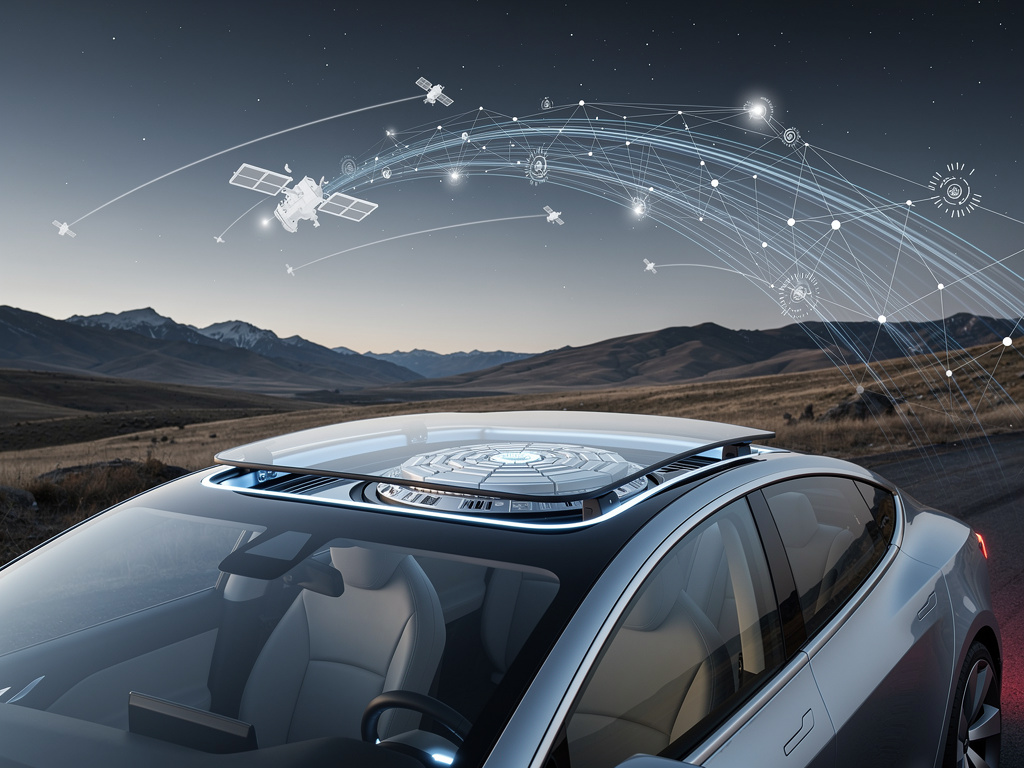
Tesla’s Orbital Ambition: Patent Fuels Speculation on Starlink-Powered Electric Rides
Tesla Inc. has long positioned its electric vehicles as rolling computers, packed with software updates, autonomous driving features, and seamless connectivity. Now, a newly revealed patent suggests the company might be gearing up to take that connectivity to new heights—literally—by embedding Starlink satellite antennas directly into its cars. This move could transform how drivers stay online, especially in remote areas where traditional cellular networks falter. Filed in May 2024 and published in December 2025, the patent describes a innovative roof assembly that allows radio frequency signals to pass through, potentially paving the way for integrated satellite internet from Elon Musk’s SpaceX venture.
The patent, detailed in documents from the U.S. Patent and Trademark Office, focuses on a vehicle roof made from radio-frequency transparent materials like polycarbonate or acrylonitrile butadiene styrene. These materials would enable antennas to be hidden beneath the roof without compromising the vehicle’s sleek design or structural integrity. According to reports, this setup addresses a key challenge: metal and glass roofs in modern cars often block satellite signals, making reliable connectivity tricky. By integrating these antennas, Tesla could offer drivers high-speed internet access via Starlink’s constellation of low-Earth orbit satellites, which already provides broadband to homes, boats, and even airplanes.
Industry observers see this as a natural synergy between Musk’s companies. Tesla vehicles currently rely on cellular networks for features like navigation, streaming, and over-the-air updates through its Premium Connectivity service. But Starlink integration could eliminate dead zones, ensuring constant access even in wilderness areas or during network outages. As one source notes, some RV owners already jury-rig Starlink dishes onto their vehicles, but Tesla’s approach promises a more elegant, factory-built solution.
Overcoming Technical Hurdles in Vehicle Design
The patent doesn’t explicitly name Starlink, but the implications are clear given Musk’s dual roles at Tesla and SpaceX. It outlines a multi-layer roof construction to maintain strength while allowing RF transparency. This could involve embedding antenna modules directly into the roof panel, complete with mounting systems that keep everything concealed. Such innovation isn’t just about aesthetics; it’s crucial for meeting safety standards, as alternative materials must match the durability of traditional ones without adding weight or cost.
Recent coverage highlights potential challenges. For instance, implementing RF-transparent roofs might require rethinking vehicle architecture to comply with crash-test regulations. Tesla’s filing proposes solutions like reinforced layers to address these issues, ensuring the roof can withstand impacts while facilitating satellite communication. This isn’t Tesla’s first foray into advanced materials; the company has experimented with glass roofs and cybertruck’s exoskeleton, but this patent marks a shift toward connectivity-focused engineering.
Drawing from web sources, the development aligns with broader trends in automotive tech, where manufacturers like Rivian and Ford are exploring satellite options for emergency services. Yet Tesla’s edge lies in its vertical integration with SpaceX, potentially giving it a head start. Posts on X, formerly Twitter, buzz with excitement from users like Tesla enthusiasts who speculate this could debut in models like the Cybertruck or upcoming Robotaxi, enabling features like real-time traffic data from space.
Synergies Between Musk’s Empire and Market Implications
Elon Musk has teased Starlink-vehicle integration before. In 2022, he mentioned on X that future Tesla cars could connect directly to satellites for emergency calls, eliminating dead zones. This patent seems to build on that vision, especially after the Federal Communications Commission approved Starlink for moving vehicles in 2022. SpaceX’s earlier patents for custom satellite antennas further support the idea of tailored hardware for automotive use.
Analysts point out that this could boost Tesla’s revenue streams. Premium Connectivity currently costs $9.99 monthly, but Starlink access might command a premium, perhaps bundled with Full Self-Driving subscriptions. Imagine streaming high-definition video or conducting video calls while traversing rural highways—features that could differentiate Tesla in a crowded EV market. According to a report from Electrek, the patent strongly suggests Tesla is preparing to embed Starlink receivers, a claim echoed in discussions across tech forums.
However, not everyone is convinced this will roll out imminently. Patents don’t always lead to products; Tesla has filed many that never see the light of day. Still, the timing is intriguing, coming amid Musk’s push to expand Starlink’s user base, which now exceeds 2 million subscribers globally. Integrating it into millions of Tesla vehicles could accelerate adoption, creating a network effect where cars become mobile hotspots.
Regulatory and Competitive Pressures Shaping the Future
Regulatory hurdles remain a factor. While the FCC has greenlit Starlink for vehicles, international approvals vary, and spectrum allocation could complicate global rollout. Tesla would need to ensure compliance with emissions standards and data privacy laws, especially as connected cars handle more personal information. In Europe, for example, stricter data regulations might require opt-in features for satellite tracking.
Competition is heating up too. Companies like Amazon’s Project Kuiper and OneWeb are building rival satellite networks, potentially offering alternatives for automakers. General Motors has partnered with AT&T for in-car Wi-Fi, while BMW explores similar tech. But Tesla’s in-house advantage could allow faster iteration, much like how it dominates EV charging with its Supercharger network.
Insights from news outlets underscore the excitement. A piece in Teslarati describes the patent as hinting at a vehicle roof with integrated RF transparency, while Mashable provides visuals of the proposed assembly, showing cross-sections of antenna mountings. These details reveal Tesla’s focus on seamless integration, avoiding bulky external dishes that disrupt aerodynamics.
Potential Applications Beyond Basic Connectivity
Beyond internet browsing, Starlink in Teslas could enable advanced features. For autonomous driving, real-time satellite data might enhance mapping in areas without ground-based signals, improving safety for features like Autopilot. Emergency services could benefit too—imagine a car automatically beaming location data via satellite during a breakdown in a remote canyon.
Fleet operators stand to gain significantly. Tesla’s Semi truck or future delivery vans could maintain constant logistics tracking, optimizing routes and reducing downtime. Posts on X from trucking enthusiasts highlight this potential, with users speculating on how it could revolutionize long-haul transport by providing uninterrupted communication.
Moreover, this ties into Musk’s broader vision of a connected world. Starlink already serves disaster zones and rural communities; extending it to vehicles could bridge digital divides, making high-speed internet ubiquitous. Yet critics worry about over-reliance on proprietary tech, potentially locking users into Musk’s ecosystem.
Engineering Insights and Material Innovations
Diving deeper into the patent’s technicals, it proposes a “roof assembly with integrated radio frequency transparency,” including overhead electrical modules for antennas. This could involve phased-array antennas, similar to those in Starlink’s user terminals, miniaturized for automotive use. Materials like acrylonitrile styrene acrylate are chosen for their balance of transparency, strength, and cost-effectiveness, addressing concerns raised in analyses from Autoblog, which notes structural challenges with non-traditional roofs.
Tesla’s engineers appear to have anticipated these issues by suggesting multi-layer constructions that reinforce weak points. This echoes innovations in aerospace, where RF-transparent composites are used in aircraft fuselages. Applying this to cars could set a new standard, influencing the entire auto industry.
From an insider perspective, this patent reflects Tesla’s iterative design philosophy. The company often files patents reactively, building on real-world feedback. For instance, user complaints about connectivity in remote areas, amplified on platforms like X, may have spurred this development.
Broader Industry Ripple Effects and Strategic Positioning
The ripple effects could extend to supply chains. Suppliers of RF materials might see increased demand, while chipmakers like Qualcomm could partner for compatible hardware. Tesla’s move might pressure competitors to accelerate their own satellite strategies, fostering innovation across the sector.
Strategically, this bolsters Musk’s portfolio. With Tesla’s market cap hovering around $1 trillion and SpaceX valued at over $200 billion, cross-company collaborations amplify value. A report from Geo News speculates on simplified satellite access in EVs, backing the idea of direct Starlink antennas.
Investors are watching closely. Tesla stock often reacts to such news, with patents signaling long-term growth. If realized, this could add billions in recurring revenue from connectivity services, much like Apple’s ecosystem monetizes apps and subscriptions.
Challenges Ahead and Visionary Outlook
Challenges persist, including power consumption. Satellite antennas require energy, and while Tesla’s batteries are robust, efficiency will be key to avoid draining range. Software integration also matters—ensuring Starlink handoffs seamlessly with cellular networks without glitches.
Looking ahead, this patent could preview a future where vehicles are nodes in a global network, sharing data for traffic optimization or even environmental monitoring. Musk’s tweets and X posts from years past, like those from 2021 discussing Starlink for moving vehicles, show this has been brewing.
Ultimately, whether this becomes reality depends on execution. But if Tesla pulls it off, it could redefine mobility, making every drive a connected adventure, free from the constraints of terrestrial infrastructure. As the EV market evolves, such innovations will likely determine who leads the pack.


 WebProNews is an iEntry Publication