
The Optimus Awakening: Tesla’s Robot Revolution and the Ripple Effects of Mass Deployment
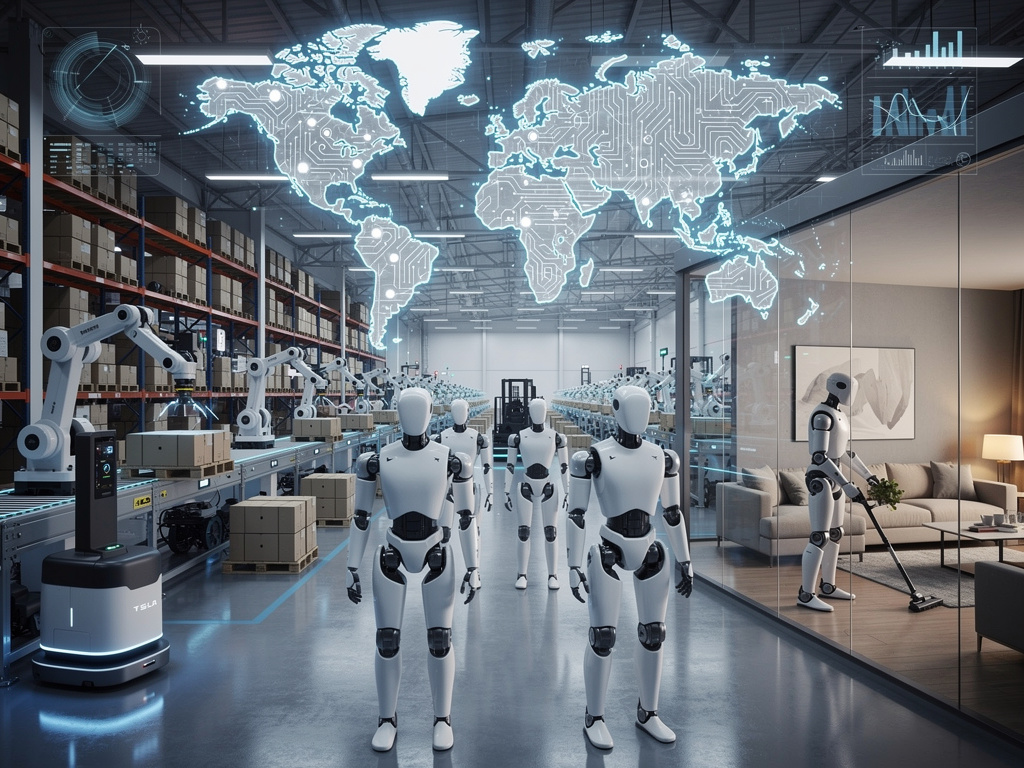
In the bustling factories of Tesla, a new era of automation is quietly unfolding. The company’s humanoid robot, known as Optimus, is no longer just a prototype showcased at glitzy events—it’s gearing up for real-world applications that could transform manufacturing, logistics, and even household chores. Recent developments suggest Tesla is on the cusp of scaling production, with executives hinting at thousands of these bots integrating into operations by year’s end. This shift isn’t merely about efficiency; it’s a potential game-changer for labor markets and economic structures worldwide.
Elon Musk, Tesla’s visionary CEO, has long touted Optimus as a cornerstone of the company’s future beyond electric vehicles. During a recent earnings call, Musk described the robot as capable of performing tasks ranging from folding laundry to precision surgery, emphasizing its versatility. As reported in a CNBC article, Musk’s focus on Optimus overshadowed discussions about EV sales, signaling a strategic pivot toward AI-driven robotics. This comes amid Tesla’s broader push into artificial intelligence, where Optimus represents “physical AI” manifesting in tangible, productive forms.
But what happens when these robots scale? Industry analysts are buzzing about the implications. If Tesla achieves mass production, Optimus could flood markets with affordable, intelligent labor substitutes. Priced potentially around $20,000 to $30,000 per unit, as speculated in a Standard Bots analysis, these bots promise to undercut human wages in repetitive tasks, raising questions about job displacement and economic inequality.
From Factory Floors to Global Supply Chains
Tesla’s internal deployment is already underway. Posts on X from Tesla enthusiasts and insiders indicate that a handful of Optimus units are assisting in Gigafactories, handling tasks like battery cell production. One such post highlighted the bots’ ability to operate autonomously, learning from real-world data much like Tesla’s self-driving cars. This hands-on testing is crucial, allowing Tesla to refine the technology before broader rollout.
Scaling Optimus involves overcoming significant hurdles in manufacturing and AI integration. Tesla is designing custom actuators and power systems from scratch, as no existing components meet the demands of reliable, high-volume production. According to insights shared on X by robotics experts, this “first principles” approach could give Tesla a competitive edge, enabling costs to drop dramatically as production ramps up.
Competitors aren’t idle. Chinese battery giant CATL has deployed its own humanoid robots, dubbed “Moz,” in operational settings, as detailed in a recent Electrek report. While Tesla showcases impressive demos on YouTube, CATL’s bots are already on factory floors, highlighting the race to dominate this emerging field. Tesla’s advantage lies in its AI prowess, derived from vast datasets from its vehicle fleet, which could make Optimus more adaptable than rivals.
Economic Shifts and Labor Market Disruptions
The potential for Optimus to reshape industries is immense. Imagine warehouses where robots sort packages with superhuman speed and accuracy, or construction sites where they handle hazardous materials without fatigue. A AI Magazine piece explores how Tesla’s AI vision extends to autonomous machines that integrate with solar energy systems, creating self-sustaining robotic ecosystems.
However, this scaling brings thorny issues. Labor unions and economists worry about widespread unemployment in sectors like manufacturing and retail. If Tesla produces millions of bots annually by the end of the decade, as forecasted in X discussions among investors, it could automate away jobs that currently employ billions globally. Governments might need to intervene with policies like universal basic income to mitigate the fallout.
On the flip side, proponents argue that Optimus will create new opportunities. Jobs in robot maintenance, programming, and oversight could emerge, fostering a more skilled workforce. Tesla’s own recruitment drives, as noted in a Business Insider story, show the company hiring for roles in robotaxi and robotics operations, indicating growth in ancillary fields.
Technological Hurdles and Innovation Frontiers
Delving deeper into the tech, Optimus relies on advanced neural networks for tasks like object recognition and manipulation. Unlike traditional robots programmed for specific functions, Optimus learns iteratively, much like a child. A Viso.ai overview describes its edge AI capabilities, enabling on-device processing for faster responses in dynamic environments.
Scaling this technology requires massive computational resources. Tesla’s Dojo supercomputer is pivotal here, training AI models on petabytes of data from cameras and sensors. Recent X posts from AI hubs speculate that breakthroughs in this area could accelerate Optimus’s deployment, potentially leading to bots that perform complex surgeries or intricate assembly work with minimal human input.
Yet, reliability remains a concern. Allegations of teleoperation in demos have surfaced, as mentioned in the Electrek report on CATL’s progress. Tesla must prove true autonomy to gain trust. Regulatory bodies are watching closely, especially for applications in sensitive areas like healthcare, where errors could have dire consequences.
Sustainability and Ethical Considerations
Tesla positions Optimus as part of its sustainability mission. By automating energy-intensive tasks, these bots could reduce carbon footprints in industries. A Sustainable Business Magazine review forecasts 2025 pricing and specs, noting how Optimus’s energy-efficient design aligns with Tesla’s eco-friendly ethos.
Ethically, the rise of humanoid robots prompts debates on AI rights and societal integration. If bots become indistinguishable from humans in capability, how do we define labor exploitation? Philosophers and policymakers are grappling with these questions, as echoed in broader discussions on X about the future of work.
Moreover, global competition intensifies. While Tesla leads in AI integration, companies like Boston Dynamics showcase advanced mobility, as highlighted in X threads on robotics trends. Tesla’s strategy of vertical integration—controlling everything from chips to software—could allow it to outpace others in scaling.
Market Projections and Investment Angles
Financially, Optimus represents a massive opportunity. Analysts project the humanoid robot market could reach trillions, with Tesla poised to capture a significant share. A PredictStreet deep-dive links this to Tesla’s shift toward physical AI, bolstered by Musk’s reinstated pay package, which incentivizes ambitious goals.
Investors are betting big. Tesla’s stock surged on news of autonomous robotaxi testing in Austin, as covered in an Applying AI analysis. This synergy between robotaxis and Optimus underscores Tesla’s ecosystem approach, where bots could maintain vehicles or expand into service industries.
For industry insiders, the key is monitoring production milestones. Tesla aims for thousands of bots in factories by late 2025, scaling to millions by 2030, per X posts from market watchers. This ramp-up will test supply chains, from rare earth materials for actuators to global chip shortages.
Broader Societal Impacts and Future Visions
Beyond economics, Optimus could democratize access to advanced help. In homes, bots might assist the elderly with daily tasks, addressing aging populations in countries like Japan. A ElonBuzz article enthuses about this takeover in 2026, painting a picture of ubiquitous robotic companions.
Critics warn of over-reliance on AI. If bots handle critical infrastructure, vulnerabilities to hacks or malfunctions could arise. Cybersecurity experts on X emphasize the need for robust safeguards, drawing parallels to Tesla’s vehicle software updates.
Looking ahead, the scaling of Optimus might accelerate human-robot collaboration. Factories could become hybrid spaces where humans oversee creative aspects while bots manage drudgery. This evolution, as discussed in a SQ Magazine stats compilation, ties into Tesla’s overall growth trajectory, from EV dominance to AI leadership.
Navigating Uncertainties in Robotic Expansion
Uncertainties abound. Regulatory approval for widespread deployment varies by region; while factories offer controlled environments, public spaces pose challenges. Tesla’s experience with autonomous driving regulations could inform its robotics strategy.
Innovation in battery life and dexterity will be crucial. Current prototypes impress, but scaling requires bots that operate for hours without recharging, as speculated in the Sustainable Business Magazine review.
Ultimately, the Optimus scaling story is one of ambition meeting reality. Tesla’s track record of disrupting industries suggests it could succeed, but the path is fraught with technical, ethical, and market obstacles. As the company pushes forward, the world watches, ready for a future where robots are as common as smartphones.


 WebProNews is an iEntry Publication