
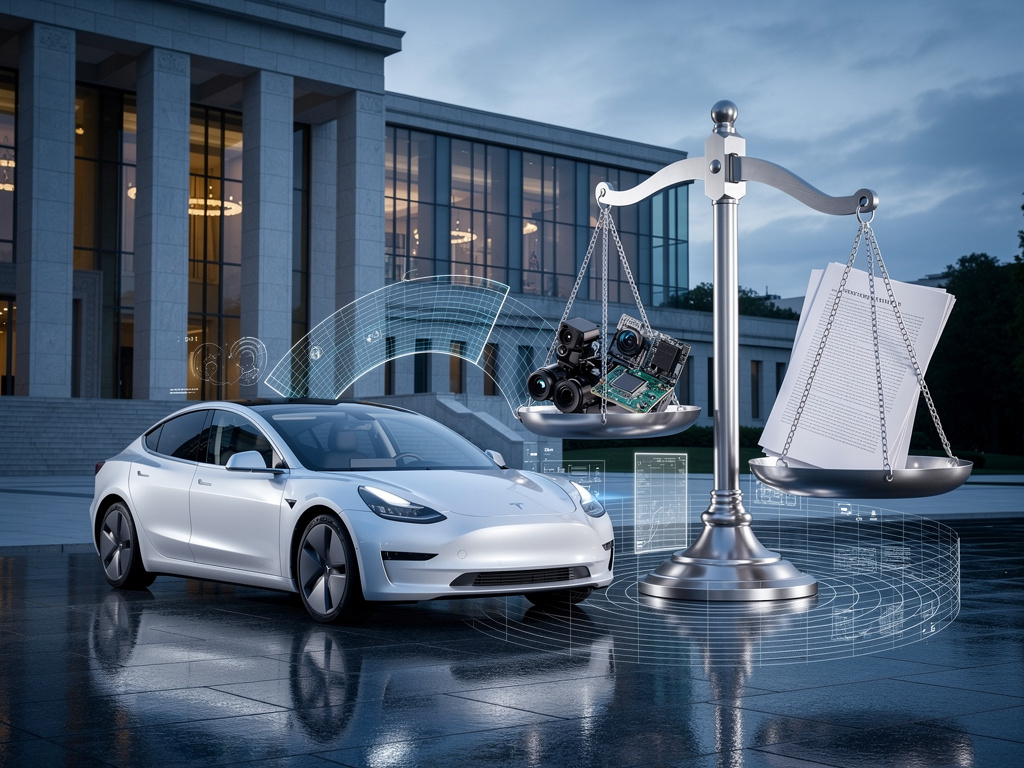
In the rapidly evolving world of autonomous driving technology, Tesla Inc. has long positioned its Autopilot system as a groundbreaking advancement, promising enhanced safety and convenience. Yet a landmark jury verdict in August 2025 has fundamentally challenged this narrative, holding the company partially liable for a fatal 2019 crash and ordering it to pay $243 million in damages. The case, stemming from a tragic incident in Florida where a Tesla Model S veered off the road while on Autopilot, killing a 22-year-old pedestrian and severely injuring another, underscores growing scrutiny over the system’s limitations and Tesla’s marketing practices. According to reports from NBC News, the jury found Tesla 33% responsible, attributing fault to inadequate safeguards that allowed the vehicle to operate in unsafe conditions.
This verdict isn’t isolated; it reflects a pattern of legal and regulatory pressures mounting against Tesla. Federal investigations by the National Highway Traffic Safety Administration (NHTSA) have documented hundreds of crashes involving Autopilot, with data revealing persistent issues like failure to detect obstacles or disengage properly. In one analysis, NHTSA reported 273 known incidents between July 2021 and June 2022 alone, many involving collisions with emergency vehicles or unexpected road hazards. Tesla has consistently argued that drivers bear ultimate responsibility, emphasizing that Autopilot is a driver-assistance feature requiring constant human oversight. However, critics and plaintiffs contend that the company’s promotional language—often touting “Full Self-Driving” capabilities—creates a false sense of security, leading to misuse.
The Florida case highlights how Tesla’s camera-based system, which relies heavily on visual sensors rather than lidar used by competitors, may contribute to these failures. Witnesses in the trial described how the Model S accelerated uncontrollably before the crash, with the driver allegedly inattentive. Tesla appealed the decision, as noted in coverage from NPR, but the ruling has opened the floodgates for similar lawsuits, potentially costing the company billions if patterns hold.
Shifting Legal Accountability in Autonomous Tech
Beyond the courtroom, Tesla’s challenges extend to settlements and ongoing probes. In September 2025, the company quietly resolved two lawsuits related to separate 2019 California crashes involving Autopilot, paying undisclosed sums to avoid trials, per details from Reuters. These incidents involved fatalities where drivers claimed the system failed to brake or steer appropriately. Industry experts point out that such settlements signal Tesla’s recognition of vulnerability, especially as juries increasingly side with victims over corporate defenses.
Public sentiment, as gleaned from posts on X (formerly Twitter), reveals a divided discourse. Some users praise Tesla’s safety data, citing internal reports showing one crash per 6.69 million miles on Autopilot in Q2 2025—far better than the U.S. average. Others, however, criticize the technology’s flaws, with anecdotes of “phantom braking” and sudden disengagements right before impacts, fueling accusations that Tesla designs systems to shift blame. One post highlighted a 2024 study using NHTSA data, claiming Tesla vehicles had a fatality rate of 5.6 per billion miles, double the industry norm, though Tesla disputes this with its own metrics.
Regulatory bodies are intensifying oversight. A December 2025 ruling by a California judge found Tesla engaged in deceptive marketing for Autopilot and Full Self-Driving features, ordering a temporary suspension of sales in the state unless compliance improvements were made, as reported by TechCrunch. The decision stemmed from evidence that Tesla’s demonstrations and Elon Musk’s public statements overstated the technology’s readiness, misleading consumers about its autonomy level.
Engineering Flaws and Industry Comparisons
At the heart of these controversies lies Tesla’s unique approach to autonomous driving. Unlike rivals such as Waymo or Cruise, which integrate radar, lidar, and detailed mapping, Tesla bets on vision-only systems powered by neural networks trained on vast datasets. Proponents argue this mimics human driving more closely, but detractors, including a 2024 Wall Street Journal investigation, have uncovered over 200 crashes where camera limitations failed in low-light or complex scenarios. The WSJ’s analysis of video and telemetry data showed recurring patterns, like Autopilot ignoring stopped vehicles or misjudging lane markings.
Recent news from early 2026 amplifies these concerns. A Utah lawsuit filed just days ago accuses Tesla’s “Autosteer” feature of causing a fatal crash that killed four family members when the vehicle veered into an oncoming truck, according to TechStory. The plaintiffs’ attorney argued that Tesla inadequately tested the system on diverse road types, echoing themes from the Florida verdict. Meanwhile, a December 2025 incident captured on livestream showed a Tesla crashing head-on while demonstrating Full Self-Driving, as detailed in Electrek, raising questions about real-world reliability.
Tesla’s response has been to iterate rapidly through over-the-air updates, claiming improvements that reduce crash rates. Company reports from Q3 2025 assert one accident per 7.5 million miles with Autopilot engaged, but independent verification is scarce. Critics on X often reference cases where the system disengages milliseconds before collisions, potentially to absolve Tesla of liability—a tactic some label as evasive programming.
Market Repercussions and Future Implications
The financial toll is mounting. Following the $243 million verdict, Tesla’s stock dipped, and analysts predict cascading effects on insurance premiums and consumer trust. Broader market trends show Tesla losing its top EV sales spot to China’s BYD in 2025, with deliveries dropping for a second straight year amid backlash over Musk’s politics and expiring U.S. tax incentives, as covered by AP News. This sales slump, down 1.6% in Q4 2025, hampers funding for ambitious projects like robotaxis, which Musk touts as the future despite delays.
Legal experts foresee a wave of class-action suits, particularly after the Guardian reported that the Florida case could inspire “costly lawsuits” by establishing precedent for shared liability, per their August 2025 article at The Guardian. In one Reddit thread on r/SelfDrivingCars, users debated a purported $329 million damages figure—slightly inflated from official reports—but the consensus leaned toward increased accountability for automakers.
For industry insiders, this era marks a pivot: Tesla’s once-dominant narrative of innovation is clashing with empirical evidence of risks. Competitors are capitalizing, with General Motors’ Super Cruise incorporating eye-tracking to enforce attention, a feature absent in early Autopilot versions. Tesla has since added cabin cameras, but adoption and effectiveness remain debated.
Evolving Safety Standards and Ethical Dilemmas
As lawsuits proliferate, ethical questions arise about balancing technological progress with public safety. A BBC report from August 2025 detailed how the 2019 Florida crash exposed Autopilot’s inability to prevent high-speed deviations, leading to the pedestrian’s death, accessible via BBC. Plaintiffs argued that Tesla’s over-reliance on driver monitoring—via steering wheel torque rather than advanced biometrics—falls short, a point reinforced in NHTSA’s ongoing investigations.
Recent X discussions highlight user frustration, with posts accusing Tesla of “dangerously oversold” features by its CEO, contributing to misuse. One thread referenced a 2023 crash compilation, underscoring long-standing issues like sudden unintended acceleration, though Tesla attributes most to user error.
Looking ahead, Tesla’s path involves not just technical fixes but cultural shifts. The company’s appeal of the Florida verdict, combined with settlements like those in California, suggests a strategy of mitigation over overhaul. Yet, with a Utah family now suing over a 2025 crash that claimed multiple lives, as exclusively reported by The Independent, the pressure intensifies.
Broader Industry Ripple Effects
The ramifications extend beyond Tesla, influencing the entire autonomous vehicle sector. Regulators worldwide are drafting stricter guidelines, inspired by U.S. cases. For instance, the European Union is considering mandates for redundant sensors, potentially disadvantaging Tesla’s vision-only model.
In the U.S., declining sales—detailed in Axios as tied to Musk’s controversies—could slow innovation funding. Analysts from Sherwood News noted in early 2026 that BYD’s overtake in EV sales underscores competitive pressures, with Tesla’s yearly deliveries sliding again.
Ultimately, these developments force a reckoning: Can companies like Tesla continue blaming drivers when their marketing blurs lines between assistance and autonomy? As more verdicts loom, the answer may reshape how self-driving tech is developed, sold, and regulated, ensuring safer roads for all.


 WebProNews is an iEntry Publication