
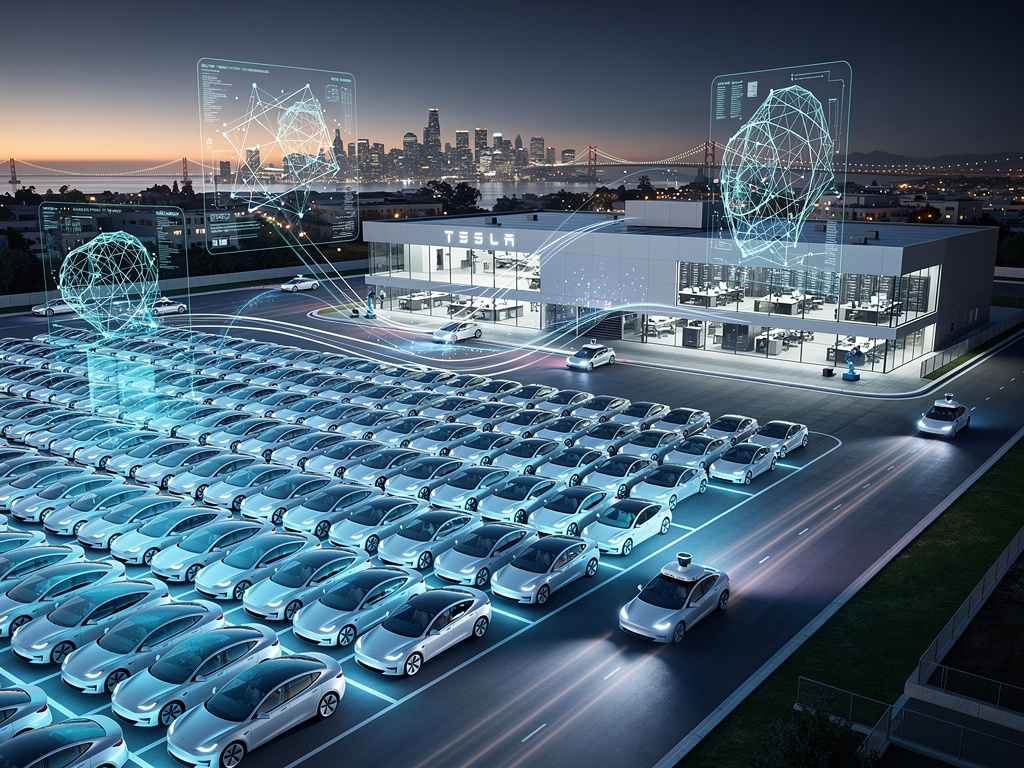
Tesla’s ambitious push into autonomous ride-hailing is gaining momentum in California, where the electric-vehicle giant has rapidly expanded its Robotaxi fleet. According to recent data from the California Public Utilities Commission (CPUC), Tesla has registered 1,655 vehicles and 798 drivers for its Bay Area service, a significant leap from the mere 28 vehicles and 128 drivers reported in August. This surge underscores Elon Musk’s vision for a driverless future, even as regulatory hurdles and technical challenges persist.
The registrations, detailed in a report by Business Insider, highlight Tesla’s aggressive scaling efforts. The company is not just adding vehicles but also bolstering its human oversight, with drivers likely serving as safety operators in this supervised phase. This comes amid broader industry shifts, where competitors like Waymo and Cruise have faced their own setbacks, including incidents that have drawn scrutiny from safety advocates.
Insiders note that Tesla’s strategy involves repurposing existing models, primarily the Model Y, for this fleet. Posts on X (formerly Twitter) from users tracking Tesla developments suggest excitement around sightings of TCP-marked vehicles—indicating official approval for paid operations—in areas like San Francisco and Los Angeles. These social media observations align with Tesla’s public statements about targeting a 2025 rollout for more unsupervised capabilities.
Fleet Expansion Signals Strategic Pivot
Tesla’s registration boom isn’t happening in isolation. A separate piece from Business Insider reveals the company is recruiting factory workers and sales staff to double as “AI operators” for the Robotaxi service, potentially offering extra pay incentives. This hybrid approach—blending human supervision with AI—allows Tesla to gather real-world data while complying with California’s strict autonomous vehicle regulations.
Regulatory filings show Tesla obtained its initial TCP (Transportation Charter-Party) permit earlier in the year, enabling employee transport on a prearranged basis. X posts from accounts like Tsla Archive have documented spotted Model Y Robotaxis with these markings, confirming paid service approvals as far back as May. This progression from testing to limited operations marks a key milestone, though full public deployment remains pending further CPUC nods.
Comparisons with rivals provide context: Waymo, a unit of Alphabet, recently paused services in San Francisco due to a blackout-related chaos, as reported by CNBC. Tesla, in contrast, claims its systems were unaffected, with Elon Musk publicly stating on X that the company’s vehicles maintained functionality during the outage. This resilience could give Tesla an edge in urban environments prone to disruptions.
Recruitment and Operational Insights
Delving deeper, Tesla’s hiring push extends to its Fremont and Palo Alto facilities, where posters have appeared soliciting internal staff for Robotaxi roles. LinkedIn profiles reviewed in industry analyses indicate a mix of engineers and non-technical personnel being trained as safety drivers, emphasizing Tesla’s cost-effective scaling model. This internal recruitment minimizes external hiring costs while leveraging existing employee knowledge of Tesla’s Full Self-Driving (FSD) software.
News from The Times of India suggests these roles come with premium compensation, potentially up to 20% above base pay, to encourage participation. Such incentives are crucial as Tesla aims to log millions of miles to refine its AI, a process that has already seen over 300,000 miles driven in California without reported collisions, per DMV records shared on X.
However, challenges loom. A July report from Politico highlighted permit delays, with Tesla employees presenting a more limited plan to regulators than Musk’s bold public promises. This discrepancy raises questions about the timeline for unsupervised operations, especially as California demands rigorous safety data before granting broader approvals.
Regulatory Hurdles and Market Implications
California’s oversight bodies, including the DMV and CPUC, have been pivotal in shaping Tesla’s path. The state’s framework requires detailed reporting on disengagements and incidents, which Tesla has navigated by starting with supervised rides. X discussions, including threads on r/SelfDrivingCars mirrored on Reddit, speculate whether Tesla scaled back initial San Francisco plans in favor of Austin, Texas, but recent registrations indicate a renewed Bay Area focus.
Broader market dynamics are at play. Tesla’s stock has reacted positively to these developments, with analyses from TechStock² noting that Robotaxi momentum, alongside a court ruling restoring Musk’s pay package, is driving investor sentiment. Forecasts for Q4 deliveries and Robotaxi hiring acceleration suggest Tesla could hit 2,000 vehicles in California by mid-2026, potentially capturing a significant share of the ride-hailing market currently dominated by Uber and Lyft.
Critics, however, point to safety concerns. While Tesla reports zero accidents in its 2025 California operations, skeptics on X argue that supervised modes mask underlying FSD limitations. Industry watchers recall past incidents, like a 2023 Cruise vehicle dragging a pedestrian, which led to permit suspensions and heightened scrutiny for all players.
Technological Underpinnings and Future Projections
At the core of Tesla’s Robotaxi is its FSD software, now in version 13, which relies on neural networks trained on billions of miles of driving data. Unlike lidar-dependent systems from competitors, Tesla’s vision-based approach uses cameras and AI, a choice Musk defends as more scalable. Recent app updates, as covered in a July Business Insider article, have informed users about Bay Area launch details, including user agreements for beta testing.
Expansion plans extend beyond California. X posts from influencers like Mario Nawfal outline a rollout map covering 23 major cities, with California leading in deployments across Los Angeles, San Diego, and beyond. Blockchain.news reported in December that Tesla’s AI-driven fleet targets a full 2025 launch, integrating Optimus robots for vehicle maintenance in a holistic ecosystem.
Financially, this could transform Tesla’s revenue streams. Analysts estimate Robotaxi services might generate $10 billion annually by 2030, per projections in TechStock² updates. Yet, achieving this requires overcoming legal battles, such as ongoing lawsuits over Autopilot-related crashes, including a recent California ruling absolving Tesla in one case.
Competitive Pressures and Innovation Edge
Tesla’s moves are pressuring rivals. Waymo’s recent blackout issues, detailed in CNBC coverage, exposed vulnerabilities in grid-dependent systems, while Tesla’s battery-powered vehicles offer inherent advantages during power failures. X sentiment reflects optimism, with users like The Tesla Newswire highlighting the jump to 1,655 vehicles as a “significant upgrade” from August figures.
Innovation continues apace. Tesla’s integration of Grok AI for route optimization and user interfaces adds a layer of sophistication, potentially setting it apart. Industry insiders speculate that partnerships with ride-sharing apps could accelerate adoption, though no official announcements have surfaced.
Looking ahead, Tesla’s California expansion serves as a bellwether for national rollout. With 798 drivers now registered, the company is building a robust testing ground. X posts from accounts like Tomek Bogunowicz warn of watching for further upgrades, suggesting this is just the beginning of a broader autonomous revolution.
Stakeholder Perspectives and Broader Impacts
Stakeholders, from investors to regulators, are closely monitoring. A December 21 TechStock² analysis notes split Wall Street forecasts, with bulls eyeing Robotaxi as a growth driver amid softening EV sales. Bears, however, caution on regulatory risks, especially in densely populated areas like the Bay Area.
Labor implications are noteworthy. By tapping factory workers for driving roles, Tesla blurs lines between manufacturing and services, potentially reshaping job markets. Unions have voiced concerns, though no major actions have targeted Tesla yet.
Environmental benefits could bolster Tesla’s case. Robotaxis promise reduced emissions through efficient routing and electric powertrains, aligning with California’s green initiatives. As the fleet grows, data from these operations will refine global AI models, positioning Tesla as a leader in autonomous tech.
Path Forward Amid Uncertainties
Navigating uncertainties remains key. Tesla’s history of ambitious timelines—Musk once predicted full autonomy by 2017—tempers expectations. Yet, the current registration surge, backed by CPUC data, indicates tangible progress.
International parallels offer lessons. In China, Baidu’s Apollo Go operates unsupervised in select cities, a model Tesla might emulate. X discussions speculate on similar approvals in California by late 2026.
Ultimately, Tesla’s Robotaxi endeavor in California encapsulates the high-stakes interplay of innovation, regulation, and market disruption. With over 1,000 new vehicles added in months, the company is accelerating toward a future where rides are summoned by app, driven by code, and overseen by evolving oversight mechanisms. As deployments expand, the industry watches closely, anticipating the ripple effects on transportation worldwide.


 WebProNews is an iEntry Publication