
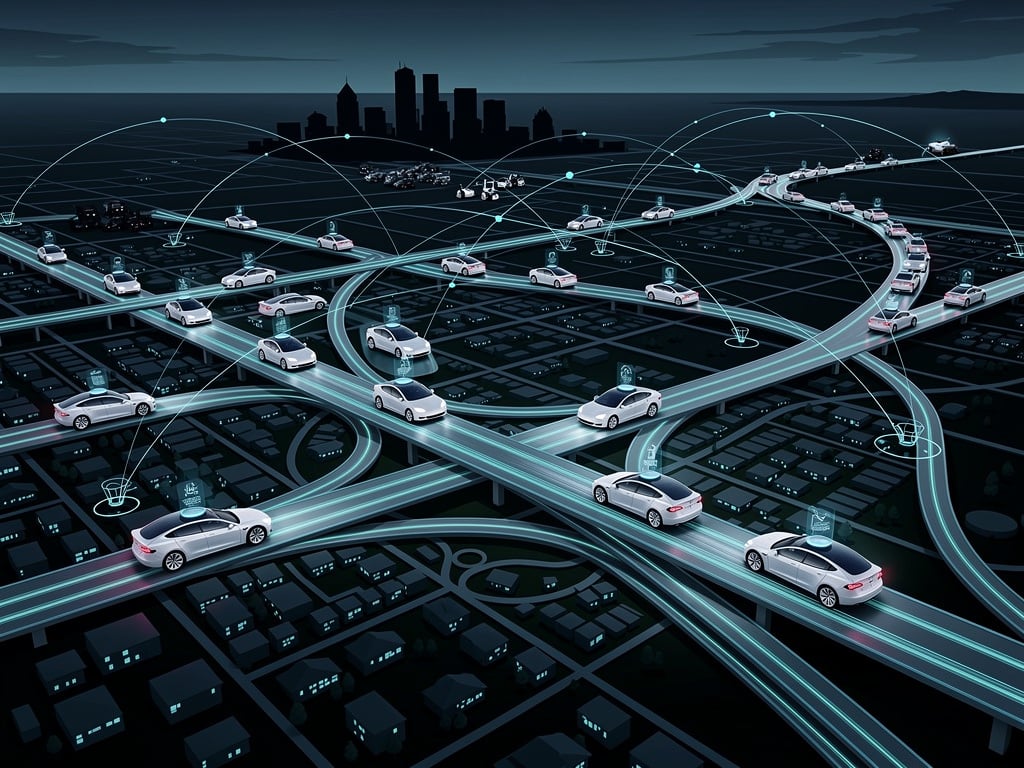
Tesla just widened its unsupervised robotaxi footprint across the entire Austin metropolitan area. The move comes at a moment when questions about fleet size, wait times and real-world scale refuse to fade. Yet data shows steady if modest progress. And the company keeps pushing boundaries in its home territory.
On June 3, 2026, Tesla confirmed via X that rides without a human safety monitor now cover the full metro zone. This includes suburbs such as Pflugerville and Manor, stretches of I-35, Gigafactory Texas and Austin-Bergstrom International Airport. Teslarati reported the development as the fifth geofence expansion since initial testing. Previous steps occurred in July, early August, late August and late October 2025. The operating area had stayed fixed after that October update until this latest doubling.
But. The fleet remains small. Texas Department of Motor Vehicles records show 42 registered Tesla robotaxi vehicles statewide. Third-party trackers put active unsupervised units near 21 in recent weeks. Business Insider noted that Tesla added no immediate new cars alongside the geographic growth. Riders still report volatile estimated arrival times. One afternoon the app displayed a “high service demand” notice even for users outside Texas.
Flash back to January 2026. Tesla began mixing a few unsupervised Model Y vehicles into its Austin fleet. CEO Elon Musk posted on X: “Just started Tesla Robotaxi drives in Austin with no safety monitor in the car. Congrats to the Tesla AI team!” AI chief Ashok Elluswamy added that the company would start small and “the ratio will increase over time.” TechCrunch captured those exact words. The service had run with safety monitors since June 2025. Removing them marked a concrete step. Real customer rides followed. Some early testers noted chase cars trailing at first. Others paid for trips through the Tesla app.
By late April the unsupervised count across Texas reached 25 cumulative vehicles. Austin held 19. Dallas and Houston, added in mid-April, contributed three each. Electrek detailed how the unsupervised tally had stagnated near zero for months before climbing. The broader active fleet, including supervised vehicles, stood at roughly 165 with the Bay Area dominating at 107. Compare that with Waymo’s hundreds of vehicles in Austin alone and thousands nationwide. The gap remains obvious.
Critics point to slow growth. Musk once spoke of 10 to 20 initial vehicles and a target of 500 in Austin by the close of 2025. Those numbers have not materialized. Recent reports even suggest the unsupervised fleet in Texas cities has contracted from its May peak. One analysis showed only 13 active units in Austin over a recent seven-day span. Demand outstrips supply on many days. Riders in Dallas and Houston face limited geofences and longer waits.
Still, the program logs hundreds of thousands of miles with a clean safety record in recent periods. No major crashes reported in unsupervised operation. Tesla continues to refine its camera-only system. Production of the purpose-built Cybercab has begun at Gigafactory Texas. Early units without steering wheels have appeared. Insiders expect them to join the fleet later this year once validation finishes. That hardware shift could change utilization rates dramatically.
Scaling Challenges Meet Competitive Pressure
Autonomous ride-hailing demands more than clever software. It requires dense vehicle supply, rapid response to edge cases and tolerance for construction, weather and unpredictable traffic. Waymo has dealt with widespread outages tied to those exact factors even after years of operation. Tesla’s approach stays conservative by design. It mixes unsupervised cars gradually. It expands geography only after demonstrated reliability. This caution explains the modest fleet numbers. It also fuels investor impatience.
Recent X posts from users and analysts show excitement mixed with realism. One noted the full-metro coverage as evidence the system handles highways and suburbs well. Another highlighted that true 24/7 high-volume service still feels distant. Tesla’s own site lists robotaxi availability in Austin, Dallas and Houston. The app handles bookings. Yet availability fluctuates. During peak hours many requests go unfulfilled.
Investors watch these metrics closely. Tesla stock has reacted to every expansion headline and every delay. The robotaxi story now intertwines with the company’s valuation in ways few other initiatives match. Success here could unlock new revenue streams far beyond vehicle sales. Failure or prolonged slow growth would raise fresh questions about capital allocation and timelines.
So what comes next? More geofence growth seems likely if current safety trends hold. Additional unsupervised vehicles should appear as Cybercabs roll off the line. Integration with the wider Tesla network, including personal cars opting into the fleet, remains a longer-term lever. For now the focus stays on Texas. Austin serves as the proving ground. The latest metro-wide step tests whether the software truly scales across varied road types without constant human oversight.
One thing feels clear. Tesla refuses to pause. It answers skepticism with measured expansion rather than grand promises. The unsupervised fleet, though still limited, moves forward. Riders in greater Austin can now summon a driverless Model Y across a vastly larger zone than six months ago. That progress counts. But turning dozens of vehicles into thousands capable of reliable, profitable service will test every part of the operation in the months ahead.


 WebProNews is an iEntry Publication