
Tesla’s Reluctant Embrace: Decoding the CarPlay Saga and Its Ripple Effects on EV Innovation
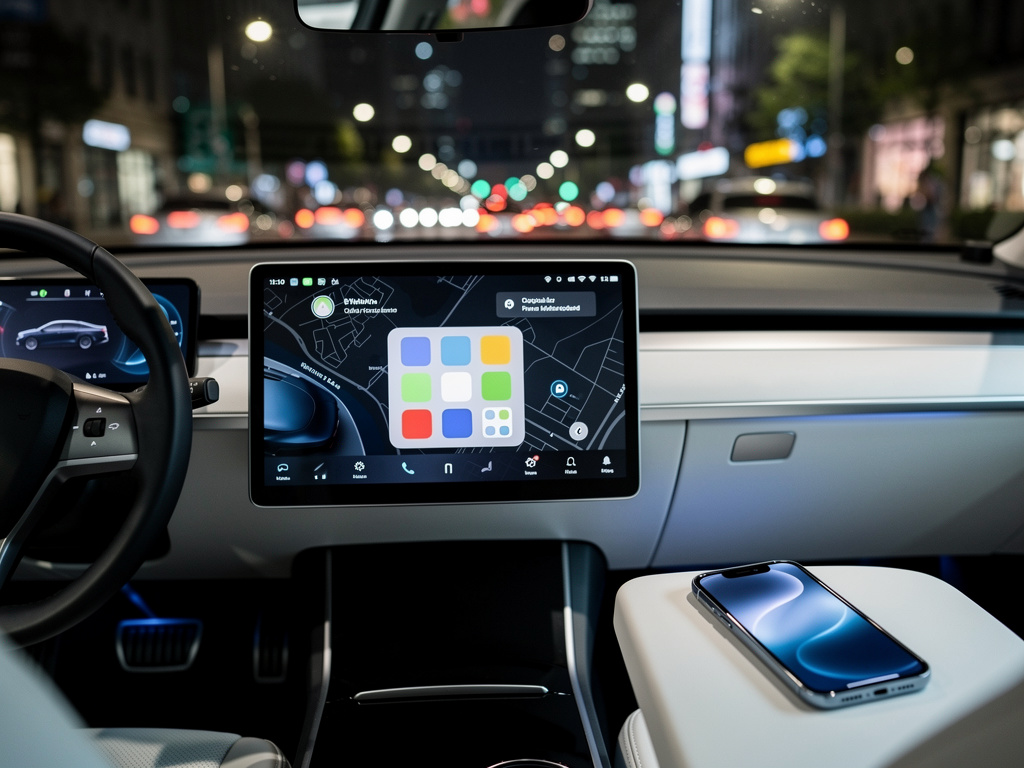
Tesla’s long-standing resistance to integrating Apple’s CarPlay into its vehicles has been a point of contention among electric vehicle enthusiasts and potential buyers for years. Now, recent reports suggest the company is finally warming to the idea, potentially marking a significant shift in its software strategy. According to a Bloomberg article published in mid-November, Tesla is actively developing CarPlay support, driven by customer demands that have grown louder amid slumping sales figures. This move, if realized, could bridge the gap between Tesla’s proprietary infotainment system and the seamless iPhone integration that millions of drivers crave. Insiders familiar with the matter indicate that the integration would not fully overtake Tesla’s interface but rather operate in a contained window, preserving the core Tesla OS experience.
The push for CarPlay comes at a time when Tesla faces intensifying competition from legacy automakers and new entrants in the EV market. For context, Tesla’s infotainment system has been lauded for its intuitive design, integrating navigation, media, and vehicle controls into a single, expansive touchscreen. Yet, the absence of CarPlay has been a dealbreaker for some, particularly iPhone users who prefer Apple’s ecosystem for apps like Apple Music, Maps, and third-party services. A report from Not a Tesla App highlights both the advantages—such as enhanced app compatibility—and disadvantages, including potential distractions from Tesla’s streamlined interface. Elon Musk, Tesla’s CEO, has historically dismissed CarPlay as unnecessary, arguing that the company’s software is superior. But with vehicle deliveries dipping in recent quarters, adding this feature could be a tactical play to lure back hesitant buyers.
Reactions from the EV community have been predictably polarized, reflecting broader debates about openness in automotive tech. On social platforms like X (formerly Twitter), posts from users express a mix of excitement and skepticism. Some hail it as a victory for consumer choice, with one prominent tech commentator noting that CarPlay could make Tesla vehicles more accessible to Apple loyalists. Others, however, worry it dilutes Tesla’s innovative edge, echoing sentiments that the company’s closed ecosystem is what sets it apart. This divide underscores a larger tension in the industry: balancing proprietary tech with widespread standards to appeal to a mass market.
The Evolution of Tesla’s Software Philosophy
Delving deeper, Tesla’s hesitation stems from its foundational approach to vehicle design, where software is as critical as hardware. Unlike traditional carmakers that readily adopt CarPlay and Android Auto, Tesla has built its brand on a vertically integrated experience. This includes over-the-air updates that continually refine features like Autopilot and Full Self-Driving. Introducing CarPlay, as detailed in a Electrek piece, would require careful implementation to avoid conflicts with these systems. Reports suggest the integration would support both wired and wireless connections but limit access to deeper functions like autonomous driving controls, ensuring Tesla retains oversight.
Industry analysts point out that this development aligns with Tesla’s broader efforts to revitalize demand. In the wake of price cuts and model refreshes, adding CarPlay could address feedback from surveys and forums where owners lament the lack of flexibility. A MacRumors analysis describes it as a “stunning reversal” for Musk, who once tweeted dismissively about such integrations. Yet, the timing is intriguing: whispers of CarPlay testing emerged just before Tesla’s 2025 Holiday Update, which ultimately rolled out without the feature, as confirmed in announcements from the company.
The Holiday Update, detailed across various outlets, introduced novelties like Grok AI navigation commands, enhanced Supercharger maps, and a festive Santa Mode, but its omission of CarPlay fueled speculation. Posts on X captured owner frustration, with some decrying it as a missed opportunity in what was expected to be a landmark release. This gap has led to theories that CarPlay might debut in a subsequent update, possibly tied to new hardware in models like the refreshed Model Y or Cybertruck variants.
Customer Sentiments and Market Implications
EV owners’ reactions, as aggregated from social media and forums, reveal a spectrum of opinions that could influence Tesla’s trajectory. Enthusiasts who switched from brands like Ford or GM—where CarPlay is standard—often praise the familiarity it brings, reducing the learning curve for new Tesla drivers. One X post from a tech influencer emphasized how CarPlay could “boost sales for customers seeing it as a must-have,” aligning with Bloomberg’s reporting on internal motivations. Conversely, die-hard Tesla fans argue that the native system is more efficient, with seamless updates and no reliance on phone connectivity, which can be spotty.
This sentiment echoes broader industry trends, where automakers grapple with software dominance. General Motors, for instance, faced backlash when it announced plans to phase out CarPlay in future EVs, only to see dealer concerns mount, as noted in older coverage from CNET. Tesla’s potential adoption could pressure rivals to innovate further, perhaps accelerating the shift toward next-gen interfaces like Apple’s enhanced CarPlay, which promises deeper vehicle integration.
From a business perspective, integrating CarPlay might help Tesla recapture market share in regions where Apple devices dominate. Sales data from recent quarters show Tesla’s growth slowing, with competitors like BYD and Rivian gaining ground through more open ecosystems. Analysts at firms like Morgan Stanley have speculated that features like this could add incremental revenue through software subscriptions or partnerships, though Tesla has yet to confirm any such plans.
Technical Challenges and Future Horizons
Implementing CarPlay isn’t without hurdles, particularly for a company as software-centric as Tesla. Engineering insights from sources indicate that the feature would run in a sandboxed environment, preventing it from interfering with critical systems like battery management or regenerative braking. A InsideEVs report posits this as a “smart move” to maintain control while satisfying demands, potentially rolling out via an over-the-air update to existing fleets.
Looking ahead, this could pave the way for broader compatibility, including Android Auto, though no such plans have surfaced. Industry insiders speculate that Tesla’s move reflects a maturing market where consumer preferences increasingly dictate tech decisions. Posts on X from EV owners highlight practical benefits, such as better podcast integration or voice commands that feel more natural through Siri, contrasting with Tesla’s voice system.
Moreover, the integration raises questions about data privacy and ecosystem lock-in. Apple’s CarPlay collects minimal data compared to Tesla’s telemetry-heavy approach, which feeds into AI training for features like Full Self-Driving. Balancing these could define Tesla’s next phase, especially as regulatory scrutiny on autonomous tech intensifies globally.
Strategic Shifts in a Competitive Arena
Tesla’s flirtation with CarPlay also signals a pragmatic pivot amid economic pressures. With interest rates affecting auto loans and inflation squeezing budgets, features that enhance perceived value become crucial. A follow-up from MacRumors suggests deployment “in the coming months,” potentially aligning with spring model launches. This timeline has sparked optimism among investors, with Tesla’s stock reacting positively to initial rumors.
Comparatively, other EV makers have embraced CarPlay to differentiate themselves. Lucid and Polestar, for example, integrate it seamlessly, appealing to tech-savvy buyers. Tesla’s delay has allowed these upstarts to chip away at its dominance, but adding the feature could reinforce its position as an innovator willing to adapt.
Ultimately, the CarPlay saga encapsulates the evolving dynamics of automotive tech, where user-centric design increasingly trumps purist visions. As Tesla navigates this, the industry’s focus sharpens on how such integrations might redefine vehicle ownership, blending hardware prowess with software harmony.
Broader Industry Ramifications and Owner Perspectives
Extending the lens, Tesla’s potential CarPlay addition could influence supplier chains and partnerships. Apple, seeking to expand its automotive footprint, stands to gain from Tesla’s vast user base, potentially accelerating adoption of its next-generation CarPlay unveiled in 2022. Industry reports note that this enhanced version allows for customizable instrument clusters, which Tesla might adapt to its displays.
Owner feedback, gleaned from X discussions, often circles back to usability. Some users report frustration with Tesla’s music streaming or navigation lags, areas where CarPlay excels. Others defend the status quo, citing examples like seamless trip planning tied to Supercharger networks.
In regions like Europe and Asia, where EV adoption surges, CarPlay’s multilingual support could broaden Tesla’s appeal. Analysts predict this could help counter sales dips in China, where local apps dominate but Apple’s ecosystem remains strong among premium buyers.
Navigating Uncertainties in EV Tech Integration
As the dust settles on the Holiday Update’s CarPlay absence, speculation mounts about a dedicated release. Tesla’s history of surprise features via software pushes suggests it could arrive unannounced, delighting owners and silencing critics.
Yet, challenges persist: ensuring compatibility across models, from the aging Model 3 to the futuristic Cybertruck. Technical deep dives reveal potential needs for hardware upgrades in older vehicles, though over-the-air capabilities mitigate this.
For industry watchers, this moment highlights a shift toward hybrid systems, where proprietary tech coexists with standards. Tesla’s journey from resistance to potential embrace may well set precedents for how EVs evolve in an era of connected mobility.


 WebProNews is an iEntry Publication