
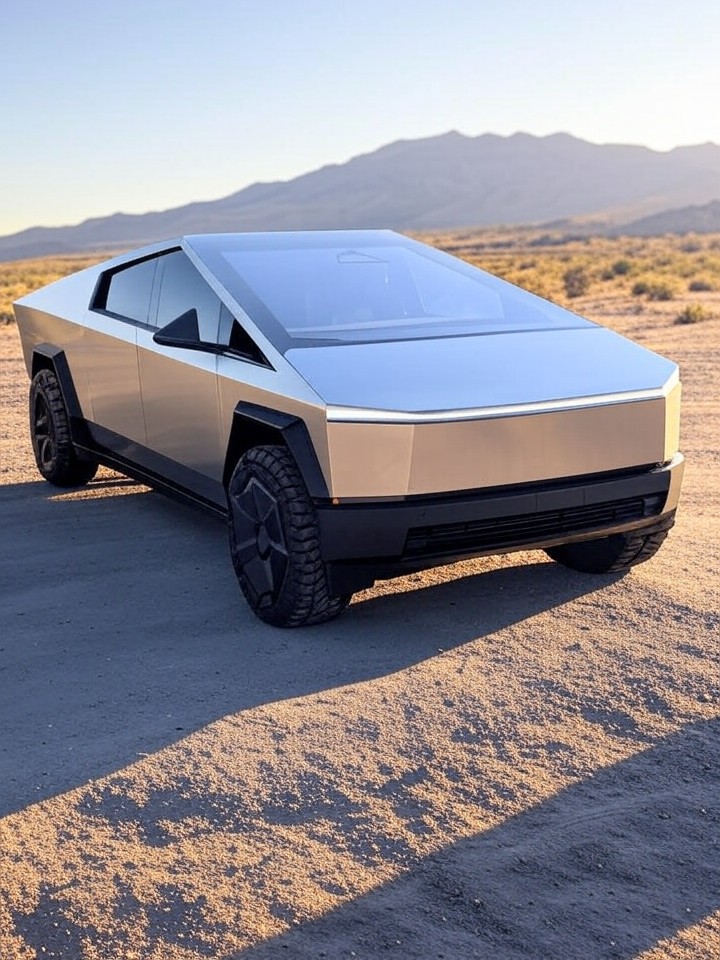
The Cybertruck Conundrum: Tesla’s Electric Pickup Faces a Rocky Road in 2025
In the ever-evolving arena of electric vehicles, Tesla’s Cybertruck has emerged as a symbol of bold innovation and polarizing design. Launched with much fanfare in late 2023, the angular, stainless-steel behemoth promised to redefine the pickup truck segment. Yet, as 2025 drew to a close, sales figures painted a starkly different picture. Industry estimates suggest that Cybertruck deliveries plummeted by nearly half compared to 2024, marking it as one of the most dramatic downturns in the EV space. This decline comes amid broader shifts in consumer preferences and competitive pressures, raising questions about Tesla’s strategy for its flagship truck.
Drawing from recent reports, the Cybertruck’s sales trajectory has been anything but smooth. According to data compiled by automotive analysts, Tesla managed to sell around 20,000 to 21,500 Cybertrucks globally in 2025, with the bulk in the U.S. market. This represents a significant drop from the approximately 40,000 units moved in 2024, when it briefly held the title of America’s best-selling electric pickup. The falloff was particularly acute in the fourth quarter, with registrations dropping by as much as 68% from prior periods. Factors such as high pricing, quality concerns, and a saturated early-adopter base have contributed to this slowdown, challenging Elon Musk’s earlier projections of up to 250,000 annual units.
Insiders point to production hurdles and market saturation as key culprits. Tesla’s Austin factory, dedicated to Cybertruck assembly, has ramped up capacity, but demand hasn’t kept pace. Reports indicate that inventory levels swelled toward year’s end, prompting discounts and incentives that Tesla rarely employs. This scenario contrasts sharply with the company’s more established models, like the Model Y, which continued to dominate EV sales charts in 2025, capturing nearly 30% of the U.S. market share.
Shifting Market Dynamics and Competitive Pressures
Broader trends in the electric vehicle sector provide crucial context for the Cybertruck’s struggles. While overall EV sales in the U.S. experienced a slowdown in 2025—growing at a modest 8% year-over-year compared to previous explosive rates—Tesla as a whole weathered the storm better than most rivals. The company’s total deliveries for the year remained robust, bolstered by strong performances from the Model 3 and Model Y. However, the Cybertruck’s niche positioning as a premium, futuristic truck has left it vulnerable in a market increasingly favoring affordability and practicality.
Competition has intensified, with traditional automakers like Ford and Rivian gaining ground in the electric pickup arena. Ford’s F-150 Lightning, for instance, outsold the Cybertruck in 2025, benefiting from brand loyalty among truck buyers and more conventional styling. Rivian’s R1T also carved out a loyal following with its off-road capabilities and lower entry price points. These rivals have capitalized on consumer hesitations around the Cybertruck’s unconventional aesthetics, which some surveys describe as a love-it-or-hate-it proposition. As one analyst noted, the truck’s bold design may have alienated mainstream buyers who prioritize utility over novelty.
Moreover, economic factors have played a role. Rising interest rates and inflation in 2025 squeezed disposable incomes, making the Cybertruck’s starting price of over $80,000 a tough sell. Tesla attempted to address this with a more affordable dual-motor variant, but uptake remained sluggish. Social media sentiment, gleaned from posts on X (formerly Twitter), reflects a mix of enthusiasm from die-hard fans and criticism from detractors highlighting issues like panel gaps and rust concerns on the stainless-steel body.
Elon Musk’s Ambitious Targets Meet Reality
Elon Musk has long positioned the Cybertruck as a cornerstone of Tesla’s future, once claiming it could be the company’s “best product ever.” Pre-launch hype included promises of revolutionary features like bulletproof exoskeletons and immense towing capacity. However, actual sales have fallen far short of Musk’s 250,000-unit annual target set in 2023. Industry trackers, such as those from Cox Automotive, estimate U.S. sales at just 20,237 units for 2025, underscoring a disconnect between vision and execution.
This shortfall isn’t isolated; it echoes earlier Tesla launches where initial buzz gave way to production bottlenecks. The Cybertruck’s rollout was delayed multiple times due to engineering challenges, including battery constraints and supply chain issues for its unique materials. By mid-2025, reports surfaced of Tesla idling production lines intermittently to manage excess inventory, a move that raised eyebrows among investors. Stock performance reflected these concerns, with Tesla shares experiencing volatility despite a late-year rally tied to broader company announcements.
Analysts from firms like those cited in CNBC have adjusted forecasts downward, predicting that Cybertruck volumes might stabilize at around 50,000 units annually without significant changes. This adjustment comes as Tesla shifts focus toward autonomous driving tech and robotaxis, potentially diverting resources from the truck program. Musk’s public statements on X have downplayed the sales dip, emphasizing long-term potential, but stakeholders are watching closely for signs of strategic pivots.
Consumer Feedback and Quality Hurdles
Diving deeper into consumer experiences reveals a tapestry of triumphs and tribulations. Early adopters praised the Cybertruck’s acceleration and tech integrations, such as its massive touchscreen and Full Self-Driving capabilities. Yet, widespread complaints about build quality have persisted. Issues like misaligned panels, software glitches, and even recalls for accelerator pedal problems have tarnished its reputation. One high-profile incident involved a Cybertruck getting stuck in snow, amplifying perceptions of it as more showpiece than workhorse.
Market research indicates that while the truck appeals to tech enthusiasts and urban dwellers, it struggles with traditional truck buyers in rural areas who demand rugged durability. Posts on X from owners and critics alike highlight these divides, with some users reporting satisfaction in daily use, while others decry the vehicle’s impracticality for heavy-duty tasks. Tesla has responded with over-the-air updates to address software bugs, but hardware fixes require service visits, straining the company’s network.
Pricing strategy has also come under scrutiny. The Foundation Series, a limited-edition model with premium features, initially drove sales but quickly saturated the market. As standard models rolled out, the lack of federal tax incentives—due to the truck’s weight exceeding eligibility thresholds—further hampered affordability. Competitors like Chevrolet’s Silverado EV, qualifying for rebates, have gained an edge in this regard.
Production Realities and Supply Chain Strains
On the manufacturing front, Tesla’s ambitions for the Cybertruck have collided with operational realities. The vehicle’s exoskeleton design, while innovative, complicates assembly and increases costs. Suppliers have reported challenges in scaling production of the 4680 battery cells, which are central to the truck’s range claims. Estimates suggest that Tesla’s Austin Gigafactory is capable of producing up to 125,000 Cybertrucks annually, but utilization rates hovered below 50% in 2025, per industry sources.
This underutilization has financial implications, contributing to margin pressures amid Tesla’s push for volume growth. The company’s Q4 2025 deliveries report, as detailed in Business Insider, highlighted a company-wide delivery figure that beat expectations, yet the Cybertruck’s contribution was minimal. Analysts speculate that Tesla may need to explore cost-cutting measures, such as simplifying the design or introducing more variants, to reignite interest.
Global expansion offers another avenue, though progress has been slow. While the U.S. accounts for nearly all sales, Tesla has teased launches in markets like Canada and Europe. Regulatory hurdles, including safety standards for the truck’s sharp edges, have delayed these efforts. In Asia, where pickup trucks hold less cultural sway, demand remains uncertain.
Strategic Responses and Future Outlook
Tesla isn’t standing idle amid these challenges. Recent moves include bundling the Cybertruck with home energy products like Powerwalls, aiming to create an ecosystem appeal. Marketing campaigns have leaned into celebrity endorsements and viral stunts, seeking to recapture the initial excitement. Internally, sources indicate a refocus on enhancing off-road capabilities and addressing quality feedback through iterative improvements.
Looking ahead, the broader EV market’s evolution will shape the Cybertruck’s fate. With incentives like the Inflation Reduction Act still in play, albeit with evolving criteria, Tesla could benefit from policy tailwinds. Rivals are ramping up, but Tesla’s brand strength and charging network provide a moat. Posts on X suggest growing optimism among some investors, pointing to potential software-driven features like enhanced autonomy as differentiators.
Yet, risks abound. If sales don’t rebound, Tesla may face tough choices, such as production cuts or model refreshes. Musk’s leadership style, often characterized by ambitious timelines, will be tested. For industry watchers, the Cybertruck serves as a case study in balancing innovation with market realities.
Lessons from the Downturn
The Cybertruck’s 2025 performance underscores broader lessons for the automotive sector. Innovation alone doesn’t guarantee success; alignment with consumer needs is paramount. Tesla’s experience highlights the perils of overhyping products in a competitive field, where execution and adaptability matter most.
Comparisons to past Tesla models, like the Model X’s initial teething issues, offer hope for recovery. That vehicle eventually found its footing through refinements. Similarly, the Cybertruck could evolve, perhaps with a more accessible version targeting fleet buyers or commercial users.
Ultimately, as Tesla navigates this chapter, the truck’s story reflects the highs and lows of pioneering electric mobility. Whether it rebounds or becomes a cautionary tale remains to be seen, but its impact on the industry is undeniable.


 WebProNews is an iEntry Publication