
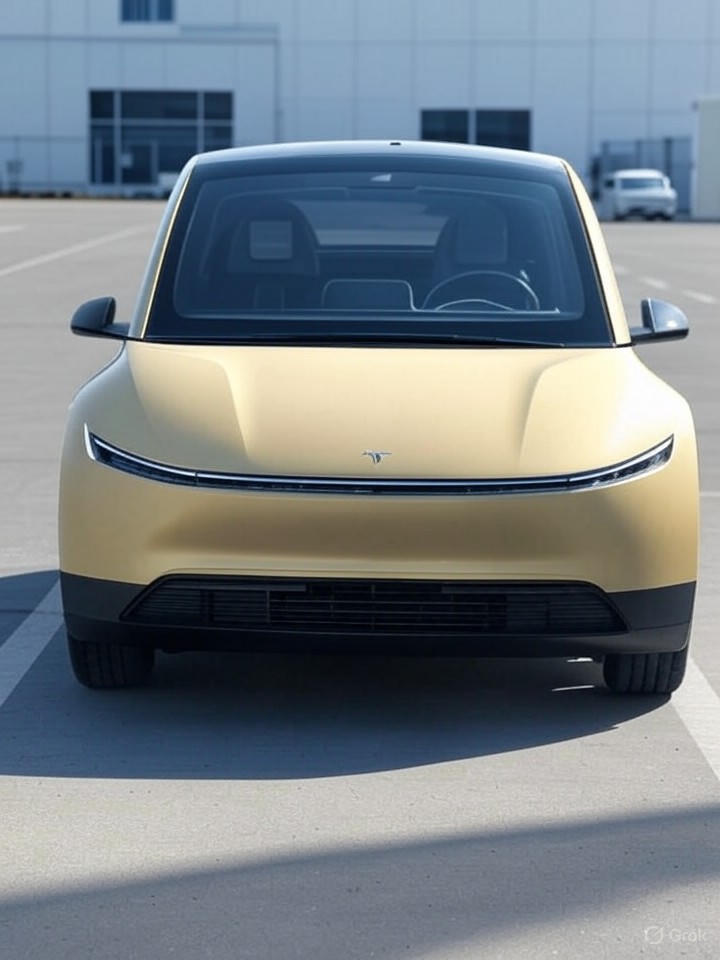
Recent drone footage emerging from Tesla Inc.’s manufacturing hubs has ignited speculation among automotive insiders about the progress of the company’s highly anticipated Cybercab, a self-driving robotaxi that could redefine urban mobility. Captured at both the Fremont Factory in California and the Gigafactory in Texas, the videos suggest that Tesla is actively testing and refining prototypes, with visible modifications hinting at imminent production ramps. This development comes amid Tesla’s push to expand its autonomous vehicle lineup, as the electric-vehicle giant seeks to counter slowing sales in its core models.
Analysts point out that the footage, which shows vehicles undergoing what appear to be stress tests and software calibrations, aligns with Tesla CEO Elon Musk’s repeated promises of a robotaxi fleet. Industry observers note that such glimpses into factory operations are rare but increasingly common through unauthorized drone surveillance, providing a window into Tesla’s secretive development processes. The buzz has been amplified on social media, where enthusiasts dissect every frame for clues about battery efficiency, sensor arrays, and chassis durability.
Testing Phases and Technological Insights
According to reports from The Cool Down, the footage implies ongoing changes and tests on the Cybercab, including potential upgrades to its autonomous driving hardware. This is particularly significant given Tesla’s reliance on vision-based systems rather than lidar, a choice that has sparked debates about safety and reliability in complex environments. Insiders familiar with the matter suggest these tests are crucial for meeting regulatory hurdles, especially as competitors like Waymo and Cruise advance their own robo-taxi services.
Further details from TeslaNorth.com highlight sightings of the Cybercab at Tesla’s crash test facilities, indicating rigorous safety evaluations. These observations underscore Tesla’s integrated approach to vehicle design, where software updates can be deployed over-the-air, potentially accelerating iteration cycles compared to traditional automakers. However, challenges remain, including navigating varying state laws on autonomous vehicles and addressing public skepticism following past incidents with Tesla’s Full Self-Driving beta.
Market Implications and Production Ramp-Up
The timing of this footage is noteworthy, as Tesla has faced a sales dip throughout 2025, with reports from Yahoo Finance noting a significant drop-off in car deliveries. Launching the Cybercab could diversify revenue streams through ride-hailing services, potentially generating billions in annual income if scaled successfully. Economists estimate that a fleet of one million robotaxis could disrupt the $10 trillion global transportation market, though Tesla would need to overcome production bottlenecks and supply chain issues evident in the drone videos.
Drone captures also reveal mysterious covered vehicles at Gigafactory Texas, as detailed in EVXL.co, fueling theories about parallel development of affordable EV variants alongside the Cybercab. This multi-pronged strategy reflects Tesla’s ambition to dominate both personal and shared mobility sectors. Yet, skeptics warn that hype around such footage often precedes delays, recalling the protracted rollout of the Cybertruck.
Regulatory and Competitive Pressures
On the regulatory front, Tesla’s advancements must align with evolving guidelines from bodies like the National Highway Traffic Safety Administration, which has scrutinized autonomous tech following high-profile accidents. The footage suggests Tesla is prioritizing real-world testing, a move that could expedite approvals but also risks exposing vulnerabilities if mishaps occur during these phases.
Competitively, the Cybercab positions Tesla against giants like Uber and emerging startups, with potential partnerships in fleet management on the horizon. As one venture capitalist remarked, the real value lies not just in the vehicle but in the data ecosystem it creates, enabling continuous improvements in AI-driven navigation. With production hints growing stronger, industry watchers anticipate official announcements soon, potentially reshaping how cities approach transportation infrastructure.


 WebProNews is an iEntry Publication