
Unlocking the Invisible: Teradar’s Terahertz Sensor Ushers in a New Era of Automotive Perception
In the fast-evolving world of automotive technology, where self-driving cars promise to reshape transportation, a new player has emerged with a sensor that could bridge longstanding gaps in vehicle perception. Teradar, a Boston-based startup, unveiled its first terahertz-band vision sensor at the Consumer Electronics Show (CES) 2026, drawing immediate attention from industry experts and investors alike. This device, operating in the terahertz frequency range—between microwaves and infrared light—aims to combine the strengths of radar and lidar while overcoming their limitations, potentially revolutionizing how vehicles “see” the world around them.
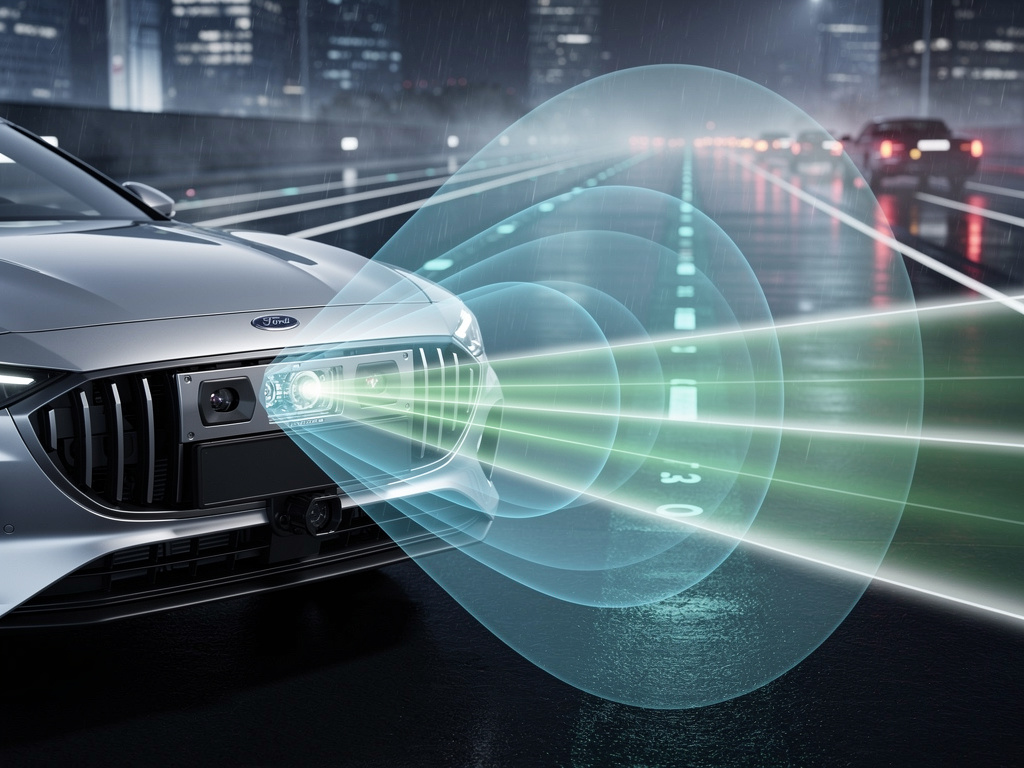
The announcement comes at a pivotal time for the automotive sector, as companies grapple with the challenges of achieving reliable autonomy in diverse conditions. Traditional sensors like cameras struggle in low light or adverse weather, radar penetrates fog but lacks resolution, and lidar offers precision but at high cost and with weather vulnerabilities. Teradar’s sensor, dubbed Summit, taps into the terahertz band to provide high-resolution imaging with long-range detection, even through rain, snow, or dust. According to details shared in a TechCrunch article, the company is leveraging this underutilized spectrum to deliver what it calls “4D sensing”—adding depth and velocity to traditional imaging.
Founded in stealth mode and emerging publicly in November 2025 with a $150 million funding round, Teradar has quickly positioned itself as a disruptor. The sensor’s ability to detect objects at distances up to 300 meters with sub-millimeter accuracy sets it apart, promising enhancements in safety for both human-driven and autonomous vehicles. Industry insiders note that this could be particularly transformative for applications in trucking and ride-sharing fleets, where reliability in all weather is paramount.
Pioneering the Terahertz Frontier
Terahertz waves, often referred to as T-rays, occupy a sweet spot in the electromagnetic spectrum, offering penetration capabilities similar to radar but with the resolution approaching that of optical systems. Teradar’s innovation lies in making this technology commercially viable for automotive use, overcoming historical hurdles like high production costs and bulky hardware. As reported in a Forbes piece, the company exploits the wavelength region between optical and radar sensing to create a disruptive solution that fills the “LiDAR-radar gap.”
Early demonstrations at CES showcased the sensor’s prowess: in simulated fog, it accurately identified pedestrians and cyclists where conventional systems faltered. This is achieved through solid-state technology, eliminating moving parts and reducing costs—Teradar claims production at scale could bring per-unit prices below $500, a fraction of current lidar systems. Partnerships with automakers are already in discussion, with whispers of integrations into models from major players like Tesla and Ford by 2028.
Beyond hardware, Teradar emphasizes software integration. The sensor feeds data into AI-driven perception stacks, enhancing machine learning models for better object classification. Posts on X from tech enthusiasts highlight excitement around this, with users noting how it could augment camera-based systems, echoing sentiments from Elon Musk’s past endorsements of vision-only autonomy while adding a robust backup layer.
From Stealth to Spotlight: Teradar’s Rapid Ascent
Teradar’s journey began in academic labs, where founders drew from research in photonics and materials science. The company’s debut press release, covered in a PR Newswire announcement from November 2025, detailed the sensor’s development, emphasizing its role in redefining safety for cars, trucks, and autonomous vehicles. This rapid progression from concept to prototype underscores the startup’s agility, fueled by venture capital from firms betting big on next-gen sensing.
Comparisons to established technologies are inevitable. Radar, a staple in adaptive cruise control, excels in range but struggles with fine details. Lidar, used by companies like Waymo, provides 3D mapping but is expensive and weather-sensitive. Terahertz sensing, as Teradar implements it, offers a hybrid: it penetrates obscurants like radar while delivering image-like resolution, potentially reducing the need for multi-sensor fusion and simplifying vehicle architectures.
Real-world testing data, shared during the CES reveal, indicates a 40% improvement in detection accuracy under poor visibility compared to leading competitors. This has sparked interest from regulatory bodies, as enhanced sensors could accelerate approvals for Level 4 autonomy. X posts from automotive analysts praise this as a game-changer, with one viral thread discussing how it might address Tesla’s ongoing challenges with vision-based systems in inclement weather.
Technical Deep Dive: How Terahertz Works in Motion
At its core, Teradar’s Summit sensor uses terahertz waves generated by compact, chip-scale emitters. These waves interact with objects, reflecting back signals that are captured and processed to form detailed 4D maps—incorporating position, shape, material composition, and speed. Unlike lidar’s laser pulses, terahertz waves are non-ionizing and safe, with lower power requirements that extend battery life in electric vehicles.
Integration challenges remain, however. Automakers must adapt existing platforms to incorporate this new data stream, which could involve overhauling software ecosystems. A New Atlas article from late 2025 explores how Teradar’s technology offers better vision than radar and lidar in bad weather at a lower cost, positioning it as an ideal complement for self-driving cars.
Industry feedback at CES was overwhelmingly positive, with demos showing the sensor distinguishing between a plastic bag and a child in the road— a common failure mode for current systems. This material differentiation stems from terahertz spectroscopy, which analyzes how waves are absorbed differently by various substances, adding a layer of intelligence to perception.
Market Implications and Competitive Dynamics
The automotive sensing market, valued at over $20 billion annually, is ripe for innovation. Teradar’s entry could pressure incumbents like Velodyne and Continental to accelerate their own R&D. Analysts predict that by 2030, terahertz-based systems might capture 15% of the market share, driven by demand for all-weather autonomy. Recent web searches reveal growing buzz, with TechCrunch noting the sensor’s reveal as a highlight of CES 2026.
Funding details reveal strategic backers, including venture arms from automotive giants, signaling confidence in scalability. Teradar plans pilot programs with fleet operators in 2026, aiming for mass production by 2027. This timeline aligns with broader industry shifts toward software-defined vehicles, where upgradable sensors like Summit could be retrofitted via over-the-air updates.
Concerns about spectrum regulation loom, as terahertz bands are not yet fully allocated for commercial use. However, advocacy from groups like the IEEE, as mentioned in a IEEE Spectrum article, suggests regulatory frameworks are evolving to accommodate such technologies, potentially transforming automotive safety.
Broader Applications Beyond the Road
While automotive is the initial focus, Teradar envisions applications in robotics, security, and healthcare. In drones, terahertz sensors could enable navigation in cluttered environments; in airports, they might enhance baggage screening. This versatility broadens the company’s appeal to investors, with X discussions highlighting potential cross-industry disruptions.
Challenges include manufacturing at scale—terahertz components require specialized fabs, which could bottleneck supply. Teradar is partnering with semiconductor leaders to mitigate this, drawing lessons from the chip shortages of the early 2020s.
Looking ahead, the sensor’s impact on safety metrics could be profound. Studies suggest that advanced perception could reduce accidents by 30%, saving lives and cutting insurance costs. As Teradar refines its technology, it may well set new standards for what vehicles can perceive.
Vision for the Future: Autonomy Redefined
Integration with AI is key to unlocking Summit’s full potential. By providing richer data sets, it enables more sophisticated neural networks, potentially accelerating the path to full autonomy. Posts on X from tech influencers compare this to historical leaps, like the shift from radar to GPS in navigation.
Competitive responses are emerging; rivals are exploring similar bands, but Teradar’s first-mover advantage, backed by patents, positions it strongly. A PR Newswire release from CES underscores the sensor’s role in redefining safety and driving.
As the industry watches, Teradar’s terahertz breakthrough could mark a turning point, blending the best of existing technologies into a cohesive, superior solution. With ongoing trials and partnerships, the road ahead looks clearer than ever, promising safer journeys for all.


 WebProNews is an iEntry Publication