
Cloud Evasions: Tencent’s Japanese Detour to Nvidia’s Forbidden AI Arsenal
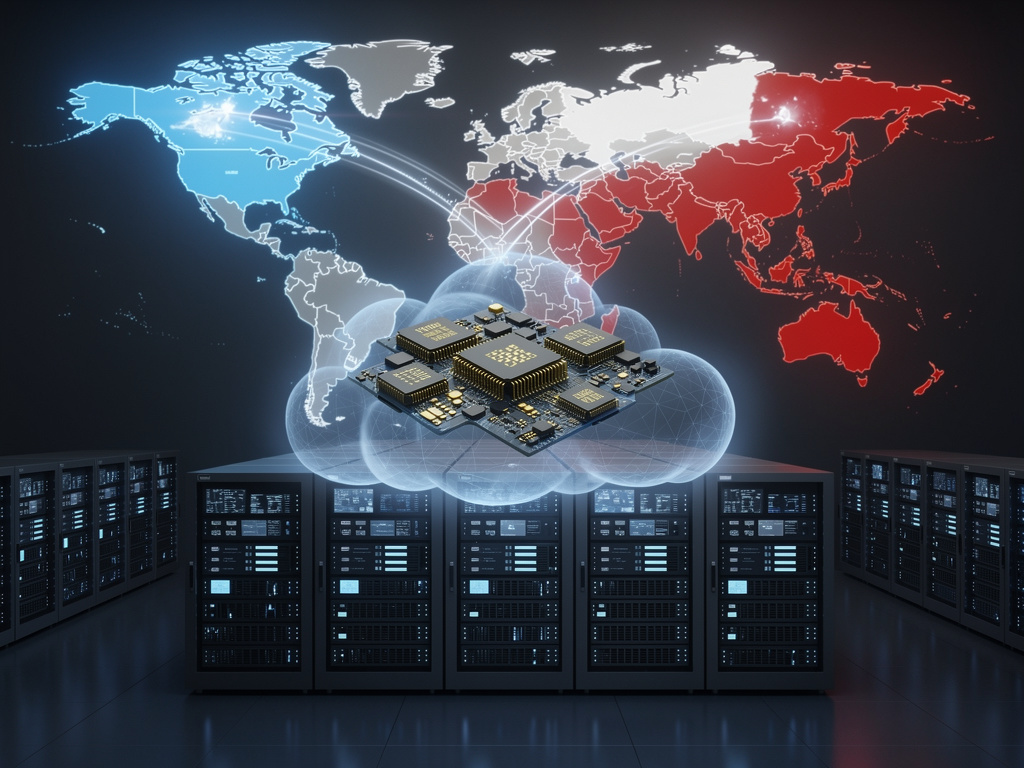
In the high-stakes world of artificial intelligence, where technological supremacy can tip the balance of global power, Chinese tech giant Tencent Holdings Ltd. has found a clever workaround to access Nvidia Corp.’s cutting-edge Blackwell AI chips. Despite U.S. export restrictions aimed at curbing China’s AI ambitions, Tencent is tapping into these powerful processors through a cloud computing deal in Japan. This maneuver highlights the challenges Washington faces in enforcing tech bans in an interconnected digital economy. Reports indicate that Tencent is renting computing power from Japanese data centers equipped with Blackwell chips, effectively bypassing direct ownership prohibitions.
The arrangement involves Datasection Inc., a Tokyo-based cloud provider that has rapidly scaled up its operations to become one of Asia’s prominent players in AI infrastructure. According to a detailed account in the Financial Times, contracts with Tencent have propelled Datasection’s growth, turning it into a key hub for what the industry calls “neoclouds”—specialized data centers focused on next-generation computing. These facilities, located outside Osaka, house thousands of Nvidia’s latest chips, allowing Tencent to run AI models remotely without physically importing the hardware into China.
This development comes amid heightened U.S.-China tensions over technology transfers. President Donald Trump, during his campaign and early administration, repeatedly warned that advanced AI chips like Blackwell would not be available to “other people,” emphasizing that only the United States should hold such technological edges. Yet, as per insights from Benzinga, Tencent’s strategy exploits a loophole in export controls: while selling or shipping the chips to China is banned, accessing them via overseas cloud services remains permissible under current rules.
The Rental Revolution in AI Access
Industry experts point out that this rental model is not entirely new but has gained momentum as export restrictions tighten. By leasing GPU time from foreign providers, Chinese firms can train sophisticated AI systems without violating bans on hardware acquisition. Wccftech reports in a piece titled “China’s Tencent Gains Access to the ‘Banned’ NVIDIA’s Blackwell B200 AI Chips by Leveraging the Rental Loophole in U.S. Export Controls” that such workarounds are becoming standard for AI giants in China, allowing them to stay competitive despite geopolitical barriers.
The Blackwell series, Nvidia’s most advanced AI accelerators, promise unprecedented performance in training large language models and other data-intensive tasks. Their architecture, featuring enhanced tensor cores and higher memory bandwidth, could give users a significant edge in developing generative AI applications. For Tencent, which operates everything from social media platforms to gaming empires, access to such technology is crucial for maintaining innovation in a fiercely competitive market.
However, this setup raises questions about the effectiveness of U.S. policies. A Reuters exclusive from December 19, 2025, notes that the Trump administration launched a review of advanced Nvidia AI chip sales to China, potentially paving the way for limited shipments. Yet, the cloud rental path circumvents these deliberations, as the chips never cross into restricted territories.
Geopolitical Ripples and Policy Gaps
Posts on X, formerly Twitter, reflect a mix of admiration and concern over Tencent’s ingenuity. Users have highlighted how this deal underscores the porous nature of tech sanctions, with some speculating on broader implications for U.S. national security. One post emphasized Trump’s stance that “nobody other than the United States” should have Blackwell chips, yet the Japanese arrangement appears to defy that rhetoric.
Datasection’s role is particularly intriguing. The company, relatively unknown until recently, has invested heavily in Nvidia hardware, reportedly securing thousands of Blackwell units. This influx has not only boosted its stock but also positioned Japan as an unlikely bridge in the U.S.-China tech divide. As detailed in a Stocktwits article, Tencent’s access via this Tokyo provider was first reported by Barron’s, illustrating how third-party nations can inadvertently facilitate technology flows.
The economic incentives are clear. For Japanese firms like Datasection, partnering with Chinese behemoths offers lucrative revenue streams. Meanwhile, Nvidia benefits indirectly, as demand for its chips remains robust despite export curbs. Stock analysts on platforms like Seeking Alpha have noted that Tencent’s move could pressure U.S. policymakers to revisit cloud-based access rules, potentially leading to tighter regulations on international data centers.
Trump’s Warnings and Enforcement Challenges
Trump’s warnings about Blackwell availability were explicit. In interviews, he stated that the chips would not be provided to adversaries, framing them as a strategic asset. A post on X from November 2025 echoed this, quoting Trump as saying the most advanced chips are for U.S. use only. However, the reality of global supply chains complicates enforcement. The administration’s review, as covered by Reuters, might approve downgraded versions for China, but the full-powered Blackwell remains off-limits—except through rentals.
This isn’t isolated to Japan. Reports suggest Tencent is exploring similar deals in Sydney, Australia, further diversifying its access points. Cryptopolitan’s coverage indicates that data centers in these locations provide a “path around Washington’s hardware limits,” allowing Chinese firms to process AI workloads without direct imports.
The broader implications for AI development are profound. Without unrestricted access, Chinese companies risk falling behind in the global race, yet loopholes like this keep them in the game. Industry insiders argue that true containment would require international cooperation, something that’s proven elusive amid economic interdependencies.
Nvidia’s Balancing Act in Global Markets
Nvidia, caught in the crossfire, has navigated these restrictions carefully. CEO Jensen Huang has publicly supported bringing manufacturing back to the U.S., as mentioned in X posts attributing it to Trump’s influence. The company’s Blackwell production in Arizona marks a shift from Taiwan-centric operations, bolstering domestic capabilities.
Yet, Nvidia’s business model thrives on widespread adoption. By supplying chips to neutral third parties like Datasection, it maintains revenue without directly flouting bans. A TradingView news item describes how this Japanese setup deploys Nvidia’s newest GPUs, enabling Tencent’s AI pursuits.
Critics, including U.S. lawmakers, view this as a failure of export controls. Alan Tonelson, in an X post, lamented that Biden attempted to close such loopholes, but Trump preserved them, allowing Chinese firms indirect access.
Future Horizons for Tech Sanctions
Looking ahead, the Tencent-Datasection deal could prompt a reevaluation of cloud computing in international trade policy. Experts predict that as AI becomes more cloud-dependent, regulators might impose data sovereignty rules or require transparency in cross-border computing.
For Tencent, this access ensures continuity in its AI initiatives, from enhancing WeChat’s features to advancing gaming technologies. The company’s stock has reacted positively, with investors seeing the workaround as a sign of resilience.
Meanwhile, Japanese authorities have remained supportive, viewing the influx of tech investment as a boon. However, pressure from Washington could alter this dynamic, especially if the U.S. pushes allies to align on export controls.
Economic Incentives Driving Innovation Evasions
The financial stakes are enormous. Nvidia’s Blackwell chips represent billions in potential revenue, and restricting them to select markets limits growth. Chinese firms, facing bans, are pouring resources into domestic alternatives, but rentals provide a stopgap.
Posts on X from crypto and tech enthusiasts highlight deals like Nvidia’s supply to Saudi Arabia, contrasting with China’s restrictions and underscoring selective enforcement.
Ultimately, this saga reveals the limitations of unilateral sanctions in a digitized world. As cloud services blur national boundaries, enforcing tech superiority demands nuanced, multilateral approaches.
Industry Responses and Strategic Shifts
Competitors are watching closely. U.S. firms like Google and Microsoft offer cloud AI services, but Chinese access is similarly restricted. Tencent’s model might inspire others, potentially leading to a proliferation of offshore data havens.
Analysts from Igor’s Lab discuss how these rental models make bans “surprisingly porous,” urging a rethink of global AI governance.
In the end, Tencent’s Japanese cloud deal exemplifies the cat-and-mouse game of tech geopolitics, where innovation finds paths through regulatory mazes, challenging superpowers to adapt or risk obsolescence.


 WebProNews is an iEntry Publication