
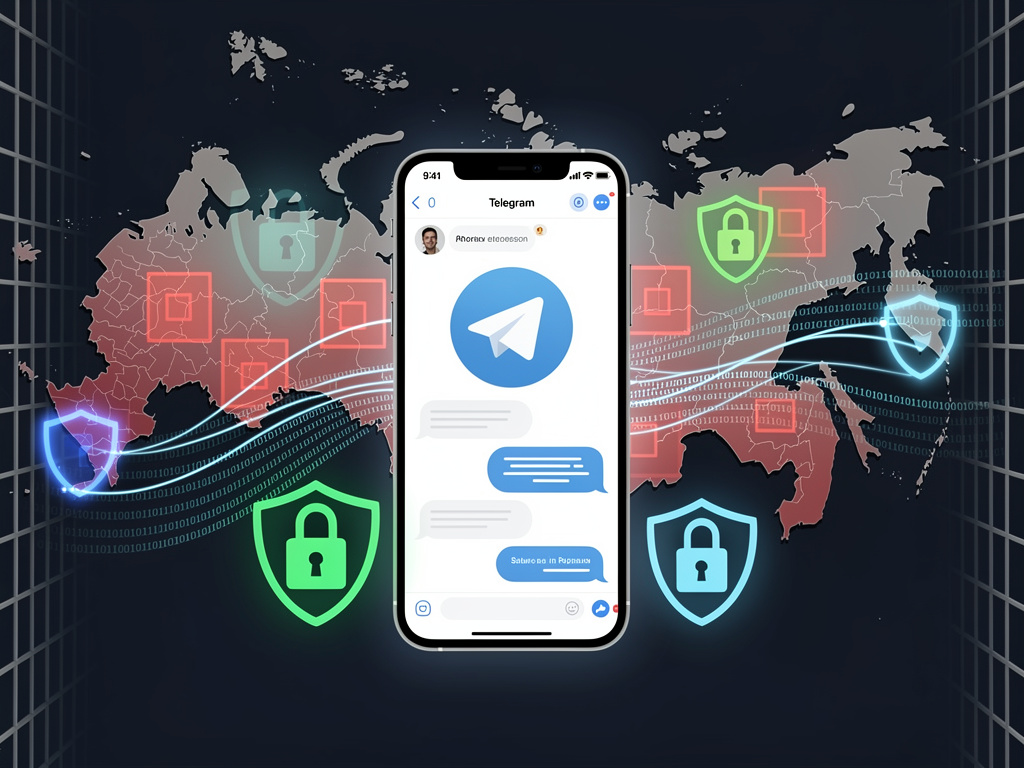
For years, Telegram has occupied a peculiar space in Russia’s digital ecosystem — simultaneously tolerated and surveilled, embraced by tens of millions of citizens yet viewed with suspicion by the Kremlin. That uneasy coexistence appears to be fracturing. In recent weeks, Russian authorities have moved to impose sweeping new restrictions on the messaging platform, prompting its CEO, Pavel Durov, to publicly condemn the measures and triggering a sharp uptick in VPN adoption among Russian internet users desperate to maintain access to one of their most essential communication tools.
The confrontation marks a significant escalation in the long-running tension between Moscow and the Dubai-based messaging service, which boasts more than 950 million users globally and remains the dominant communications platform in Russia. It also raises urgent questions about the future of digital privacy in one of the world’s most surveilled states, and whether the Kremlin’s latest crackdown will succeed where previous efforts have failed.
Durov Breaks His Silence on Russian Restrictions
Pavel Durov, the Russian-born billionaire who founded Telegram in 2013, has rarely been one to mince words when it comes to government overreach. But his latest public statements carry an unusual edge. According to TechRadar, Durov condemned the new restrictions imposed by Russian authorities, framing them as an assault on the communication rights of ordinary citizens. His comments came as reports emerged that Russian internet service providers had begun throttling or partially blocking Telegram traffic in certain regions, making the app sluggish or entirely inaccessible without circumvention tools.
The restrictions appear to be part of a broader campaign by Roskomnadzor, Russia’s federal communications regulator, to tighten control over digital platforms that resist full compliance with the country’s increasingly stringent data localization and surveillance laws. Russia’s so-called “sovereign internet” legislation, enacted in 2019, gave authorities the technical infrastructure to filter, throttle, and block internet traffic at will. While Telegram was officially unblocked in Russia in 2020 after a two-year ban that was widely regarded as ineffective, the current measures suggest the Kremlin is exploring more sophisticated methods of controlling access to the platform.
A History of Cat-and-Mouse: Russia vs. Telegram
The relationship between Telegram and the Russian state has been fraught since the platform’s inception. Durov, who also founded the Russian social network VKontakte before being forced out by Kremlin-aligned investors, built Telegram explicitly as a privacy-first messaging service. The platform’s end-to-end encryption for secret chats and its refusal to hand over encryption keys to Russian intelligence services led to its initial ban in 2018. That ban, however, proved to be a spectacular failure — millions of Russians continued using Telegram through VPNs and proxy servers, and the blocking efforts caused widespread collateral damage, inadvertently disrupting access to unrelated services including Google and Amazon Web Services.
When Russia lifted the ban in June 2020, it was widely interpreted as an acknowledgment that the effort had been futile. But the reversal came with implicit strings attached. Analysts noted at the time that Telegram appeared to have made certain concessions regarding cooperation with Russian authorities on terrorism-related content moderation, though the exact nature of any agreement remained opaque. Durov has consistently maintained that Telegram has never provided encryption keys or bulk user data to any government.
VPN Demand Spikes as Russians Seek Digital Escape Routes
The most immediate and measurable consequence of the new restrictions has been a dramatic surge in VPN usage across Russia. As TechRadar reported, Russian citizens have turned to virtual private networks in large numbers to bypass the blocks and maintain access to Telegram. This pattern mirrors what occurred during the 2018 ban, when VPN downloads in Russia skyrocketed virtually overnight.
The spike is particularly notable because Russia has simultaneously been cracking down on VPN services themselves. Over the past two years, Roskomnadzor has blocked or restricted access to numerous popular VPN providers, and legislation passed in recent sessions has imposed penalties on the distribution of tools designed to circumvent internet restrictions. Despite these efforts, VPN usage in Russia has continued to climb. According to data from multiple VPN providers, Russia consistently ranks among the top countries globally for VPN adoption, a trend that has accelerated since the start of the conflict in Ukraine in 2022, when authorities blocked access to major Western social media platforms including Facebook, Instagram, and Twitter.
The Kremlin’s Expanding Toolkit for Internet Control
What makes the current round of restrictions different from the ham-fisted blocking attempts of 2018 is the sophistication of the tools now at the Russian government’s disposal. The deep packet inspection (DPI) technology deployed under the sovereign internet law allows authorities to identify and throttle specific types of internet traffic — including VPN protocols — without necessarily blocking entire IP ranges. This means regulators can degrade the Telegram experience for ordinary users without triggering the kind of widespread internet disruptions that embarrassed them six years ago.
Russia has also been investing heavily in domestic alternatives to Western digital services, part of a broader strategy to reduce dependence on foreign platforms. The state-backed messaging service, VK Messenger, and other domestic platforms have been promoted as alternatives, though none have come close to matching Telegram’s user base or feature set. Telegram’s appeal extends far beyond simple messaging — it functions as a news distribution platform, a social network, a file-sharing service, and even a financial tool through its TON blockchain integration. For many Russians, it is the primary source of independent news and information, making any restriction on access a matter of profound civic significance.
Durov’s Legal Entanglements Add Complexity
The timing of the Russian crackdown is also notable in the context of Durov’s ongoing legal troubles in France. The Telegram CEO was detained by French authorities in August 2024 on charges related to the platform’s alleged failure to cooperate with law enforcement investigations into criminal activity conducted through Telegram. Durov was released on bail but remains under judicial supervision in France, unable to leave the country. The French case has drawn intense international attention and raised questions about whether governments worldwide are coordinating pressure on Telegram to weaken its privacy protections.
Durov has framed both the French prosecution and the Russian restrictions as part of a broader pattern of government hostility toward encrypted communications platforms. His public statements suggest he views the current moment as an existential test for Telegram’s founding principles. The platform has made some concessions to law enforcement in recent months — including updated policies on sharing limited user data in response to valid legal requests — but Durov has drawn a firm line against providing backdoor access to encrypted communications or bulk surveillance capabilities.
What the Telegram Standoff Means for Global Digital Rights
The escalating confrontation between Telegram and the Russian state carries implications that extend well beyond Russia’s borders. Governments around the world are grappling with the tension between citizens’ right to private communication and the state’s desire for surveillance capabilities. The European Union’s proposed Chat Control legislation, India’s repeated clashes with WhatsApp over encryption, and Brazil’s periodic bans on messaging platforms all reflect the same fundamental conflict.
For Russia’s approximately 100 million Telegram users, the stakes are immediate and personal. The platform serves as a lifeline for independent journalism, civil society organizing, and private communication in a country where traditional media is almost entirely state-controlled. Each new restriction pushes more users toward VPNs and other circumvention tools, creating a growing population of digitally literate citizens who are practiced in evading government controls — a dynamic that authoritarian regimes have historically found difficult to reverse.
The Road Ahead for Telegram and Its Users
Whether Russia’s latest measures will prove more effective than the failed 2018 ban remains to be seen. The technical capabilities available to Roskomnadzor have improved substantially, but so have the circumvention tools available to ordinary users. The VPN market has matured significantly, with providers offering increasingly sophisticated obfuscation technologies designed specifically to evade DPI-based blocking.
Durov, for his part, shows no signs of backing down. His public condemnation of the Russian restrictions represents a calculated bet that Telegram’s massive user base gives it leverage that few other platforms possess. With nearly a billion users worldwide and a dominant position in multiple markets across the former Soviet Union, the Middle East, and Southeast Asia, Telegram is too large and too deeply embedded in daily life to be easily dislodged. The coming months will test whether that assessment holds — and whether the Kremlin is prepared to accept the economic and social costs of a full-scale digital confrontation with the platform that has become, for better or worse, the backbone of Russian digital communication.


 WebProNews is an iEntry Publication