
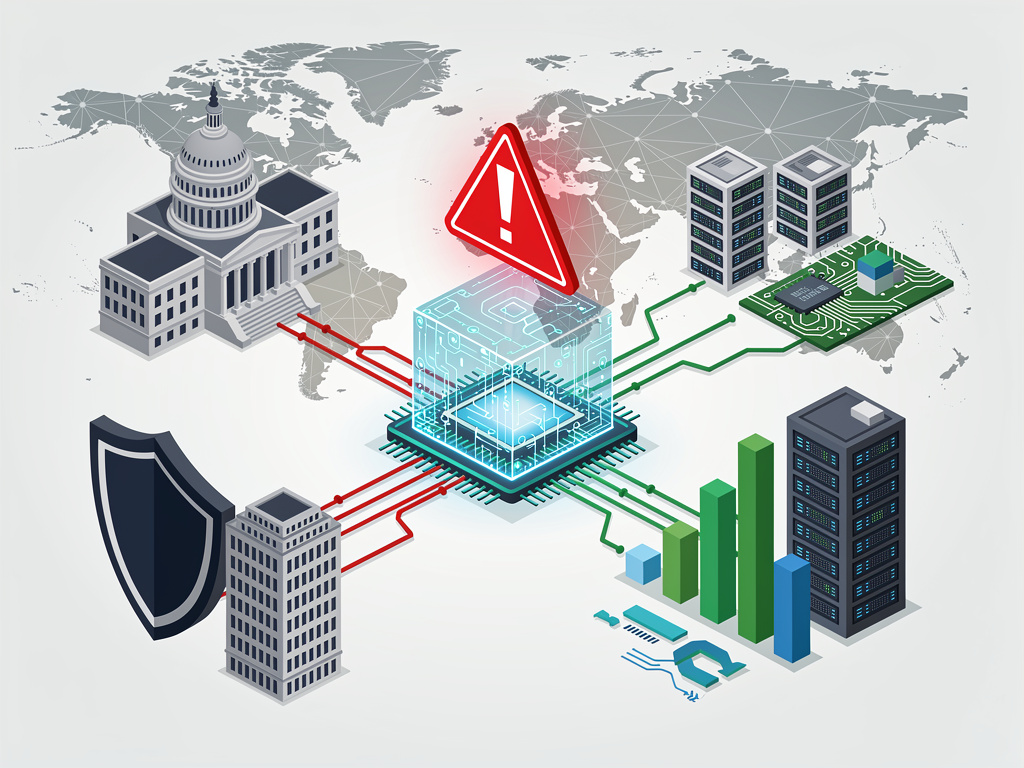
A coalition of major technology trade groups is pressing the Trump administration to reverse a designation that labels AI startup Anthropic as a supply chain risk — a move that could complicate the company’s access to government contracts and send a chilling signal across the artificial intelligence sector.
The dispute centers on a little-known federal supply chain risk management process. Anthropic, the San Francisco–based maker of the Claude AI assistant, was flagged under the Federal Acquisition Supply Chain Security Act, which allows agencies to restrict procurement from companies deemed potential threats. The designation, first reported by MSN and other outlets, has drawn sharp pushback from industry.
The Information Technology Industry Council (ITI), the Computer & Communications Industry Association (CCIA), and other trade bodies sent a letter urging the administration to drop the label. Their argument is straightforward: Anthropic is a U.S.-headquartered company with no known foreign adversary ties, and branding it a supply chain risk undermines the credibility of the entire risk assessment framework.
That framework matters. It was designed to protect federal networks from threats posed by companies with links to hostile governments — think Huawei or Kaspersky. Applying it to an American AI firm with substantial backing from Amazon and Google strikes many in the industry as a misuse of the tool.
“This action risks weaponizing a supply chain security process for purposes it was never intended to serve,” ITI President Jason Oxman said, according to reporting from Reuters. The concern isn’t just about Anthropic. It’s about precedent. If any domestic technology company can be tagged with a supply chain risk label without transparent justification, the designation becomes a political weapon rather than a security mechanism.
So why Anthropic?
The precise rationale behind the label hasn’t been made fully public, which is itself part of the controversy. The Federal Acquisition Security Council (FASC), an interagency body, can issue these designations through a process that doesn’t require the same level of disclosure as other federal actions. Critics say that opacity is exactly the problem. Companies have limited ability to contest or even understand the basis for being flagged.
Some observers have pointed to Anthropic’s public stance on AI safety and its willingness to engage with policymakers on both sides of the aisle — including cooperation with the Biden administration’s AI executive order — as a possible irritant. Anthropic CEO Dario Amodei has been outspoken about the existential risks of artificial intelligence, a position that doesn’t always align neatly with the current administration’s deregulatory posture. But drawing a direct line between policy disagreements and a supply chain designation remains speculative.
What isn’t speculative is the financial and competitive impact. A supply chain risk label can effectively lock a company out of federal procurement, a market worth hundreds of billions of dollars annually. For Anthropic, which has been aggressively pursuing government and enterprise customers, the designation is more than an inconvenience. It’s a direct threat to a major revenue channel.
And the timing is notable. Anthropic closed a $2 billion funding round led by Lightspeed Venture Partners in early 2025, with the company valued at roughly $60 billion. Amazon has committed up to $4 billion in investment. Google has poured in $2 billion more. These aren’t companies that typically back firms with genuine supply chain vulnerabilities.
The broader AI industry is watching closely. Trade groups argue that unpredictable government designations will deter investment in American AI companies at precisely the moment the U.S. is competing with China for technological supremacy. CCIA’s Matt Schruers told reporters that the action “sends the wrong message to innovators and investors alike.”
There’s also a legal dimension. The FASC process includes provisions for companies to respond to proposed actions, but the timeline and procedural protections are thin compared to formal rulemaking or adjudication. Anthropic has reportedly engaged counsel and is pushing back through official channels, though the company has declined to comment in detail publicly.
Congressional interest is building too. Several lawmakers have raised questions about whether the FASC process needs reform to prevent misapplication. Bipartisan concern — rare on most tech issues — suggests this could become a legislative flashpoint.
The stakes extend well beyond one company. If the supply chain risk label sticks, it establishes that the executive branch can effectively blacklist a domestic AI firm without public justification. That would reshape how every technology company in the country thinks about government relations, political positioning, and the cost of candor on policy matters.
For now, the administration hasn’t signaled whether it intends to withdraw the designation. But pressure is mounting from an industry that sees this as a test case — not just for Anthropic, but for the rules governing how Washington interacts with its own technology sector.


 WebProNews is an iEntry Publication