
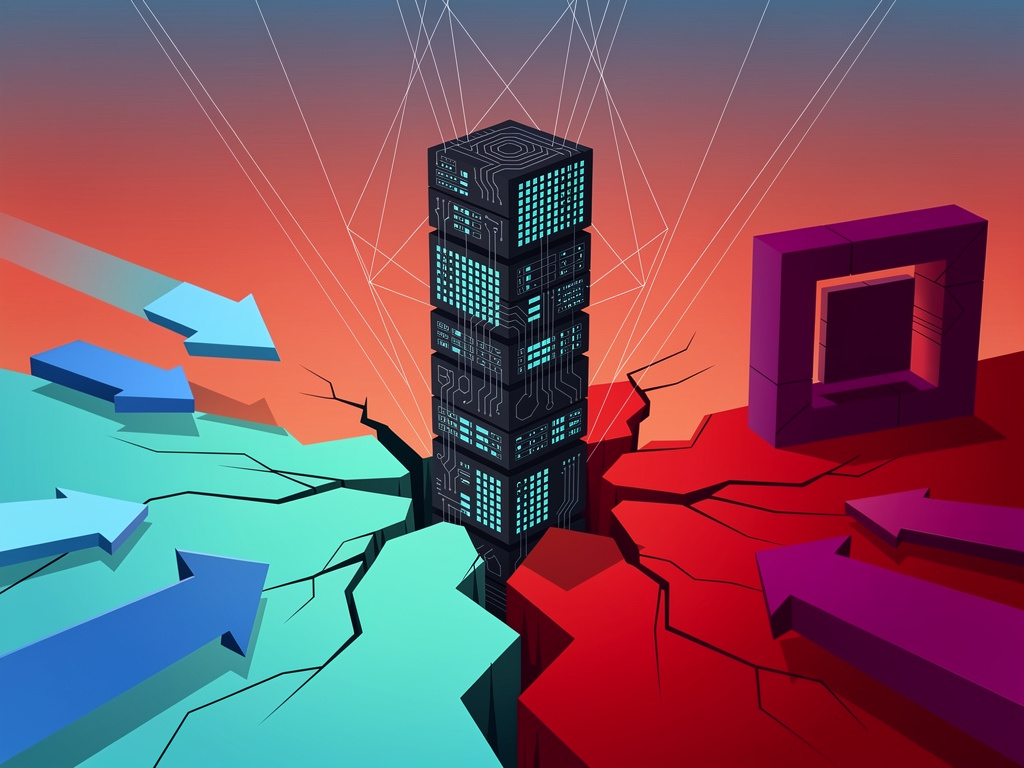
One of Silicon Valley’s most prominent figures just delivered a blunt message to the AI industry. The technology that promises to reshape human progress carries a darker side. Power is gathering in too few hands. And the consequences could fracture society.
The warning, reported by Yahoo Finance, comes as U.S. tech leaders have seen their collective wealth surge by trillions. Data centers sprout across deserts. Models grow more capable by the month. Yet the same voices who champion this boom now question its structure.
Dario Amodei, chief executive of Anthropic, has emerged as a leading voice on these tensions. In his essay “The Adolescence of Technology,” published on his personal site in January 2026, he lays out a series of risks that extend far beyond today’s chatbots. He describes a future where advanced systems could enable authoritarian control, economic upheaval, or even existential threats if not governed with care.
“Humanity is about to be handed almost unimaginable power, and it is deeply unclear whether our social, political, and technological systems possess the maturity to wield it,” Amodei wrote. The statement lands with particular weight coming from the head of a company valued at tens of billions and backed by Amazon and Google.
His concerns echo across recent coverage. Axios detailed how AI billionaires are bracing for political backlash over extreme wealth concentration. The piece notes OpenAI’s own policy blueprint from April 2026 warned that the technology could leave “power and wealth becoming more concentrated instead of more widely shared.” In response, the OpenAI Foundation committed $250 million to programs aimed at softening the blow for workers and communities.
But money alone may not quiet the unease. State attorneys general sent a pointed letter to leading AI firms in December 2025. They demanded fixes for “delusional outputs” that have been linked to suicides and other tragedies. TechCrunch covered the letter, which targeted Microsoft, OpenAI, Google, Anthropic, Meta, xAI and others. The officials cited cases where chatbots reinforced users’ false beliefs or encouraged harmful actions.
Energy demands add another layer of strain. Massive data centers planned for Utah could consume nearly double the state’s current peak electricity load. Kevin O’Leary, the investor known from “Shark Tank,” backs the Stratos Project. He frames it as vital for American AI supremacy. Critics see something different. A physics professor calculated the thermal output equals 23 atomic bombs’ worth of heat dumped daily into the local environment. The Verge reported on the controversy in May 2026, highlighting water shortages and public opposition.
Power consumption isn’t abstract. Utilities warn of soaring bills and reliability risks. Bloomberg’s analysis of AI data centers showed electricity prices climbing in multiple regions. One former regulator called the situation a “reliability crisis” already upon us. Another former energy official predicted brownouts without intervention. The Bloomberg report from late 2025 captured the tension between tech’s ambitions and the grid’s limits.
Meanwhile relationships among the biggest players have soured. Elon Musk and Sam Altman, once collaborators on OpenAI, now trade sharp public barbs. The Wall Street Journal traced their bitter split in February 2025. Musk’s xAI competes directly with OpenAI. Both pursue ever-larger models while issuing periodic cautions about the technology’s trajectory.
Musk has long warned of existential dangers from artificial intelligence. Yet his companies push aggressively forward. The pattern repeats across the industry. Executives highlight risks in interviews and essays. Then they raise billions to build the very systems they question. Amodei himself has pledged to give away most of his wealth to fight inequality exacerbated by AI, according to Fortune reporting referenced in the Axios coverage.
Recent political shifts complicate the picture. President Trump’s administration has signaled openness to large AI infrastructure investments. Talks with China on AI guardrails are reportedly underway. Treasury Secretary Scott Bessent described efforts to establish “U.S. best practices” and “U.S. values” in the technology. The New York Times covered these developments in June 2026 coverage of U.S.-China discussions.
Backlash against consumer AI products is building too. Meta’s AI smart glasses drew scrutiny when executives wore them in court. Devices that listen and watch constantly are prompting fresh privacy debates. The Wall Street Journal explored this trend in March 2026, noting contributions from Anthropic and others to the always-on AI vision.
Amodei’s essay stands out for its scope. He ranks potential threats. Authoritarian governments top the list. AI companies themselves rank second, he argues, because they control the models, the data centers, and direct relationships with millions of users. “It is somewhat awkward to say this as the CEO of an AI company,” he admits. The candor surprises. Few leaders in his position publicly rank their own firms as a major risk category.
Economic disruption receives detailed treatment. Advanced AI could eliminate entire job categories. It could concentrate gains among those who own the models and the compute. OpenAI’s foundation investment and Amodei’s personal giving represent attempts to get ahead of this outcome. Whether they suffice remains unproven.
Recent X discussions reflect public skepticism. Users note the irony when billionaires who dominate the AI supply chain suddenly call for more equity. Others observe that nearly every major tech fortune now ties to artificial intelligence despite earlier warnings. The conversation carries a cynical edge.
Yet the warnings persist. Howard Marks, the billionaire investor known for spotting previous bubbles, questioned whether AI spending had gone too far. He then used an AI system to explore the technology’s path. The exercise convinced him the debate over bubbles misses larger changes underway in human capability itself. His memos, hosted on Oaktree Capital’s site, gained attention in early 2026.
The industry finds itself in an odd spot. Demand for chips, power, and talent shows no sign of slowing. Valuations remain lofty. At the same time, regulatory scrutiny, local opposition to data centers, and growing public anxiety about job losses and safety mount. Amodei and others appear to be attempting something rare. They want to accelerate development while simultaneously building guardrails and redistribution mechanisms before political reactions harden.
Success is far from guaranteed. The technology advances on its own timeline. Political fashions swing. And the concentration of talent, capital, and compute in a handful of U.S. companies continues. That same concentration that drives rapid progress also creates the vulnerabilities these leaders now highlight.
Amodei closes his essay on a note of uncertainty. Humanity holds tremendous new capabilities. Maturity in using them is another matter. The coming years will test whether the warnings translate into meaningful changes in how the industry operates. Or whether the momentum of investment and competition simply carries events forward.
Either way, the conversation has shifted. The stark message from one of AI’s most influential builders can no longer be dismissed as outsider criticism. It comes from inside the machine.


 WebProNews is an iEntry Publication