
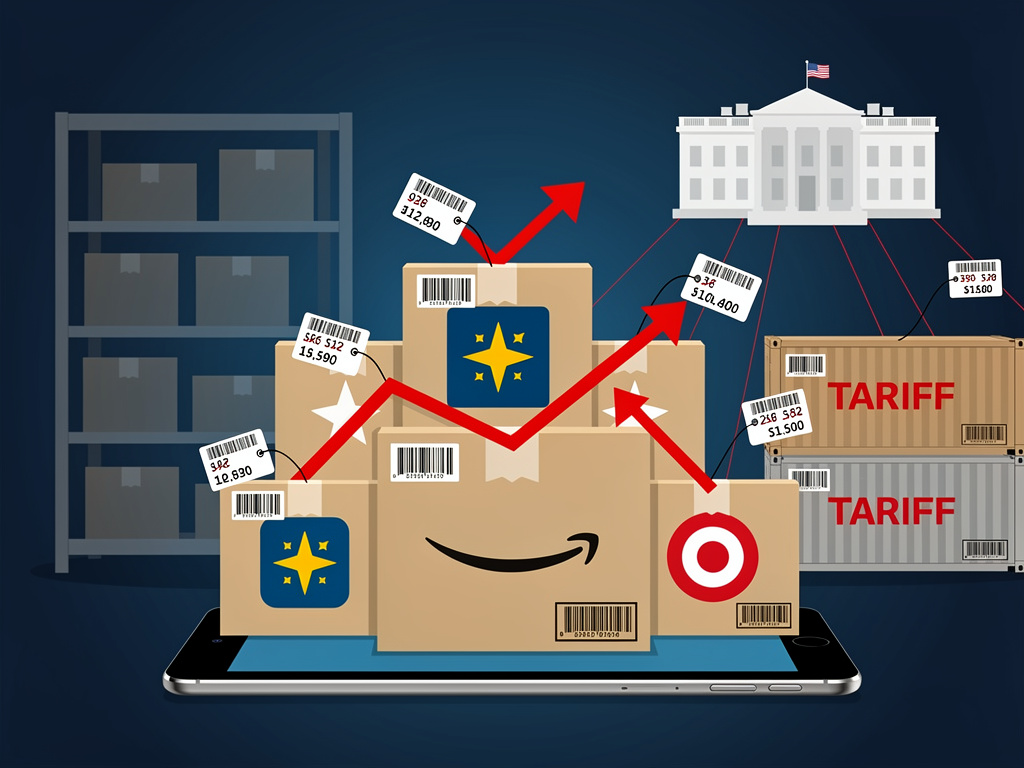
In the glittering halls of Davos, amid discussions on global trade and economic resilience, Amazon CEO Andy Jassy delivered a candid assessment that reverberated through retail boardrooms and Wall Street trading floors. Speaking to CNBC on the sidelines of the World Economic Forum, Jassy revealed that President Donald Trump’s sweeping tariffs, imposed last spring, are now “creep[ing] into some of the prices” on Amazon’s platform. This marks a pivotal shift for the e-commerce behemoth, which relies heavily on third-party sellers importing goods from tariff-hit nations like China.
Amazon and its sellers had preemptively stockpiled inventory ahead of the tariff rollout, a strategy Jassy highlighted as key to buffering initial cost shocks. “Like many retailers, Amazon and its vast network of third-party sellers loaded up on inventory ahead of Trump’s tariff rollout last spring,” Jassy explained in the interview. But by fall, those buffers depleted, leaving sellers to grapple with duties that have escalated to 145% on Chinese imports and a 10% baseline on others. Some sellers are passing costs directly to consumers, others absorbing them to maintain volume, and many splitting the difference amid razor-thin retail margins.
“At a certain point, because retail is, as you know, a mid-single digit operating margin business, if people’s costs go up by 10%, there aren’t a lot of places to absorb it,” Jassy noted. “You don’t have endless options.” Amazon remains committed to collaborating with partners to keep prices low, but the CEO’s remarks underscore the limits of such efforts as fresh imports bear the full tariff brunt.
Jassy’s Reversal Signals Broader Strain
Jassy’s Davos disclosure contrasts sharply with his stance just months earlier. In a June 2025 CNBC appearance, he stated the company had not seen “prices appreciably go up,” a position held even as Trump announced the levies. This evolution reflects not denial but the timeline of inventory exhaustion, as pre-tariff stocks dwindled. Sellers had previously confided to CNBC they were contemplating hikes, and a major retail trade group warned in August 2025 of looming shortages, higher prices, and job cuts if trade tensions persisted.
The tension between Amazon and the administration dates back further. In April 2025, reports surfaced that Amazon considered displaying tariff contributions next to product prices on its Haul spinoff site for low-cost items. The White House branded this a “hostile action,” with Press Secretary Karoline Leavitt decrying it as political. President Trump personally called founder Jeff Bezos, later praising him as “terrific” for resolving the issue swiftly. Amazon clarified no such labeling was planned for its main site, but the episode highlighted early frictions. Commerce Secretary Howard Lutnick dismissed claims that a 10% tariff would materially alter prices, except for niche items like mangos.
Amazon’s official line tempers Jassy’s on-air candor. A spokesperson told WFFT, citing CNN, that “While we are seeing prices for some sellers and some brands go up, overall the prices of products on Amazon have not changed outside of normal fluctuations.” This nuance aligns with Jassy’s observation of varied seller strategies, but underscores creeping pressures.
White House Insists Foreigners Foot the Bill
The Trump administration pushes back forcefully. White House spokesman Kush Desai affirmed, “The average tariff imposed by America has increased by almost tenfold under President Trump, and inflation has continued to cool from Biden-era highs.” He maintained “foreign exporters who depend on access to the American economy… will ultimately pay the cost of tariffs.” This echoes Trump’s longstanding narrative that duties pressure trading partners without burdening U.S. consumers—a view Jassy’s comments implicitly challenge as inventory shields fade.
Consumer behavior offers mixed signals. Jassy described shoppers as “pretty resilient,” continuing to buy while trading down to cheaper alternatives and delaying premium discretionary purchases. This mirrors patterns at other retailers, where tariff-hit categories like apparel, electronics, and toys see bargain-hunting intensify. Yet, Federal Reserve surveys paint a grimmer picture of mounting strains ahead.
The Federal Reserve’s latest Beige Book, compiled through early January 2026, notes prices rose moderately across most districts, with tariffs a “consistent theme.” Firms have exhausted cost-cutting, planning hikes targeted at high-demand items to limit backlash. Manufacturing contacts cited duties as a top challenge, alongside skilled labor shortages, signaling broader ripple effects into 2026.
Retail Peers Echo Amazon’s Warning
Amazon isn’t alone. Walmart, with 40% imported merchandise, warned early of price hikes across food, toys, and electronics, drawing Trump’s rebuke to “eat” the costs. CEO Doug McMillon later noted ongoing pressures through fiscal 2026’s second half, per ABC News. Target and Home Depot, sourcing half their goods overseas, have selectively raised prices while downplaying broad increases to avoid political ire, as detailed by CNN Business.
In earnings calls, Home Depot acknowledged some items vanishing from shelves and incremental hikes, while Target’s CEO Brian Cornell flagged winter produce costs from Mexico tariffs. A Yale Budget Lab estimate pegs the average household tariff burden at $2,400 annually, amplifying executive cautions. On X, discussions rage, with users like @StockMKTNewz highlighting Jassy’s April 2025 prediction that sellers would pass costs on, validated now as buffers vanish.
Broader industry signals align. Nike anticipates $1 billion in added 2026 fiscal costs, planning hikes; AutoZone vows to pass duties to consumers. The National Retail Federation views tariffs as “one tool,” but privately, CEOs like those from Walmart, Target, and Home Depot met Trump in April 2025, warning of supply disruptions and empty shelves, per CBS News.
Inventory Exhaustion Accelerates Ripple Effects
The mechanics are straightforward: Pre-tariff hoarding delayed pain, but fall depletion exposed vulnerabilities. Jassy noted in Davos that Amazon urged sellers to front-load shipments, mirroring tactics across retail. Now, with fresh goods tariff-laden, decisions vary—aggressive absorbers risk margins, passthroughs risk volume. Retail’s mid-single-digit profitability leaves little wiggle room, as Jassy emphasized.
Fed contacts report suppliers initially absorbed portions, but many now push hikes. Beige Book anecdotes from districts like San Francisco detail retail and manufacturing implementing increases for tariffs, utilities, and insurance. Expectations tilt toward accelerated 2026 inflation, with some eyeing trade policy clarity early next year.
Politically, tariffs fuel debate ahead of midterms. Trump touts cooled inflation and revenue for priorities like border security, but executives’ disclosures challenge the narrative. Bezos’ overtures—$1 million inaugural donation, White House dinners—suggest detente, yet Jassy’s candor risks rekindling tensions.
Outlook: Resilience Meets Mounting Pressures
Looking ahead, Jassy remains optimistic on consumer fortitude, but caveats loom. “Amazon’s consumers overall have fared well. But we’ll have to see what happens in 2026,” he told CNBC. Retailers diversify supply chains—onshoring, nearshoring—but transitions lag. X chatter, from @axios amplifying Jassy to @StockMKTNewz recapping shifts, reflects public scrutiny.
Fed outlooks stay cautious, with tariffs dampening demand forecasts. Retailers balance shareholder transparency against presidential scrutiny, tiptoeing rhetoric as in spring 2025 when Walmart drew fire post-earnings. For industry insiders, Jassy’s Davos pivot signals the tariff era’s next phase: from buffered anticipation to tangible checkout impacts.
As 2026 unfolds, watch inventory cycles, seller adaptations, and policy tweaks. Tariffs have reshaped global flows; their domestic echo now tests America’s retail engine.


 WebProNews is an iEntry Publication