
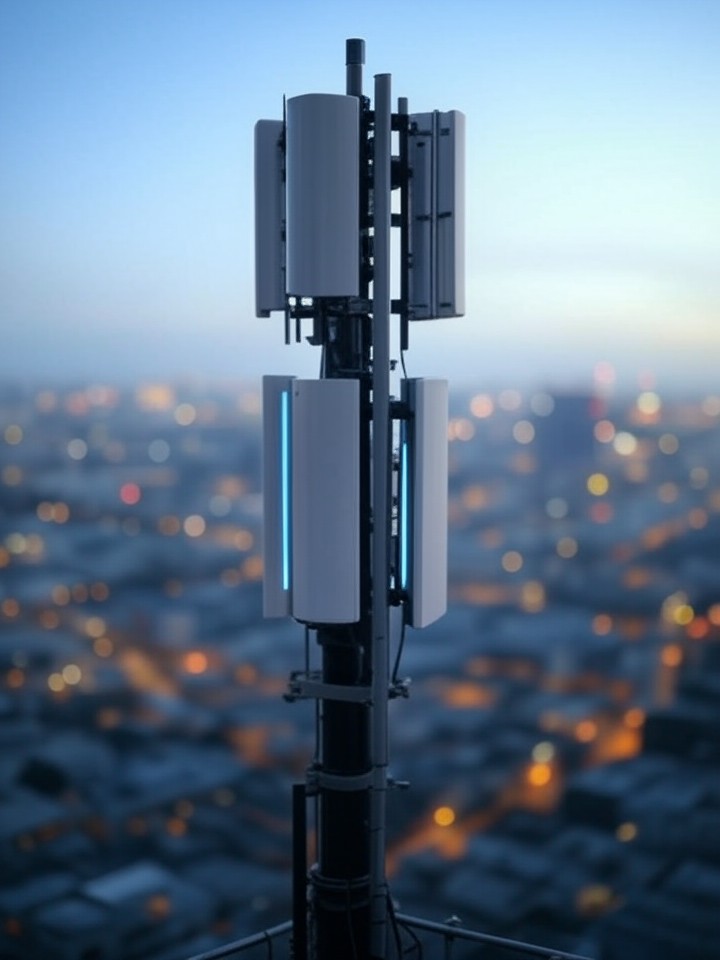
In the ever-evolving arena of U.S. mobile networks, where speed, reliability, and coverage dictate consumer loyalty and corporate fortunes, T-Mobile has once again asserted its dominance. According to the latest Mobile Network Experience Report from analytics firm Opensignal, released in early January 2026, T-Mobile secured victories in 12 out of 16 categories, marking a sweeping triumph over rivals Verizon and AT&T. This performance underscores T-Mobile’s strategic investments in 5G infrastructure, even as competitors scramble to close the gap.
The report, which draws on billions of data points from real user experiences across the country, evaluates carriers on metrics like download speeds, video streaming quality, and network consistency. T-Mobile’s wins include overall download speed, upload speed, video experience, and 5G availability, among others. This isn’t just a minor edge; in some categories, T-Mobile’s scores significantly outpace the competition, highlighting the fruits of its aggressive spectrum acquisitions and network expansions following the 2020 merger with Sprint.
For industry observers, this report arrives at a pivotal moment. With 5G adoption nearing ubiquity and emerging technologies like 6G on the horizon, carriers are under pressure to deliver seamless experiences amid rising data demands from streaming, gaming, and remote work. T-Mobile’s consistent outperformance suggests its mid-band spectrum strategy is paying dividends, allowing for broader coverage without sacrificing speed.
T-Mobile’s Winning Streak in Key Metrics
Delving deeper into the specifics, Opensignal’s analysis shows T-Mobile leading in overall download speed with an average of 186.3 Mbps, far ahead of Verizon’s 161.1 Mbps and AT&T’s 128.2 Mbps. This metric is crucial for everyday users, directly impacting everything from app downloads to high-definition video calls. Similarly, in 5G download speed, T-Mobile clocked in at 216.5 Mbps, reinforcing its position as the go-to for speed-hungry consumers.
Upload speeds tell a comparable story, with T-Mobile at 17.2 Mbps overall, edging out Verizon’s 15.9 Mbps. For professionals relying on cloud uploads or live streaming, this edge can mean the difference between seamless productivity and frustrating lags. The report also praises T-Mobile’s video experience, scoring it at 74.2 out of 100, attributed to optimized network handling of bandwidth-intensive services like Netflix and YouTube.
Beyond raw speeds, Opensignal’s consistency score—measuring how often users get a reliable connection—saw T-Mobile at 85.6%, a testament to its dense urban and suburban deployments. Industry insiders note that this reliability stems from T-Mobile’s early bet on low-band 5G for wide-area coverage, combined with mid-band for capacity in high-traffic zones. As reported in a recent article by Android Authority, this holistic approach has allowed T-Mobile to “secure the top spot in 12 of 16 areas rated,” leaving little room for rivals to claim parity.
Competitive Pressures and Rival Responses
Verizon, long a powerhouse in coverage, managed wins in just two categories: overall coverage experience and 5G coverage experience. Its scores reflect strengths in rural and suburban areas, where its extensive low-band spectrum provides a safety net. However, Verizon trailed in speed-related metrics, a potential vulnerability as urban consumers prioritize performance over sheer reach.
AT&T, meanwhile, claimed victories in voice app experience and 5G voice app experience, areas where call quality and VoIP reliability shine. Yet, its overall showing was lackluster, with third-place finishes in most speed categories. A piece from PhoneArena bluntly states that “AT&T is nowhere near T-Mobile,” emphasizing the carrier’s need for aggressive infrastructure upgrades to regain competitiveness.
This disparity isn’t new. Historical data from Opensignal’s reports, such as the January 2025 edition, shows T-Mobile beginning its “three-peat” in overall network experience, as highlighted in T-Mobile’s own newsroom announcement. Back then, the carrier swept all five overall categories, setting a precedent that continues into 2026. Competitors have responded with spectrum auctions and partnerships—Verizon’s C-band expansions and AT&T’s fiber integrations—but T-Mobile’s head start appears unassailable for now.
Strategic Investments Fueling Dominance
At the heart of T-Mobile’s success is its post-merger strategy. The Sprint acquisition bolstered its mid-band holdings, enabling faster 5G rollouts without the coverage gaps that plagued early adopters. By 2026, T-Mobile boasts over 300 million people covered by its Ultra Capacity 5G, a network layer that delivers gigabit speeds in populated areas.
Financially, this translates to subscriber growth. T-Mobile added millions of postpaid customers in 2025, outpacing rivals, according to industry filings. This momentum is fueled not just by network prowess but by pricing tactics, like the new “Better Value” family plan with a five-year price guarantee, as detailed in a Technobezz report. Such moves lock in loyalty while competitors grapple with rate hikes, including T-Mobile’s own adjustment to its Regulatory Programs & Telco Recovery Fee, noted in another PhoneArena article.
From a technical standpoint, Opensignal’s methodology—crowdsourcing data from millions of devices—provides a ground-truth view that lab tests can’t match. As StartupNews.fyi explains, this approach evaluates “mobile customers using data points from all over,” ensuring metrics reflect real-world usage rather than controlled environments.
Industry Sentiment and Broader Implications
Sentiment on platforms like X echoes the report’s findings, with users praising T-Mobile’s 5G improvements. Posts highlight how the carrier has overtaken Verizon in multiple 5G categories, reflecting a shift in perceptions from underdog to leader. This buzz aligns with Opensignal’s data, where T-Mobile’s 5G availability hit 62.7%, surpassing Verizon’s 36.1%.
For telecom executives, these results signal broader trends. As a Telecoms.com piece on 2026 trends notes, the focus is shifting toward AI-driven network optimization and edge computing to handle exploding data volumes. T-Mobile’s edge here could position it favorably for integrations with emerging tech, like AR/VR applications demanding ultra-low latency.
Rivals aren’t idle. Verizon’s investments in millimeter-wave 5G for dense urban spots and AT&T’s push into fixed-wireless access aim to erode T-Mobile’s leads. Yet, as evidenced by Opensignal’s consistent rankings, closing the gap requires more than capital—it’s about execution in spectrum deployment and customer-centric innovations.
Evolving Challenges in Network Evolution
Looking ahead, challenges loom. Regulatory scrutiny over spectrum allocations could slow expansions, while economic factors like inflation might pressure pricing strategies. T-Mobile’s fee increases, though minor, have drawn user ire on social media, potentially chipping at its value proposition.
Moreover, global comparisons add context. Opensignal’s 2025 Global Mobile Network Experience Awards, detailed on their insights page, show U.S. carriers lagging behind leaders like those in South Korea, where average speeds exceed 500 Mbps. This gap urges domestic players to accelerate, with T-Mobile’s model offering a blueprint.
Internally, T-Mobile’s leadership, including figures like former executive Neville Ray, has long championed data-driven bragging rights. Historical X posts from the carrier celebrate past wins, reinforcing a culture of performance metrics that resonates with insiders.
Future Horizons for Mobile Supremacy
As 2026 unfolds, T-Mobile’s dominance invites questions about sustainability. Will competitors’ multi-billion-dollar investments yield parity, or will T-Mobile’s agile approach maintain its lead? Opensignal’s June 2025 U.S. report, available on their site, already hinted at tightening races, with AT&T improving in consistency.
For consumers, the benefits are clear: fiercer competition drives better service. Industry analysts predict that by year’s end, 5G penetration could hit 90%, amplifying the importance of these metrics. T-Mobile’s sweep, as covered in a Droid Life article, provides “the best marketing material” for the carrier, but it’s the underlying tech that will determine long-term victors.
Ultimately, this report isn’t just about awards—it’s a barometer for an industry in flux, where network excellence translates directly to market share and revenue. T-Mobile’s 2026 performance sets a high bar, challenging rivals to innovate or risk obsolescence in a connected world.


 WebProNews is an iEntry Publication