
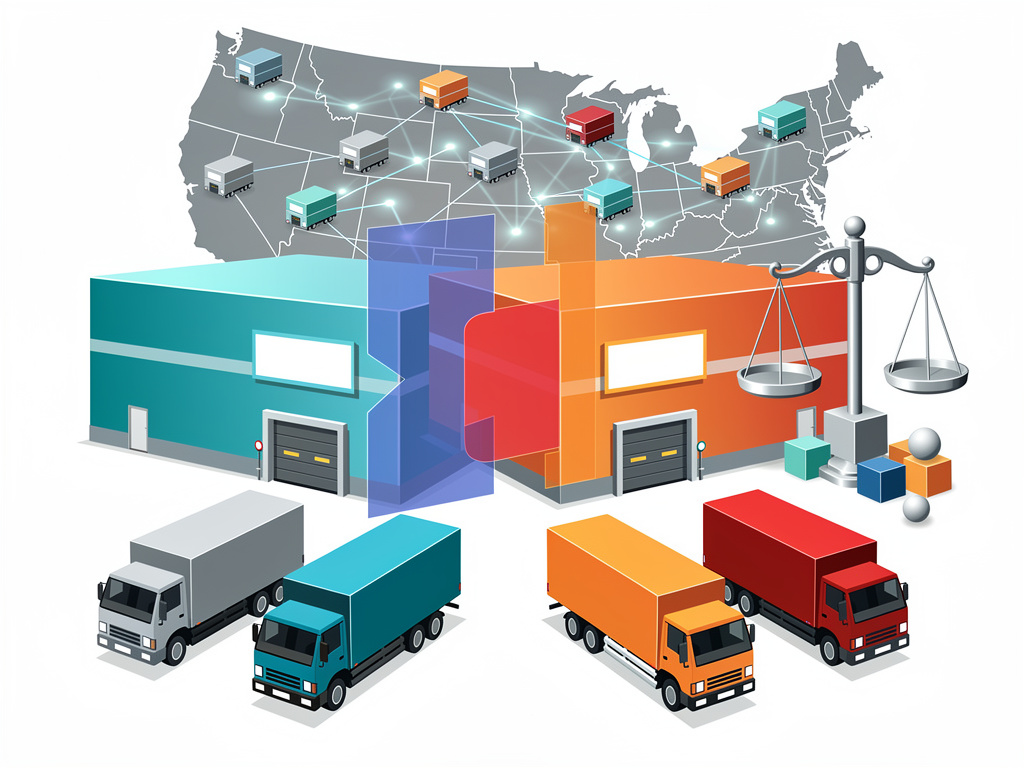
Sysco Corporation just made the biggest acquisition in its history, and it’s one that could fundamentally alter the economics of foodservice distribution in the United States. The Houston-based giant announced on June 12, 2025, that it would acquire Jetro Restaurant Depot, the nation’s largest cash-and-carry foodservice wholesaler, for approximately $8.2 billion in a cash-and-stock deal. It’s a move that marries Sysco’s massive delivery infrastructure with Restaurant Depot’s warehouse-club model — and it raises immediate questions about competition, pricing, and the future shape of an industry that feeds millions of Americans every day.
The deal, reported by Yahoo Finance, values Jetro Restaurant Depot at a significant premium and would bring roughly 150 warehouse-style locations under Sysco’s umbrella. Restaurant Depot has long served as a lifeline for independent restaurant operators — the mom-and-pop diners, taco shops, pizzerias, and catering companies that lack the purchasing power to negotiate favorable terms with the big broadline distributors. Walk into any Restaurant Depot on a weekday morning and you’ll find restaurant owners pushing flatbed carts stacked with cases of chicken thighs, industrial-sized cans of tomatoes, and boxes of disposable gloves. No delivery trucks. No sales reps. Just wholesale prices and a membership card.
That model is about to collide with Sysco’s.
Sysco, which reported over $78 billion in revenue for its most recent fiscal year, already dominates the traditional foodservice distribution business. Its fleet of refrigerated trucks delivers everything from fresh produce to frozen seafood to roughly 730,000 customer locations across the globe. The company has spent decades building a logistics network that is, by most measures, unmatched in the industry. But there’s a segment of the market that has stubbornly resisted the Sysco pitch: small, price-sensitive operators who prefer to do their own shopping rather than pay for the convenience of delivery.
Restaurant Depot was built precisely for those operators. Founded in 1990 by the Jetro Cash and Carry family of companies, it grew into a chain of no-frills warehouse stores that function like a Costco for restaurants. Membership is free for anyone with a business license in the food industry. Prices are marked up only modestly above wholesale. And critically, the model eliminates the cost of last-mile delivery — the single most expensive component of traditional foodservice distribution.
Sysco CEO Kevin Hourican framed the acquisition as a way to serve customers “however they want to be served,” according to statements included in the company’s announcement. The logic is straightforward: some operators want delivery, some want to pick up their own product, and some want both depending on the week. By acquiring Restaurant Depot, Sysco can offer all three options under one corporate roof. It’s a strategy that echoes what major retailers have done in recent years — blending e-commerce with brick-and-mortar to meet customers wherever they are.
But the foodservice industry isn’t retail. And the competitive dynamics here are more complex than a simple omnichannel play.
Consider the independent restaurant owner in, say, suburban Chicago. She currently splits her purchasing between Sysco deliveries for her core dry goods and weekly trips to Restaurant Depot for proteins and produce, where she can inspect the product herself and compare prices in real time. Restaurant Depot’s independence from the major distributors is part of its value proposition — it creates competitive tension that keeps prices honest. If Sysco owns Restaurant Depot, does that tension disappear? Does she lose a meaningful alternative?
Industry analysts have been weighing exactly this question. The deal will almost certainly face scrutiny from the Federal Trade Commission, which blocked Sysco’s attempted $8.2 billion acquisition of US Foods back in 2015 on antitrust grounds. That deal would have combined the two largest broadline distributors in the country, and the FTC argued it would reduce competition and raise prices for restaurants, hospitals, and other foodservice customers. Sysco ultimately abandoned the merger.
This time, the competitive analysis is different. Restaurant Depot operates in the cash-and-carry segment, not broadline distribution. The two businesses serve overlapping customer bases but through fundamentally different models. Sysco’s argument will likely be that the acquisition enhances competition by creating a more versatile competitor to other broadline distributors, wholesale clubs, and even Amazon Business, which has been making inroads into foodservice procurement. Whether regulators buy that argument remains to be seen.
The financial structure of the deal itself is notable. Sysco is paying with a combination of cash and stock, suggesting the company wants to preserve balance sheet flexibility even as it takes on a massive new asset. Jetro Restaurant Depot generates strong cash flow — its warehouse model requires relatively low capital expenditure compared to a fleet-based distribution business, and inventory turns are high because restaurant operators buy frequently and in smaller quantities than institutional customers. For Sysco, those cash flows could help offset the debt taken on to finance the acquisition.
Wall Street’s initial reaction was cautiously positive but not euphoric. Sysco shares dipped modestly in early trading on the announcement before recovering. Investors appear to be weighing the strategic rationale against execution risk and regulatory uncertainty. Integrating two fundamentally different business models — one built on trucks and relationships, the other on warehouses and self-service — is no small task. And Sysco’s track record with large acquisitions is mixed at best, given the US Foods debacle.
There’s also the cultural question. Restaurant Depot’s workforce and customer base have a scrappy, entrepreneurial character that is very different from Sysco’s corporate culture. Restaurant Depot employees work in warehouse environments, stocking shelves and operating forklifts. Sysco’s customer-facing employees are largely sales representatives and delivery drivers. Merging these cultures without alienating Restaurant Depot’s loyal customer base will require careful management — and patience.
So what does this mean for the broader foodservice distribution industry?
If the deal closes, it will likely accelerate consolidation. US Foods, the second-largest broadline distributor, may feel pressure to respond with its own acquisitions in the cash-and-carry or specialty distribution space. Performance Food Group, the third-largest player, has been on an acquisition spree of its own in recent years and could pursue similar targets. Smaller regional distributors, already squeezed by rising costs and thin margins, may find themselves with fewer options.
And then there’s the technology angle. Sysco has invested heavily in digital ordering platforms, data analytics, and supply chain optimization tools in recent years. Restaurant Depot, by contrast, has operated with a relatively low-tech approach — its competitive advantage is price and product quality, not software. Integrating Sysco’s technology capabilities into the Restaurant Depot model could create something genuinely new: a cash-and-carry operation with the data infrastructure of a major distributor. Imagine a Restaurant Depot where your membership card triggers personalized pricing based on your purchase history, where inventory is managed with the same predictive algorithms Sysco uses for its delivery business, where an app tells you what’s in stock at your nearest location before you make the drive.
That’s the optimistic scenario. The pessimistic one is simpler: Sysco raises prices at Restaurant Depot, reduces product variety to align with its own supply chain, and turns a beloved independent brand into just another division of a corporate giant. It’s happened before in other industries. It could happen here.
The timing of the deal is also worth examining. The restaurant industry has been under enormous pressure since 2020. First the pandemic, then supply chain disruptions, then historic food inflation, and now a period of uneven recovery where consumer spending on dining out has softened in many markets. Independent restaurants — Restaurant Depot’s core customers — have been hit hardest. Many have closed permanently. Those that survived are operating on razor-thin margins and are more price-sensitive than ever.
For Sysco, acquiring Restaurant Depot now means buying access to that customer segment at a moment when those customers desperately need affordable sourcing options. It’s a bet that independent restaurants will recover and grow — and that Sysco can be their primary supplier across multiple channels. If that bet pays off, it could drive meaningful revenue growth for years. If the independent restaurant segment continues to shrink, Sysco will have overpaid for a declining customer base.
The $8.2 billion price tag is steep. Not unreasonable for a business of Restaurant Depot’s scale and profitability, but steep nonetheless. Sysco will need to demonstrate clear synergies — in procurement, in logistics, in technology — to justify the premium to shareholders. And it will need to do so without destroying what makes Restaurant Depot work in the first place.
One thing is clear: this is not a defensive move. Sysco isn’t buying Restaurant Depot because it’s afraid of losing market share to cash-and-carry competitors. It’s buying Restaurant Depot because it sees an opportunity to own a larger piece of a fragmented market and to build something that no other foodservice company currently offers — a true multi-channel distribution platform that serves everyone from the largest hospital chains to the smallest taqueria.
Whether that vision survives contact with regulators, integration challenges, and the unpredictable appetites of American diners is the $8.2 billion question. But Kevin Hourican and his team have clearly decided that the risk is worth taking. And for the hundreds of thousands of restaurant operators who depend on both Sysco trucks and Restaurant Depot warehouses, the outcome of this deal will matter more than almost any other corporate transaction this year.
The food on your plate tonight may not taste any different. But the business behind it is about to change in ways that will be felt from loading docks in the Bronx to kitchen back doors in Wichita.


 WebProNews is an iEntry Publication