
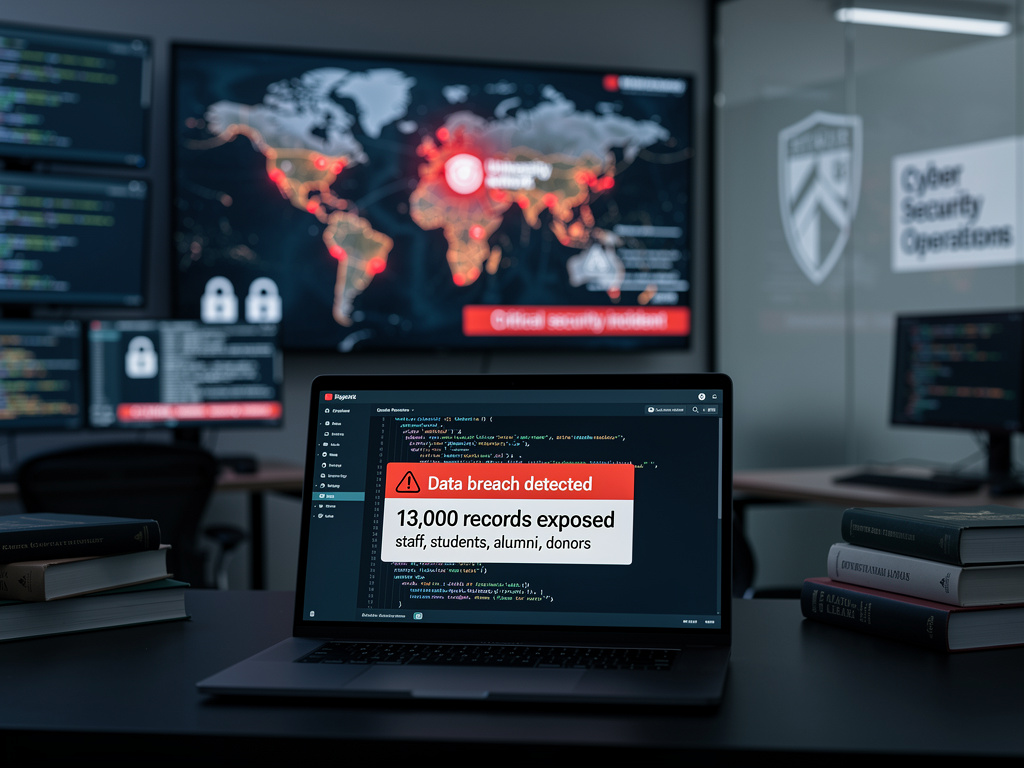
In the early hours of December 18, 2025, Australia’s University of Sydney disclosed a significant cybersecurity breach, revealing that hackers had infiltrated an online coding repository and siphoned off personal data belonging to thousands of staff, students, alumni, and donors. The incident, which the university described as involving ‘historic data,’ has thrust one of the nation’s premier academic institutions into the spotlight amid rising cyber threats to educational sectors worldwide.
The breach targeted a GitLab instance hosted by the university, where attackers accessed and exfiltrated files containing sensitive information such as names, email addresses, phone numbers, and in some cases, financial details from donors. BleepingComputer reported that the hackers stole data on over 13,000 individuals, marking this as one of the largest academic data exposures in recent Australian history.
University officials moved swiftly to notify affected parties, emphasizing that the compromised data was historical and not tied to active systems. ‘The University of Sydney has notified its community of a cyber security breach in which historic data relating to certain members of our community has been accessed,’ the institution stated in an official announcement.
Breach Entry Point Revealed
Investigations pinpointed the intrusion to a vulnerable online coding platform, specifically a self-hosted GitLab server used for collaborative software development projects. According to cybersecurity analyses, the attackers likely exploited unpatched vulnerabilities or weak authentication mechanisms common in such repositories. Cyber Daily detailed that the exfiltrated files included resumes, contact lists, and donor records, painting a picture of opportunistic theft rather than a targeted espionage operation.
The scope of the compromise became clear as forensic teams combed through logs, confirming the data theft occurred prior to detection. No evidence of ransomware deployment surfaced, distinguishing this from hybrid attacks plaguing other institutions. Instead, the focus was on data harvesting for potential identity fraud or phishing campaigns.
Posts on X from cybersecurity watchers highlighted the breach’s rapid dissemination, with users noting the university’s GitLab exposure as a textbook case of misconfigured academic infrastructure. One prominent thread discussed similar vulnerabilities in university-hosted dev environments across Australia.
University’s Rapid Response
The University of Sydney activated its incident response protocol immediately upon detection, taking the affected repository offline and engaging external forensic experts. The University of Sydney’s official notification outlined support measures, including credit monitoring offers for those impacted and guidance on monitoring for identity theft.
A dedicated FAQ page provided step-by-step advice: ‘Change passwords: Update your passwords for all accounts and use multi-factor authentication where possible.’ The university also coordinated with the Australian Cyber Security Centre (ACSC), which has been looped in to assess national implications.
Chief Information Officer comments, as relayed through internal memos cited by media, underscored the isolated nature of the breach: ‘No current student or staff active records were compromised.’ This framing aimed to reassure the 70,000-strong community while transparency efforts continued.
Scale of the Exposure
Reports converged on a victim count exceeding 13,000, encompassing current and former staff, alumni dating back decades, and philanthropic donors. 9News quoted university sources confirming ‘personal information’ in historical files was accessed, including details that could fuel sophisticated scams.
Insurance Business Australia highlighted the donor angle, noting financial data exposure could lead to direct monetary losses. ‘Staff, Alumni and donor information affected,’ the outlet reported, linking the university’s disclosure to broader insurance claims in academia.
The breach’s timing, just before year-end holidays, amplified risks as victims might delay protective actions. X sentiment reflected widespread concern, with alumni sharing alerts about phishing spikes post-disclosure.
Cyber Vulnerabilities in Academia
This incident underscores persistent weaknesses in university IT setups, where open-source tools like GitLab are deployed without enterprise-grade hardening. Past breaches, such as the university’s 2023 cyber event detailed on its site, involved compromised websites with user data from February 2024, signaling recurring issues.
Insurance Business noted ACSC involvement, reflecting government scrutiny on critical infrastructure protections. Educational institutions, handling vast personal datasets, remain prime targets for cybercriminals seeking low-hanging fruit.
Experts on X pointed to supply-chain risks in academic coding platforms, where student projects inadvertently store sensitive info. The Sydney breach mirrors global trends, like recent U.S. university hacks, emphasizing the need for zero-trust architectures.
Aftermath and Protective Measures
Affected individuals received personalized notifications urging password resets and vigilance against phishing. The university’s cyber page, updated post-incident, lists proactive steps: ‘Report: If you suspect any misuse of your information, report it to your cyber security team immediately.’
Broader implications include potential regulatory fines under Australia’s Privacy Act, though the historical data aspect may mitigate penalties. Forensic reports, still underway, will inform a root-cause analysis expected in early 2026.
X discussions evolved to remediation tips, with threads advising two-factor authentication enforcement and regular audits of dev repos. The university pledged enhanced monitoring, positioning the breach as a catalyst for systemic upgrades.
Industry-Wide Wake-Up Call
For cybersecurity professionals, the Sydney hack exemplifies the perils of legacy systems in research-heavy environments. With 13,000 records loose, the dark web monitoring scramble is underway, as predicted by HackNotice.
Stakeholders anticipate class-action murmurs, though no lawsuits have materialized yet. The episode reinforces insurance carriers’ push for cyber policies tailored to academia, amid projections of escalating claims.
As investigations deepen, the University of Sydney’s handling—marked by prompt disclosure—sets a benchmark for peers, potentially averting reputational damage while galvanizing sector-wide defenses.


 WebProNews is an iEntry Publication