
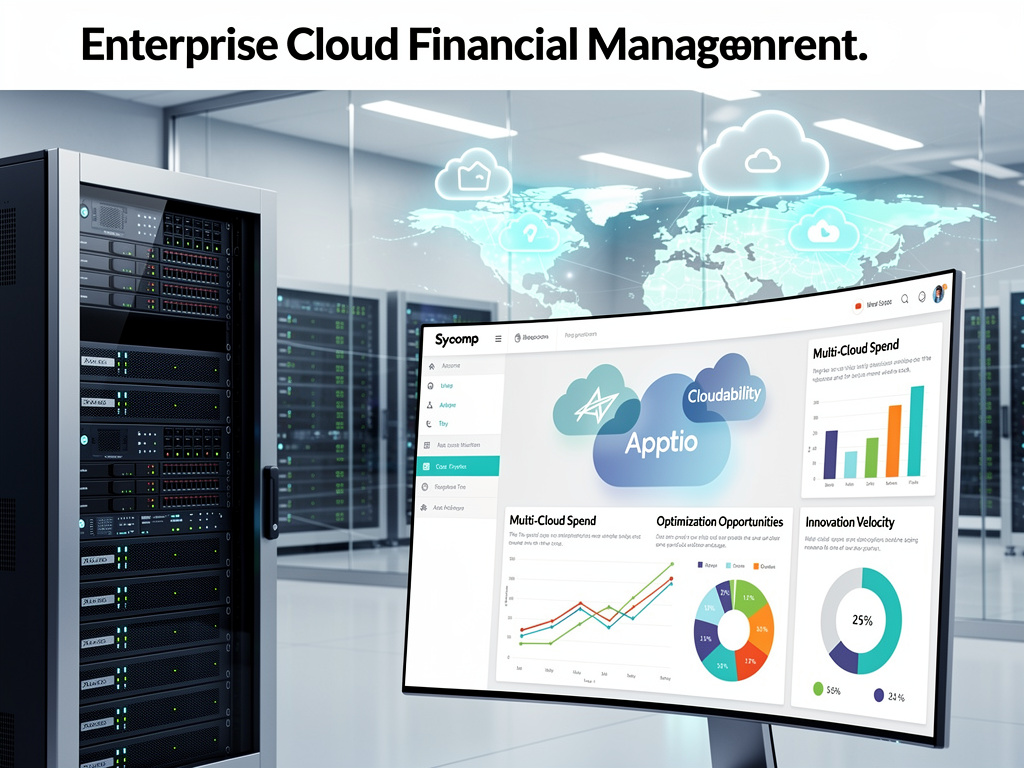
In a move that underscores the growing complexity of cloud financial management, global IT services and logistics vendor Sycomp has announced a strategic partnership with Apptio’s Cloudability FinOps platform, marking a significant expansion of its Intelligent Cloud Platform capabilities. According to Channel E2E, this collaboration arrives at a critical juncture when enterprises are grappling with escalating cloud expenditures and the need for sophisticated financial optimization tools that extend far beyond simple cost tracking.
The partnership represents more than a tactical vendor relationship; it signals a fundamental shift in how managed service providers are approaching cloud economics. Sycomp’s decision to integrate Cloudability’s capabilities into its existing platform reflects broader industry recognition that cloud financial operations have evolved from a back-office concern to a strategic imperative requiring real-time visibility, predictive analytics, and automated optimization. For enterprises navigating multi-cloud environments with sprawling infrastructure footprints, the ability to correlate spending patterns with business outcomes has become essential to maintaining competitive advantage.
The Strategic Rationale Behind Enterprise FinOps Integration
The timing of Sycomp’s partnership with Cloudability is particularly noteworthy given the current economic climate. As organizations face pressure to demonstrate return on cloud investments, the demand for sophisticated FinOps capabilities has intensified dramatically. Industry analysts have observed that cloud spending optimization is no longer optional but mandatory, with companies seeking partners who can deliver granular cost allocation, chargeback mechanisms, and actionable insights that drive both financial accountability and technical efficiency.
Sycomp’s Intelligent Cloud Platform, which already provides infrastructure management and optimization services, will now incorporate Cloudability’s advanced analytics engine, enabling customers to gain unprecedented visibility into their cloud spending patterns across AWS, Microsoft Azure, and Google Cloud Platform. This multi-cloud approach is crucial, as most enterprises today operate in heterogeneous environments where workloads are distributed across multiple providers based on performance requirements, cost considerations, and strategic partnerships.
Cloudability’s Market Position and Technical Capabilities
Apptio’s Cloudability platform has established itself as a leader in the FinOps space by offering capabilities that extend beyond basic cost reporting. The platform provides real-time budget alerts, anomaly detection, reserved instance optimization, and sophisticated forecasting models that help organizations anticipate future spending based on historical trends and planned infrastructure changes. These features are particularly valuable for enterprises experiencing rapid growth or seasonal fluctuations in cloud resource consumption.
The integration will enable Sycomp’s customers to leverage Cloudability’s machine learning algorithms to identify optimization opportunities automatically, such as rightsizing recommendations for over-provisioned instances, unused resources that can be decommissioned, and opportunities to convert on-demand instances to reserved or spot instances for significant cost savings. These capabilities are essential as cloud environments become increasingly complex, with thousands of resources spanning multiple regions and services.
The Broader FinOps Movement and Industry Implications
The partnership between Sycomp and Cloudability reflects the maturation of the FinOps discipline, which has evolved from a niche practice into a recognized framework with established best practices, certification programs, and dedicated organizational roles. The FinOps Foundation, a Linux Foundation project, has been instrumental in standardizing approaches to cloud financial management, promoting collaboration between finance, technology, and business teams to optimize cloud spending while maintaining performance and innovation velocity.
For managed service providers like Sycomp, offering robust FinOps capabilities has become a competitive differentiator. Customers increasingly expect their technology partners to provide not just infrastructure management but strategic guidance on cloud economics. This shift has prompted MSPs to invest heavily in financial management tools and expertise, recognizing that cost optimization is as critical to customer satisfaction as uptime and performance metrics.
Multi-Cloud Complexity and Cost Attribution Challenges
One of the most significant challenges facing enterprises today is accurate cost attribution across complex multi-cloud environments. Different cloud providers use varying pricing models, billing structures, and terminology, making it difficult for organizations to develop unified views of their total cloud spending. Cloudability’s normalization capabilities address this challenge by translating disparate billing data into standardized formats that enable apples-to-apples comparisons and consolidated reporting.
The platform’s tagging and labeling features allow organizations to categorize resources by business unit, application, environment, or any other relevant dimension, enabling accurate chargeback and showback models. This granular cost allocation is essential for promoting accountability and ensuring that teams understand the financial implications of their technical decisions. When development teams can see the direct cost impact of their architecture choices, they are more likely to make economically rational decisions without sacrificing innovation.
Automation and Predictive Analytics in Cloud Cost Management
The integration of Cloudability into Sycomp’s platform brings sophisticated automation capabilities that reduce the manual effort required for cloud cost management. Automated policies can enforce spending limits, trigger alerts when budgets are approaching thresholds, and even take corrective actions such as shutting down non-production resources during off-hours. These automation features are particularly valuable for organizations with limited FinOps personnel or those managing large-scale cloud deployments where manual oversight is impractical.
Predictive analytics represent another critical dimension of modern FinOps platforms. By analyzing historical spending patterns, resource utilization trends, and planned infrastructure changes, Cloudability can forecast future cloud costs with increasing accuracy. These forecasts enable organizations to budget more effectively, avoid unexpected cost overruns, and make informed decisions about capacity planning and resource allocation. For CFOs and financial planning teams, this predictive capability transforms cloud spending from an unpredictable variable cost into a manageable, forecastable expense.
The Role of Managed Service Providers in FinOps Excellence
Sycomp’s decision to enhance its platform with Cloudability capabilities reflects a broader trend of MSPs positioning themselves as strategic advisors rather than mere infrastructure operators. By offering comprehensive FinOps services, MSPs can help customers navigate the complexities of cloud economics, implement best practices, and achieve continuous optimization. This advisory role requires deep expertise in both cloud technologies and financial management, representing a significant evolution in the MSP value proposition.
The partnership also highlights the importance of tool integration in delivering effective FinOps outcomes. Rather than requiring customers to manage multiple disparate platforms, Sycomp is creating a unified experience where financial management capabilities are seamlessly integrated with infrastructure monitoring, security, and compliance tools. This integrated approach reduces complexity, improves user adoption, and enables more holistic optimization strategies that consider both technical and financial dimensions simultaneously.
Industry Trends Driving FinOps Adoption
Several converging trends are accelerating FinOps adoption across industries. First, the shift from capital expenditure to operational expenditure models has made cloud spending a significant line item in corporate budgets, attracting increased scrutiny from CFOs and boards of directors. Second, the proliferation of cloud services and the complexity of modern applications have made it difficult for organizations to understand what they are paying for and whether they are receiving commensurate value. Third, economic uncertainty has intensified pressure to optimize costs without compromising innovation or competitive positioning.
Additionally, the growing emphasis on environmental sustainability is driving interest in cloud efficiency. Optimizing cloud resource utilization not only reduces costs but also minimizes energy consumption and carbon footprint, aligning with corporate sustainability goals. FinOps platforms like Cloudability increasingly incorporate sustainability metrics, enabling organizations to track and reduce their environmental impact alongside their financial expenditures.
Implementation Challenges and Success Factors
While the benefits of FinOps platforms are clear, successful implementation requires addressing several challenges. Cultural change is often the most significant obstacle, as effective FinOps requires collaboration between traditionally siloed finance and technology teams. Organizations must establish clear roles and responsibilities, define success metrics, and create incentive structures that reward cost-conscious behavior without stifling innovation.
Data quality and completeness represent another critical success factor. FinOps platforms are only as effective as the data they ingest, making comprehensive tagging strategies and accurate resource attribution essential. Organizations must invest time in establishing tagging standards, implementing automated tagging policies, and remediating historical data to ensure that cost allocation is accurate and meaningful. Without this foundational work, even the most sophisticated FinOps tools will deliver limited value.
Future Directions for Cloud Financial Management
Looking ahead, the FinOps discipline is likely to become even more sophisticated, incorporating artificial intelligence and machine learning to provide increasingly proactive and prescriptive recommendations. Future platforms may automatically implement optimization strategies based on organizational policies and risk tolerance, moving from providing insights to taking autonomous actions that continuously optimize cloud spending.
The integration of FinOps with broader IT financial management and business planning systems will also deepen, enabling organizations to model the financial impact of strategic initiatives, compare cloud versus on-premises economics more accurately, and optimize technology spending across their entire portfolio. As cloud becomes increasingly central to business operations, the line between cloud financial management and overall corporate financial planning will continue to blur.
For Sycomp and its customers, the partnership with Cloudability represents an important step in this evolutionary journey. By combining Sycomp’s managed services expertise with Cloudability’s advanced FinOps capabilities, the partnership creates a powerful platform for organizations seeking to maximize the business value of their cloud investments while maintaining rigorous financial discipline. As cloud adoption continues to accelerate and economic pressures intensify, such partnerships will become increasingly essential for enterprises competing in digital-first markets.


 WebProNews is an iEntry Publication