
SwitchBot’s Onero H1: The Dawn of Everyday Robotics or Just Another CES Gimmick?
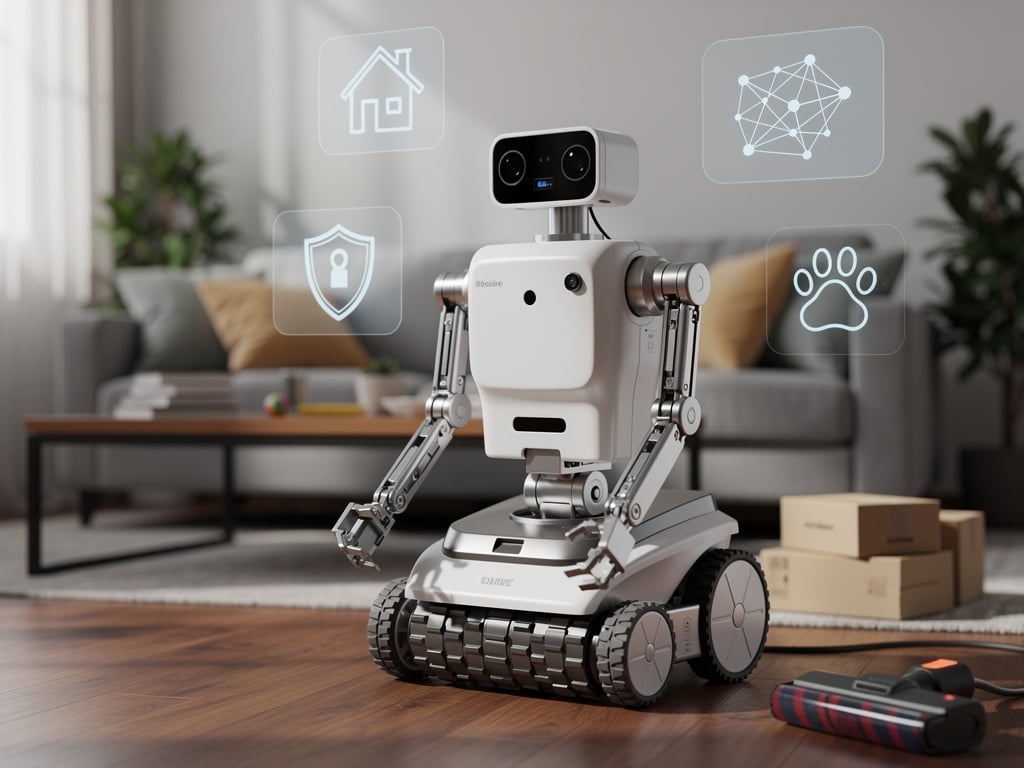
In the bustling halls of CES 2026, where tech giants and startups alike vie for attention with promises of revolutionary gadgets, SwitchBot made a bold entrance with its Onero H1 humanoid housebot. Billed as the “most accessible humanoid housebot,” this wheeled AI assistant aims to bridge the gap between science fiction and suburban living rooms. Drawing from announcements at the show, the Onero H1 combines arms, cameras, and on-device intelligence to handle household chores, potentially reshaping how consumers interact with smart home technology. But as industry observers dissect the reveal, questions linger about its practicality, integration with existing ecosystems, and whether it truly democratizes robotics for the average household.
SwitchBot, known for its affordable smart home devices like automated curtains and locks, is expanding into embodied AI with the Onero H1. The robot features a humanoid upper body mounted on wheels, allowing it to navigate homes while performing tasks such as picking up objects, monitoring pets, or even delivering snacks. According to details shared during the CES keynote, the device leverages on-board AI to process commands without constant cloud reliance, emphasizing privacy and responsiveness. This approach aligns with growing concerns over data security in connected devices, positioning SwitchBot as a player attuned to consumer anxieties.
Early hands-on impressions suggest the Onero H1’s design prioritizes accessibility over complexity. Unlike bipedal robots from competitors like Tesla’s Optimus, which require advanced balance algorithms, SwitchBot’s wheeled base simplifies mobility, reducing costs and failure points. Insiders note that this could make it more feasible for mass production, with potential pricing under $1,000—a stark contrast to high-end models exceeding $20,000. Yet, the robot’s capabilities are still conceptual; demos at CES showed it folding laundry and unloading dishwashers, but real-world performance in cluttered homes remains unproven.
Unveiling the Tech Behind the Bot
Delving deeper into the Onero H1’s specifications, the robot integrates multiple sensors, including depth-sensing cameras and LIDAR for mapping environments. This enables it to create 3D models of rooms, avoiding obstacles and optimizing paths for efficiency. SwitchBot’s press release highlights its compatibility with the company’s existing ecosystem, such as smart locks and lights, allowing seamless automation. For instance, the bot could unlock doors for deliveries or adjust lighting based on occupancy, creating a more cohesive smart home experience.
Industry analysts point out that the Onero H1’s AI is powered by edge computing, processing tasks locally to minimize latency. This is crucial for time-sensitive actions like catching a falling object or responding to voice commands instantly. However, challenges arise in training such systems; SwitchBot has partnered with AI firms to refine its algorithms, drawing on vast datasets from simulated home scenarios. Comparisons to established players like Amazon’s Astro reveal similarities in pet monitoring and home security features, but SwitchBot aims to undercut on price while offering modular upgrades.
Beyond hardware, the software stack is where the Onero H1 could shine or falter. It supports natural language processing for intuitive interactions, much like advanced voice assistants, but with physical agency. Developers at CES demonstrated integrations with third-party apps, suggesting potential for custom scripts—say, programming the bot to prepare coffee at a set time. Yet, for industry insiders, the real test will be scalability: Can SwitchBot’s supply chain handle demand without compromising quality, especially amid global chip shortages?
Market Positioning and Competitive Edges
SwitchBot’s strategy at CES 2026 extends beyond the Onero H1, encompassing updates to its smart home lineup. As reported by AppleInsider, the company unveiled enhanced 3D facial recognition smart locks that pair with the robot for added security, such as verifying identities before granting access. This holistic approach positions SwitchBot as a one-stop provider for AI-driven home automation, potentially appealing to budget-conscious consumers wary of fragmented systems from bigger brands.
In the broader context of home robotics, the Onero H1 enters a field crowded with ambitious prototypes. LG, for example, showcased its own CLOiD robot at the same event, capable of folding laundry and serving food, as noted in coverage from Engadget. SwitchBot differentiates by emphasizing affordability and ease of use, claiming the title of “most accessible” in a nod to its lower entry barriers. Mashable’s article on the reveal, available here, describes it as a step toward realizing the “sci-fi fantasy of a robot butler,” highlighting its wheeled design’s practicality over flashy bipedal alternatives.
Sentiment on social platforms like X reflects a mix of excitement and skepticism. Posts from tech enthusiasts praise the multitasking potential—vacuuming, air purification, pet monitoring, and food delivery—echoing viral shares from users like Rowan Cheung, who highlighted its couch-side convenience. However, critics question its rigidity, with one user noting it “doesn’t even bend,” pointing to limitations in flexibility compared to more anthropomorphic designs. These online discussions underscore a public eager for practical robots but cautious about overhyped promises.
Practicality in Real Homes
Turning to practicality, ZDNET’s analysis, found here, poses the question: Are our homes ready for a real-life Rosie the Robot? SwitchBot believes so, but experts argue that infrastructure hurdles, like uneven flooring or narrow doorways, could impede adoption. The Onero H1’s wheeled base mitigates some issues, but it may struggle with stairs, limiting its use in multi-level homes unless paired with elevators or ramps.
Energy efficiency is another key consideration for industry professionals. The robot’s battery life is touted at several hours per charge, with docking stations for autonomous recharging. This draws parallels to robotic vacuums, but the added arms and AI demand more power, potentially increasing electricity costs. SwitchBot addresses this with energy-saving modes, but long-term data from beta testing will be essential to validate claims.
Integration with broader smart home standards, such as Matter or Zigbee, could be a game-changer. The Verge’s coverage of the announcement, accessible here, notes the bot’s on-device intelligence as a privacy boon, avoiding the data leaks plaguing cloud-dependent rivals. For developers, open APIs might foster a community of add-ons, extending functionality beyond factory settings.
Challenges and Future Prospects
Despite the buzz, challenges abound. Regulatory scrutiny on AI ethics, particularly around surveillance features, could slow rollout. In the U.S., where privacy laws vary by state, SwitchBot must navigate compliance to avoid backlash. Moreover, manufacturing in China—SwitchBot’s base—raises supply chain vulnerabilities amid geopolitical tensions, a concern echoed in broader tech sector analyses.
Looking ahead, SwitchBot’s vision for “Smart Home 2.0,” as detailed in a PR Newswire release here, envisions robots as central hubs orchestrating devices. This could evolve into ecosystems where multiple bots collaborate, handling complex routines like full meal prep or elderly care assistance. Industry insiders speculate that partnerships with giants like Google or Apple might accelerate this, leveraging voice ecosystems for enhanced control.
Competitive pressures will intensify. With CES 2026 spotlighting innovations from across the sector, as compiled in The Verge’s comprehensive roundup here, SwitchBot must differentiate through iterative updates. Early adopters on X express hope for affordability, with posts lauding its potential to transform daily life, but warn of teething issues like software bugs or mechanical failures.
Industry Implications and Broader Impact
For the tech industry, the Onero H1 signals a shift toward commoditizing humanoid robots. By focusing on accessibility, SwitchBot challenges the notion that advanced robotics are reserved for labs or luxury markets. This could spur investment in affordable AI, democratizing tools once limited to enterprises. Economic ripple effects include job creation in robotics assembly and software development, though automation fears persist in service sectors.
Consumer adoption hinges on trust and usability. Pilot programs, potentially launching later in 2026, will provide critical feedback. If successful, the Onero H1 might pave the way for widespread home robotics, much like smartphones disrupted communication. However, failures could reinforce cynicism, stalling progress.
Ultimately, SwitchBot’s CES gambit with the Onero H1 embodies the tension between innovation and feasibility. As the show wraps up, the robot stands as a testament to evolving home tech, promising a future where AI assistants are as commonplace as refrigerators. Whether it delivers on that promise will depend on execution, market reception, and the relentless pace of technological advancement.


 WebProNews is an iEntry Publication