
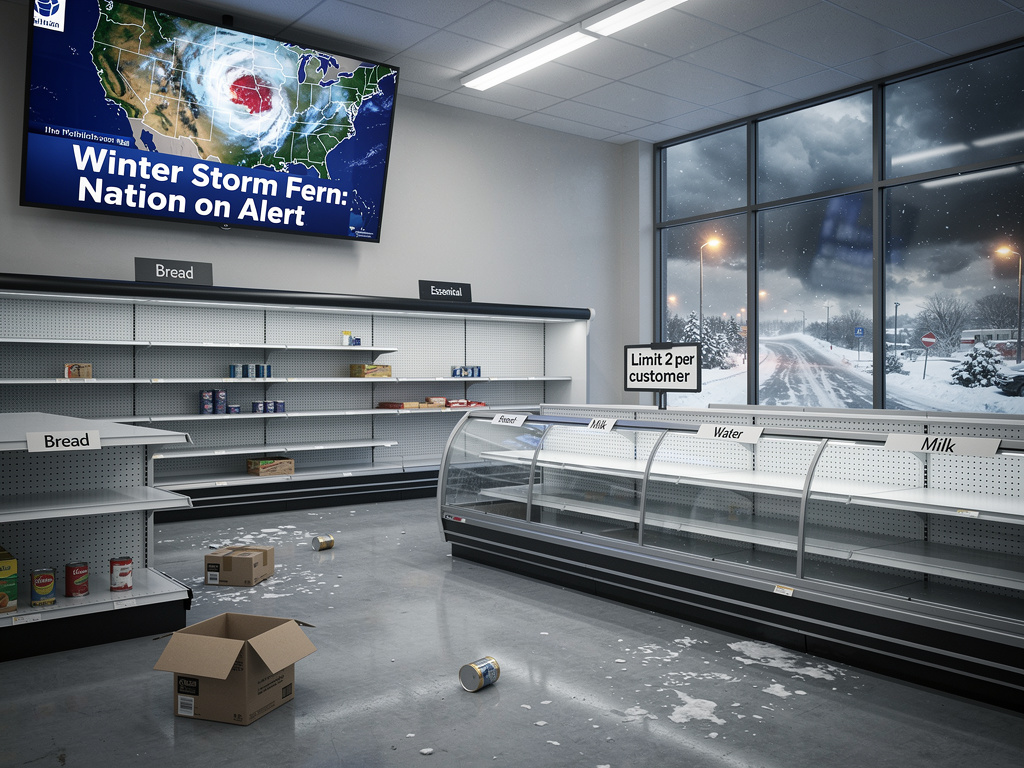
As Winter Storm Fern barrels toward the U.S., grocery stores from the South to the Northeast are facing barren aisles, with shoppers scrambling for bread, milk and toilet paper. The frenzy, affecting over 200 million people across 34 states, echoes past weather-driven rushes but stands out for its scale and speed. Retailers report shelves emptied within hours of forecasts, straining supply chains still recovering from prior disruptions.
Forecasters warn of unprecedented dangers, including freezing rain that could snap tree limbs and topple power lines, potentially leaving millions without electricity for days. The National Weather Service has issued alerts for everything from blizzard conditions in the Midwest to ice storms in the Southeast. In Atlanta, supermarkets like Publix saw dairy cases cleared out by midday Thursday, according to local reports.
Roots of the Rush
The impulse to hoard staples like milk and bread before snow has deep psychological roots, experts say. ‘It’s a tale as old as time: a storm is coming and grocery shelves quickly empty of certain staples,’ notes USA Today. Behavioral scientists point to loss aversion—fear of missing out on essentials—driving bulk purchases, even when fridges are full.
This behavior amplifies shortages, as one shopper’s cartload leaves less for others, sparking a feedback loop. Posts on X capture the scene: users share photos of empty bread racks at Walmart in Texas and bare toilet paper shelves in Virginia, with one noting, ‘Frantic grocery shoppers stock up ahead of the sprawling, potentially historic winter storm,’ as reported by FOX Weather on X.
Retailers Race to Replenish
Grocers, battle-tested by the pandemic, are deploying emergency restocking protocols. ‘Shoppers have been panic-buying ahead of a winter storm, but retailers say they learned a lot in the pandemic and will be ready to quickly restock,’ writes USA Today. Chains like Kroger and H-E-B are diverting trucks from unaffected regions and limiting purchases per customer to ration supply.
In Houston, H-E-B stores urged calm via social media, stating they’ve prepositioned extra inventory. Yet, photos from shoppers show otherwise: desolate produce sections and fights over the last gallons of milk. Fox Business details how ‘Grocery stores nationwide face empty shelves as Americans rush to prepare for a massive winter storm threatening over 200 million people this weekend’ (Fox Business).
Supply Chain Under Siege
Logistics networks, already tight, face compounded pressure from iced-over roads and grounded flights. Distributors report delays in perishable goods, with dairy farms in the Midwest struggling to deliver amid early snow. The Daily Mail warns of extreme risks: ‘Historic winter storm is so dangerous it could kill Americans sheltering INSIDE their homes’ due to collapsing trees piercing roofs (Daily Mail).
Power outages loom largest, with utilities bracing for widespread blackouts. Entergy in the South predicts up to a week of disruptions in some areas, forcing reliance on non-perishables. Industry insiders note that while big-box retailers like Walmart have robust warehouses, regional chains in the storm’s path are most vulnerable.
Southern States Hit Hardest
Typically milder climes like Georgia and Texas are ground zero for panic. In Dallas, videos circulate of lines snaking around grocery parking lots. ‘Americans in southern states are emptying supermarkets ahead of Storm Fern, which will bring freezing weather and snow to 200 million people this weekend,’ reports Daily Mail.
The storm’s moniker, Fern, belies its ferocity—models show a bomb cyclone developing, dumping up to 18 inches of snow in parts of Virginia. Hardware stores report booms in generator sales, with Home Depot limiting quantities to one per customer. Sentiment on X reflects urgency, with users posting, ‘Walmart shelves stripped bare as panic buyers empty out stores ahead of massive storm’ from The US Sun coverage.
Lessons from Past Storms
Memories of 2021’s Uri storm in Texas, which left stores barren and power grids failing, fuel current hoarding. Then, natural gas shortages idled plants; now, preemptions aim to avert repeats. Houston Public Media covers local prep: ‘It’s somewhat of a Texas tradition — buying all the essentials before a winter storm’ (Houston Public Media).
Grocery executives, speaking anonymously, reveal data showing 300% spikes in sales of batteries and canned goods 48 hours pre-storm. Analysts predict $2 billion in extra retail revenue this weekend, offset by waste from spoiled perishables post-event.
Expert Strategies for Survival
FEMA recommends 72-hour kits over bulk buys, emphasizing water (one gallon per person daily) and non-electric cooking methods. ‘Store shelves left empty as winter storm nears. See photos,’ documents USA Today, advising alternatives like powdered milk.
Insurers warn of rising claims from ice-damaged homes, urging tree-trimming now. As the storm unfolds, retailers pivot to online fulfillment where possible, though delivery windows shrink with worsening weather.
Forecast Tracks Escalation
By Saturday, Fern’s core will slam the Appalachians with 50 mph winds and sub-zero wind chills. NOAA satellites show moisture feeds intensifying the system. Economic forecasters eye ripple effects: school closures, flight cancellations and $5 billion in potential damages.
For industry watchers, this event tests post-pandemic resilience. Grocers’ investments in micro-fulfillment centers and AI demand forecasting face real-time trial, determining if lessons learned hold against nature’s extremes.


 WebProNews is an iEntry Publication