
Steve Wozniak helped build the most valuable company on the planet. He co-founded Apple in a garage, engineered the Apple II, and became one of the most respected figures in the history of personal computing. So when he says flatly that he is “not a fan of AI,” the technology industry should listen — not because he’s necessarily right, but because his objections illuminate a tension that most Silicon Valley executives would rather ignore.
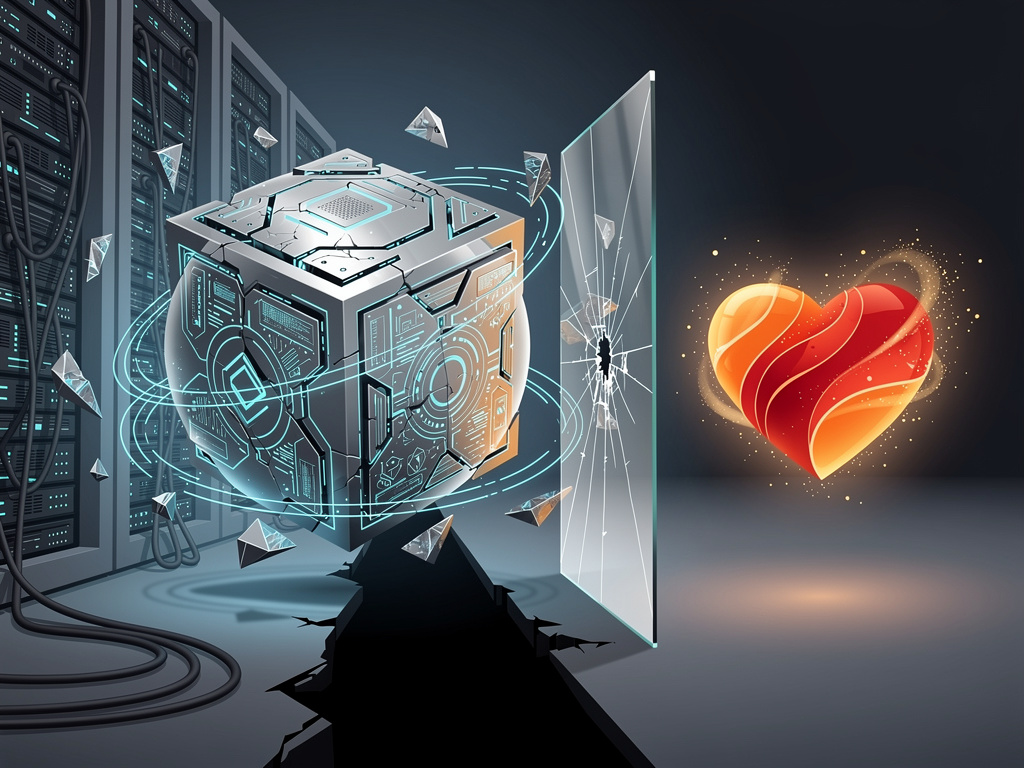
In a recent interview with the BBC, Wozniak delivered a blunt assessment of artificial intelligence that stands in sharp contrast to the breathless enthusiasm emanating from nearly every corner of the tech sector. “I am not a fan of AI,” he said, as reported by TechRadar. His critique wasn’t rooted in Luddite anxiety or a general suspicion of progress. It was more specific and, in some ways, more damning. Wozniak argued that AI fundamentally lacks emotional depth — that it can simulate human expression but cannot truly understand it, and that this gap matters far more than the industry is willing to admit.
“It doesn’t have feelings, it doesn’t have understanding, it doesn’t have consciousness,” Wozniak told the BBC. He characterized AI-generated content as derivative, assembled from patterns in existing data rather than born from genuine comprehension or creativity. For Wozniak, this isn’t a minor limitation. It’s the whole problem.
The timing of his remarks is striking. Apple, the company he co-founded, has been racing to integrate AI across its product line. Apple Intelligence — the company’s branded AI initiative — now sits at the center of its software strategy for iPhones, iPads, and Macs. CEO Tim Cook has positioned AI as central to Apple’s future. And Wozniak, who hasn’t been involved in Apple’s operations for decades but remains its spiritual co-creator, is essentially saying the emperor’s new algorithm has no clothes.
This isn’t the first time Wozniak has expressed skepticism. He’s warned about AI-generated misinformation, called for clearer labeling of AI content, and questioned whether the technology’s benefits outweigh its risks to ordinary people. But his latest comments carry a sharper philosophical edge. He’s not just worried about bad actors misusing AI. He’s questioning whether the technology, at its core, can ever deliver what its proponents promise.
The Emotional Intelligence Gap That Money Can’t Close
Wozniak’s central argument — that AI lacks genuine emotional understanding — touches a nerve that runs through multiple industries now betting heavily on artificial intelligence. Healthcare companies are deploying AI chatbots to interact with patients experiencing mental health crises. Education platforms are using AI tutors to work with children. Customer service operations across virtually every sector have replaced human agents with large language models. In each case, the implicit promise is that AI can handle interactions requiring empathy, nuance, and emotional sensitivity.
But can it? The evidence is mixed at best. Large language models like OpenAI’s GPT-4o, Anthropic’s Claude, and Google’s Gemini have become remarkably good at producing text that reads as emotionally aware. They can express sympathy, adjust tone, and mirror the language patterns associated with empathy. Yet as Wozniak points out, there’s nothing behind the performance. No felt experience. No understanding of what it means to suffer, to celebrate, to grieve. The words are statistically generated approximations of human emotional expression, not the real thing.
This matters less when AI is summarizing a document or generating code. It matters enormously when AI systems are placed in roles that demand authentic human connection. A therapist who doesn’t actually understand pain. A teacher who can’t truly recognize a child’s frustration. A customer service agent that performs caring without caring at all.
Wozniak isn’t alone in raising these concerns, though he may be the most prominent technologist to state them so bluntly. Researchers in AI ethics have long warned about what MIT professor Sherry Turkle calls the substitution of “artificial intimacy” for genuine human relationships. The risk isn’t that AI will become conscious and turn hostile — the sci-fi scenario that dominates public imagination. The risk is subtler: that we’ll accept synthetic empathy as good enough and stop investing in the real thing.
And yet the money keeps flowing. Global investment in AI reached an estimated $200 billion in 2024, according to multiple industry analyses. Microsoft, Google, Amazon, and Meta have each committed tens of billions to AI infrastructure. Nvidia’s market capitalization has soared past $3 trillion on the strength of AI chip demand. The financial incentives pushing AI adoption forward are enormous — and they don’t pause for philosophical objections from retired engineers, no matter how legendary.
That’s part of what makes Wozniak’s position so unusual. He has no financial stake in AI’s success or failure. He’s not shorting Nvidia or launching a competing product. He’s offering a critique that is, in the purest sense, disinterested — motivated by genuine concern rather than competitive positioning. In an industry where nearly every public statement about AI carries an economic subtext, that kind of independence is rare.
His comments also arrive at a moment when public sentiment toward AI appears to be shifting. A February 2025 survey by the Pew Research Center found that Americans’ concern about AI in daily life has been steadily increasing, with a majority expressing more worry than excitement about the technology’s expanding role. Reports of AI hallucinations — confident-sounding but entirely fabricated outputs — have eroded trust. High-profile failures, from AI-generated legal briefs citing nonexistent cases to chatbots giving dangerous medical advice, have reinforced the sense that the technology is being deployed faster than it’s being understood.
Apple itself has not been immune to these growing pains. The company’s AI-powered notification summaries, introduced as part of Apple Intelligence, drew criticism after generating inaccurate summaries of news articles — including a false summary that suggested a public figure had died. Apple temporarily pulled the feature for news content. The incident underscored a point Wozniak has been making: AI systems that process language without understanding meaning will inevitably produce errors that humans would never make.
So where does this leave the industry? Probably not where Wozniak would like. The commercial momentum behind AI is too powerful, the competitive pressures too intense, for any single critique — however well-founded — to slow the trajectory. Companies that don’t adopt AI risk falling behind competitors that do. The logic of the market doesn’t accommodate existential doubts about whether machines can truly think or feel.
But Wozniak’s objections serve a different and perhaps more lasting purpose. They’re a reminder that technical capability and human value are not the same thing. That a system can be extraordinarily powerful and still miss something essential. That the question “Can AI do this?” is fundamentally different from “Should AI do this?” — and the second question deserves at least as much attention as the first.
The man who helped invent the personal computer isn’t arguing that technology is bad. He’s arguing that this particular technology is being oversold and under-examined. That in the rush to automate everything, the industry is treating human qualities — emotion, consciousness, genuine understanding — as problems to be engineered around rather than capacities to be preserved.
It’s a lonely position in 2025. But Wozniak has been in lonely positions before. He was right about a few things then, too.


 WebProNews is an iEntry Publication