
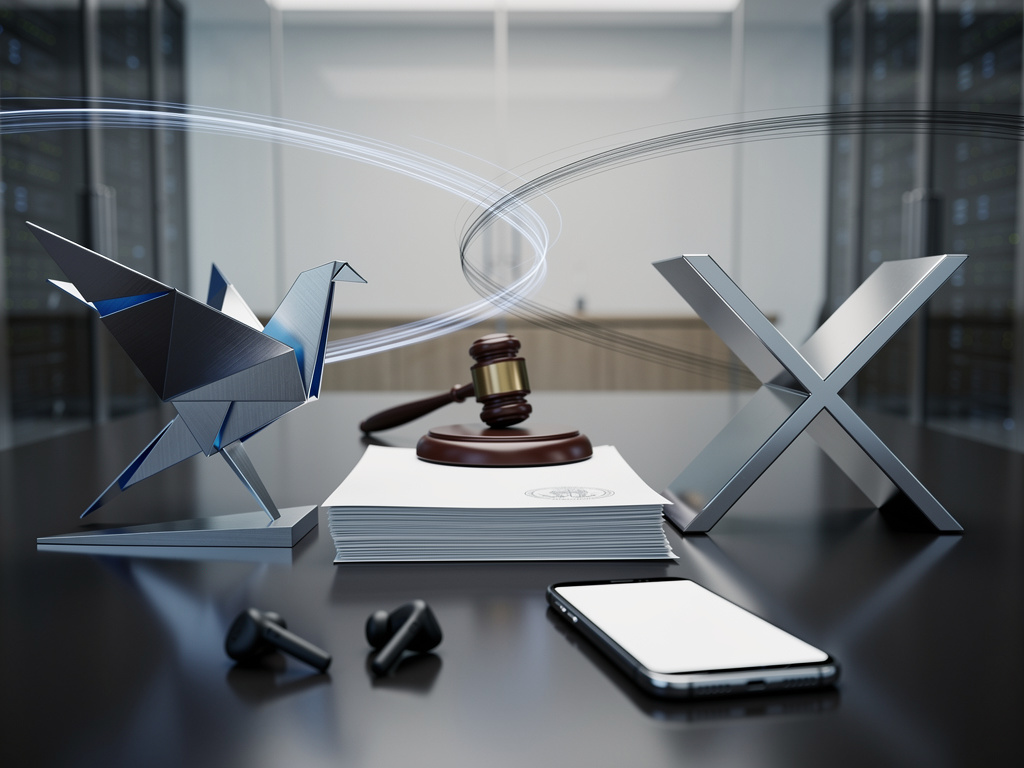
Reviving the Blue Bird: Elon Musk’s X Battles a Startup Over Twitter’s Lingering Legacy
In the ever-evolving world of social media, where brands rise and fall with the whims of tech titans, a new chapter is unfolding in the saga of what was once Twitter. A small startup named Operation Bluebird has ignited a legal firestorm by petitioning the U.S. Patent and Trademark Office to cancel trademarks associated with “Twitter” and “Tweet,” claiming that Elon Musk’s rebranded platform, now known as X, has effectively abandoned them. This move comes amid Musk’s ambitious transformation of the service into an “everything app,” but it raises profound questions about intellectual property in the digital age. The dispute highlights how quickly a once-iconic brand can become contested territory when its owner pivots dramatically.
Operation Bluebird, led by Stephen Coates, a former trademark attorney for Twitter, argues that since Musk’s 2023 rebranding to X, the original marks have been left unused, constituting abandonment under trademark law. This isn’t just a nostalgic grab; the startup aims to launch its own social media platform under the Twitter banner, potentially resurrecting the bird logo and familiar terminology that millions still associate with microblogging. According to reports, the petition was filed on December 2, 2025, setting the stage for what could be a landmark case in tech branding.
The backstory traces back to Musk’s $44 billion acquisition of Twitter in 2022, followed by a swift rebrand to X in July 2023. The shift was part of Musk’s vision to expand beyond short posts into payments, video, and more, drawing inspiration from apps like WeChat. However, this overhaul left the “Twitter” name in limbo, with the domain changing to x.com in 2024. Now, with Operation Bluebird’s challenge, the ghosts of Twitter’s past are haunting X’s present.
A Bold Petition and the Abandonment Argument
Coates and his team at Operation Bluebird contend that X Corp. has not used the “Twitter” and “Tweet” marks in commerce for over three years, a key threshold for abandonment claims under U.S. law. This argument draws on precedents where brands like Polaroid or Blockbuster faded into obscurity, allowing others to swoop in. In their filing, they assert that the rebrand was so complete that it severed ties to the old identity, making the trademarks fair game.
Industry experts note that trademark abandonment isn’t just about non-use; it requires intent to discontinue, which Operation Bluebird claims is evident from Musk’s public statements dismissing the old brand. For instance, Musk famously tweeted about killing the bird, symbolizing a clean break. This petition isn’t without risks—challenging a behemoth like X, backed by Musk’s resources, could lead to protracted litigation.
Meanwhile, reactions on social platforms reflect a mix of amusement and skepticism. Posts on X itself buzz with users speculating on whether this could fracture the platform’s user base or even force a partial rollback. Some see it as poetic justice for Musk’s disruptive style, while others dismiss it as a publicity stunt by an underdog startup.
X hasn’t taken this lying down. In a swift response, the company updated its terms of service to explicitly prohibit unauthorized use of the “Twitter” name, trademarks, logos, and related assets without written consent. This move, detailed in a TechCrunch report, underscores X’s determination to retain control. Furthermore, X filed a countersuit against Operation Bluebird, arguing that the trademarks remain active through residual goodwill and ongoing associations.
The countersuit claims that even post-rebrand, the public still refers to the platform as Twitter in casual discourse, preserving the marks’ value. Legal analysts point out that this “residual use” defense has been successful in cases like the rebranding of companies such as FedEx, where old names linger in public memory. X’s legal team is leveraging this to assert continued ownership.
This isn’t the first trademark tussle for Musk’s ventures. Back in 2023, when Twitter became X, companies like Microsoft and Meta raised eyebrows over their own “X” trademarks in gaming and social media. Although no major lawsuits materialized then, it set a precedent for how single-letter brands can spark conflicts.
Legal Precedents and Strategic Implications
Diving deeper into trademark law, abandonment requires proof of non-use coupled with intent not to resume. Operation Bluebird’s petition cites X’s complete overhaul, including the removal of the bird logo and redirection of twitter.com traffic, as evidence. A Reuters article from December 8, 2025, first highlighted the startup’s bid, noting it’s a rare opportunity to reclaim a tech giant’s discarded brand.
X’s countersuit, as reported, positions the company as the rightful steward, emphasizing investments in the original marks. This could involve demonstrating internal uses or licensing agreements that keep the trademarks alive. For industry insiders, this case echoes battles like Apple’s fight over the “iPhone” mark or Google’s vigilance with “Google” as a verb.
The strategic angle is fascinating. If Operation Bluebird succeeds, it could launch a rival platform capitalizing on nostalgia, attracting users disillusioned with X’s changes under Musk. Posts on X from users like those sharing memes about “bringing back the real Twitter” indicate a sentiment for the pre-Musk era, with its focus on concise, real-time conversation.
On the flip side, a win for X would reinforce Musk’s rebranding efforts, solidifying X as the evolution of Twitter without loose ends. However, the dispute might erode user trust or highlight internal chaos, especially after leadership shakeups like Linda Yaccarino’s resignation in July 2025, as noted in Wikipedia’s entry on Twitter under Elon Musk.
Broader implications extend to how tech companies manage rebrands. Musk’s approach—abrupt and total—contrasts with gradual shifts like Facebook to Meta, where old assets were phased out carefully. This case could set guidelines for future rebrands, warning against leaving valuable IP vulnerable.
For startups, Operation Bluebird’s gambit shows the potential rewards of challenging established players on abandonment grounds. Coates, with his insider knowledge from Twitter’s legal team, brings credibility, but facing X’s war chest will test the startup’s resolve.
The Role of Public Perception and Digital Identity
Public perception plays a crucial role in trademark disputes, as goodwill is intangible yet vital. Even after the rebrand, many still call X “Twitter,” a phenomenon X’s lawyers are likely to exploit. An Ars Technica piece from December 10, 2025, explores this “abandonment” angle, suggesting it’s a rare chance to revive a beloved brand.
Operation Bluebird envisions a platform that harkens back to Twitter’s roots, perhaps emphasizing free speech without the algorithmic tweaks and monetization pushes seen on X. Their website teases features like enhanced privacy and community-driven moderation, aiming to differentiate from X’s integration with tools like Grok AI.
Legal experts interviewed in various outlets predict a drawn-out battle. The USPTO will review the petition, potentially leading to a trial-like proceeding. If canceled, Operation Bluebird could register the marks themselves, but X’s countersuit in federal court adds layers of complexity.
This isn’t isolated; it’s part of a pattern in Musk’s empire. From Tesla’s patent strategies to SpaceX’s branding, intellectual property is fiercely guarded. Yet, the Twitter rebrand’s fallout shows vulnerabilities when change is too radical.
Industry insiders are watching closely, as a ruling could influence how companies like TikTok or Instagram handle potential rebrands. The dispute underscores the enduring value of brand identity in a digital ecosystem where users form deep attachments.
Moreover, it raises questions about innovation versus preservation. Musk’s push for X as an all-encompassing app includes payments and job searches, but at what cost to its core identity? Operation Bluebird’s challenge might force a reckoning.
Potential Outcomes and Future Ramifications
As the case progresses, possible outcomes range from settlement—perhaps X licensing the marks back to Operation Bluebird—to a full USPTO cancellation. A Mondaq analysis from December 16, 2025, delves into the abandonment claim, recalling the 2022 acquisition’s controversies.
If Operation Bluebird prevails, it could splinter the social media market, offering an alternative for those seeking a “pure” Twitter experience. Conversely, X’s victory would affirm Musk’s strategy, potentially accelerating expansions.
Financially, trademarks like “Twitter” hold immense value, estimated in billions due to global recognition. Losing them could dent X’s valuation, especially amid advertiser pullbacks and regulatory scrutiny.
User sentiment, gleaned from X posts, shows division. Some cheer the potential revival, posting about ditching X for a new Twitter, while loyalists mock the startup as opportunistic.
This battle also intersects with broader tech trends, like the rise of decentralized platforms. Operation Bluebird might position itself as a blockchain-based alternative, though details remain sparse.
Ultimately, this dispute encapsulates the tensions in tech: innovation’s pace versus legacy’s pull. As courts deliberate, the outcome will shape how brands navigate reinvention in an era of constant flux.
Looking ahead, if X retains the marks, it might incorporate “Twitter” elements nostalgically, like special modes or archives. For Operation Bluebird, success could launch a niche player, but scaling against X’s network effects is daunting.
In the end, this saga reminds us that in the digital realm, names aren’t just labels—they’re cultural artifacts with lives of their own. Whether the blue bird flies again or remains caged by X, the fight over its legacy is far from over.


 WebProNews is an iEntry Publication