
Eternal Orbit: How a Bold Startup Aims to Democratize Space Burials for the Masses
In the burgeoning field of space memorial services, a new player is poised to revolutionize how we honor the departed. Enter AstroRemains, a startup founded in 2025 that’s set to launch the ashes of 1,000 individuals into Earth’s orbit in 2027, all at a fraction of the cost previously associated with such celestial send-offs. Priced at just $2,500 per participant—a stark contrast to the $12,500 quoted in historical services—this initiative promises to make space burials accessible to everyday families, not just the elite. Drawing from advancements in reusable rocket technology and economies of scale, AstroRemains is betting big on the intersection of grief, innovation, and the final frontier.
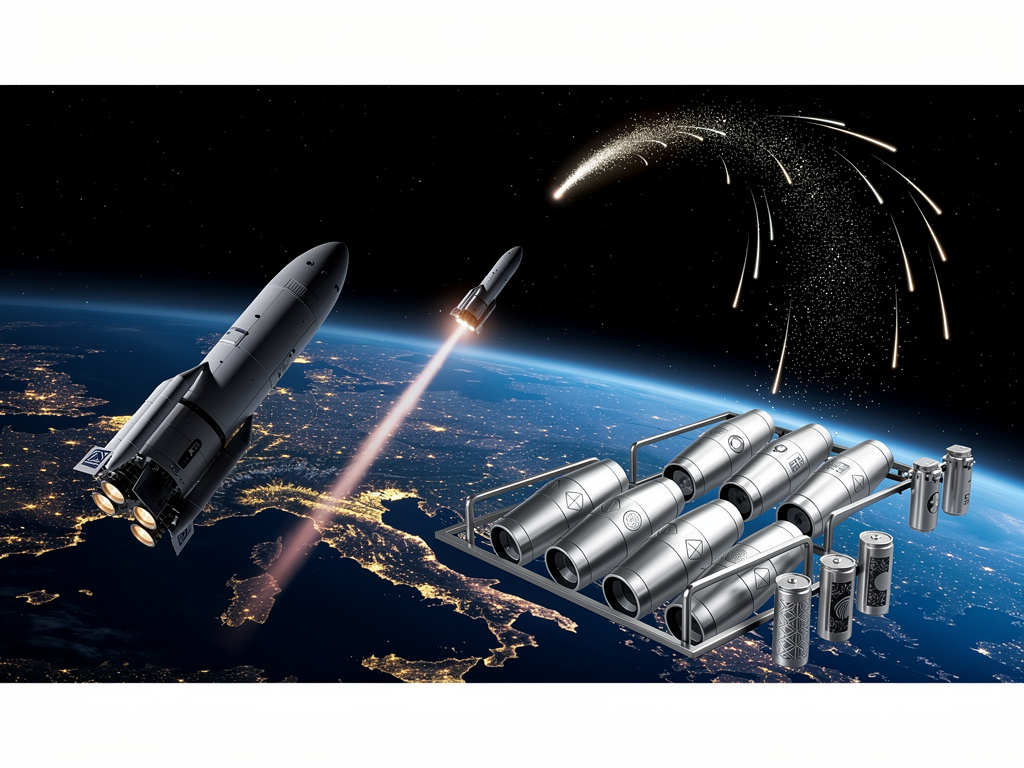
The company’s approach hinges on partnering with established launch providers like SpaceX and Blue Origin, leveraging their frequent missions to piggyback memorial payloads. According to details shared in a recent profile by TechCrunch, AstroRemains has secured slots on multiple Falcon 9 rockets scheduled for 2027, allowing them to bundle hundreds of small capsules containing cremated remains into a single deployment. Each capsule, no larger than a lipstick tube, holds about a gram of ashes, sealed in a durable alloy designed to withstand the rigors of space. Once in orbit, these capsules will circle the Earth for years before eventually re-entering the atmosphere as shooting stars, a poetic end that resonates with many bereaved families.
This model isn’t entirely new, but AstroRemains scales it up dramatically. Pioneers like Celestis have been offering memorial spaceflights since the 1990s, as noted in their own company site, where they describe launching symbolic portions of remains into near-space or beyond. However, those services often catered to smaller groups, with costs prohibitive for many. AstroRemains flips the script by aiming for volume: by aggregating 1,000 participants per mission, they dilute expenses across a larger pool, much like ride-sharing apps disrupted transportation.
Scaling the Heavens: The Business Model Behind Mass Space Memorials
The economics of AstroRemains’ plan are rooted in the plummeting costs of space access. Over the past decade, reusable rockets have slashed launch prices from tens of millions to mere millions per flight. Blue Origin’s recent push into satellite internet, as reported by CNBC just days ago, underscores this trend, with plans to deploy thousands of satellites by late 2027. AstroRemains taps into this by negotiating secondary payload spots, essentially hitchhiking on commercial missions. “We’re not building rockets; we’re optimizing the ride,” said founder Elena Vasquez in an interview, emphasizing how this keeps overhead low.
Beyond affordability, the startup addresses emotional and logistical hurdles. Families submit ashes via mail, receive tracking details, and can even watch live streams of the launch. This digital integration draws from services like Elysium Space, which partnered with SpaceX for orbital burials back in 2017, per a CNBC article from that era. But AstroRemains goes further, offering customizable memorials, such as engraved messages on capsules or virtual reality simulations of the orbital path. Industry insiders note that this personalization could capture a market segment previously underserved, especially as cremation rates rise globally.
Regulatory compliance is another key pillar. Space burials must navigate FAA approvals and international treaties on orbital debris. AstroRemains ensures capsules are designed to deorbit naturally within 25 years, aligning with guidelines from bodies like NASA. This proactive stance avoids the pitfalls seen in early experiments, like the 1997 Pegasus rocket launch carrying 24 remains, as chronicled in Wikipedia’s entry on space burials, which marked the dawn of this practice but highlighted debris concerns.
From Sci-Fi Dreams to Real-World Grief Tech
The concept of space burials traces back to science fiction, with roots in stories like Neil R. Jones’ 1931 novella, but it gained traction in the 1960s amid the space race. Today, companies like Heavenly Stars Fireworks offer ashes-to-space services, as detailed on their website, blending pyrotechnics with orbital flights. AstroRemains builds on this legacy by targeting mass adoption, inspired by a 2018 mission that sent 100 people’s ashes via a dedicated satellite, covered in a Forbes piece. Scaling to 1,000 represents a tenfold increase, potentially setting a new standard.
Public sentiment, gleaned from recent posts on X (formerly Twitter), shows growing enthusiasm mixed with humor. Users have joked about “orbituaries” for space-bound lists, echoing a 2021 post, while others highlight innovative memorials like QR-coded diaries for the deceased. This buzz reflects a cultural shift toward unconventional farewells, with thousands opting for spaceflights as per a 2024 KVPR report on memorial trends.
For industry players, AstroRemains’ model raises questions about saturation. Competitors like Space Beyond, a Florida-based firm offering affordable options since 2025, as featured in FOX 35 Orlando, are already in the game. Yet AstroRemains differentiates with its volume strategy, potentially undercutting prices further as launch cadences increase.
Challenges in the Void: Navigating Risks and Ethics
Not everything is smooth sailing. Orbital congestion is a real threat, with over a million pieces of debris posing risks, as noted in discussions around space tech startups on X. AstroRemains mitigates this by using biodegradable materials and precise deployment, but critics worry about long-term environmental impact. Ethical debates also simmer: Is commodifying grief appropriate? Some view it as empowering, allowing personalized tributes, while others see it as exploitative.
Funding for AstroRemains came from venture capital focused on space tech, with a pre-seed round similar to those seen in firms like Aule Space, per recent X posts on fundraising. This influx enables rapid scaling, but dependence on launch partners introduces variables—if SpaceX delays missions, memorials could be postponed, testing family patience.
Moreover, global accessibility is a goal, but international regulations vary. In the U.S., services thrive, but exporting ashes requires customs clearance, adding layers of complexity. AstroRemains plans to expand to lunar or deep-space options by 2030, building on Celestis’ experiences as blogged on their site.
The Human Element: Stories from the Stars
At its core, this isn’t just about technology—it’s about human stories. Imagine a family honoring a lifelong stargazer by sending their ashes to join the cosmos. Testimonials from similar services, like those in Celestis’ pricing page, speak to the profound closure provided. AstroRemains amplifies this by fostering communities, perhaps through apps linking participants’ families.
Looking ahead, the startup’s 2027 launch could inspire copycats, democratizing space further. As AI and data centers eye orbital placements, per a recent TIME article, the skies are getting busier, making efficient, affordable memorials timely.
Industry experts predict that by 2030, space burials could become as common as scattering ashes at sea, especially with companies like Open Cosmos enabling “mission as a service,” as highlighted in X posts on launch clients. AstroRemains’ bold target of 1,000 sets a high bar, potentially transforming how we remember the dead in an era of expanding horizons.
Pioneering the Next Frontier of Remembrance
As AstroRemains prepares for its landmark mission, the blend of innovation and emotion positions it at the forefront of a niche yet growing sector. Collaborations with funeral tech firms, like those offering live-streamed memorials mentioned in recent X discussions, could integrate seamlessly.
Challenges remain, from technical glitches to public perception, but the startup’s focus on affordability—echoing options from Options for Ashes—addresses a key barrier. If successful, it might not only send ashes skyward but also elevate the entire field of memorial services.
Ultimately, in a world where space is no longer the domain of governments alone, AstroRemains embodies the democratization of the stars, turning personal loss into a shared journey among the constellations. With launches on the horizon, the company is writing a new chapter in humanity’s eternal quest to reach beyond.


 WebProNews is an iEntry Publication