
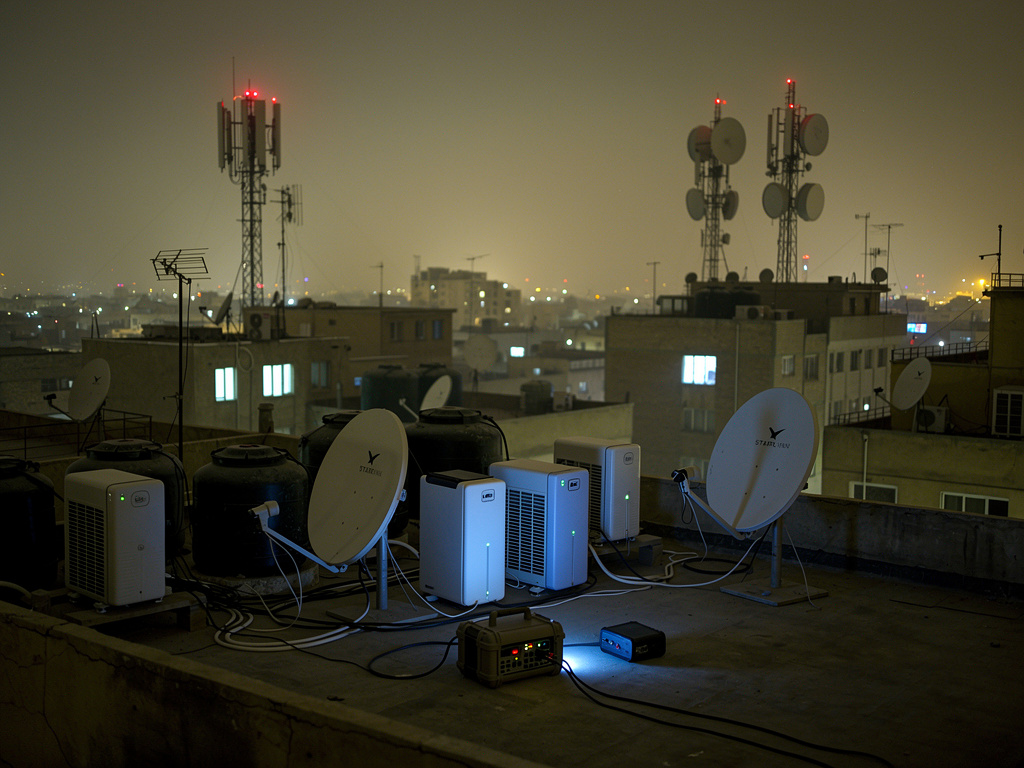
In the midst of Iran’s most severe internet blackout in years, smuggled Starlink satellite terminals are piercing the regime’s iron grip on information. As protests rage across all 31 provinces, demonstrators are turning to Elon Musk’s SpaceX technology to broadcast videos and coordinate actions, evading Tehran’s near-total shutdown. The activation of free Starlink access has transformed a niche tool into a lifeline for dissidents, according to reports from CNN Politics.
The Iranian government, facing widespread unrest that began in Tehran last month, imposed a nationwide internet cutoff starting January 9, 2026. This move echoes past suppressions but marks an escalation, with authorities deploying military-grade jammers possibly sourced from China or Russia. Protesters, undeterred, have established an underground ecosystem of smuggled devices, customized software, and risky couriers to maintain connectivity. Financial Times details how these terminals, hidden in homes and makeshift setups, allow users to bypass blacklisted networks.
SpaceX’s decision to provide free service mirrors activations in other crisis zones, but Iran’s scale poses unique challenges. Regime forces are now raiding residences to confiscate equipment, using a ‘whitelist’ system for loyalists while the public endures digital isolation. This cat-and-mouse game underscores Starlink’s growing role in geopolitical flashpoints.
From Halal Net to Total Blackout
Iran’s internet strategy has evolved dramatically. Previously reliant on a ‘halal internet’—a filtered domestic network—Tehran shifted to a near-total blackout amid protests that, while not yet matching the 2022-2023 Mahsa Amini uprising, have spread nationwide. The government blacklisted nearly the entire web, whitelisting only essential economic services to prop up a faltering economy, inverting China’s model, as noted in a post on X by Winthrop Rodgers citing Financial Times analysis.
Authorities activated a ‘kill switch’ with sophisticated jamming tech, disrupting Starlink signals. India Today reports raids on homes to seize devices, aiming to conceal crackdown casualties. Protesters share footage of brutal suppression via smuggled terminals, with access free for a limited time, per Middle East Online.
Smuggling Rings and Tech Adaptations
An intricate smuggling operation fuels this resistance. Terminals enter via borders, assembled with custom firmware to evade detection. The Guardian describes Iranians risking lives to relay messages, using Starlink alongside VPNs and mesh networks. Reuters confirms users are tapping Musk’s service to skirt the blackout, marking another instance of satellite tech countering shutdowns (Reuters).
Customization is key: Software tweaks optimize signals against jammers, with experts in touch with users verifying functionality. PCMag highlights the regime’s web suppression tactics, now challenged by these adaptations. A tech expert cited by CNN notes free access aiding protesters as the crackdown intensifies.
Regime’s Counteroffensive
Tehran’s response is multifaceted. Beyond jamming, security forces conduct door-to-door searches, as detailed by India Today. The Independent reports on efforts to block protest horrors from global view (The Independent). Loyalists operate on protected networks, isolating the regime from dissent.
Speculation swirls around foreign aid for jammers, with fingers pointing to Beijing and Moscow. Washington Times calls free Starlink a game-changer, enabling real-time protest coordination. Musk’s stance against the Ayatollahs draws attention, per Gateway Pundit.
Global Echoes and Future Stakes
Starlink’s Iran deployment recalls Ukraine and Gaza uses, but here it’s unsanctioned smuggling. USA Today explores if it could fully break the blackout, with Trump eyeing Musk’s involvement (USA Today). Times of India explains its role as a protester lifeline.
A post on X by Matthew Reed flags FT’s report on circumvention efforts. Kurdish media leverages shared digital spaces, transcending borders, as Rodgers notes on X. This underground tech web sustains protests, challenging Tehran’s control.
Technological Arms Race Intensifies
As Starlink proliferates, so do countermeasures. Reports indicate intermittent service amid jamming, yet users persist. The economic toll mounts: Blackouts cripple businesses, fueling more unrest. SpaceX’s gratis provision signals commitment to connectivity in authoritarian states.
For industry watchers, this episode tests satellite broadband’s resilience. Iran’s firewall innovations—whitelisting amid blanket bans—offer lessons for global censors. Protesters’ ingenuity, blending hardware smuggling with software hacks, redefines digital resistance.
The standoff persists into mid-January 2026, with no resolution in sight. Starlink’s beams cut through the darkness, but regime raids and jammers loom large, setting the stage for prolonged digital warfare.


 WebProNews is an iEntry Publication