
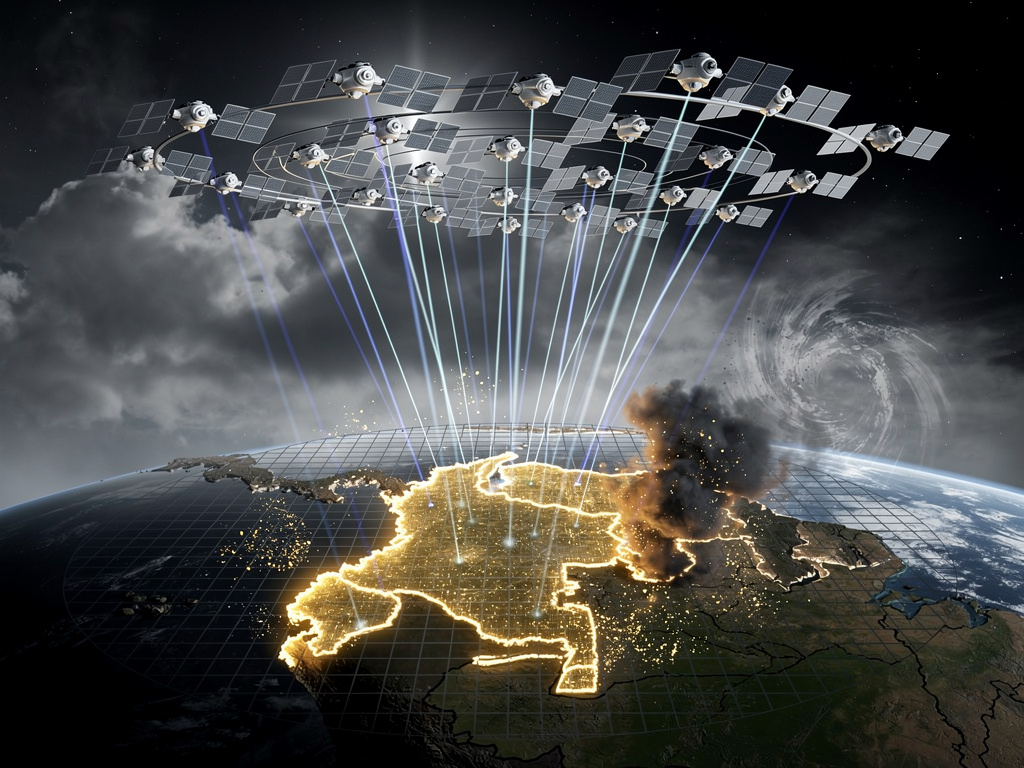
Starlink’s Satellite Salvation: Beaming Freedom to a Nation in Turmoil
In the wake of a dramatic U.S. military operation that led to the capture of Venezuelan President Nicolás Maduro, Elon Musk’s Starlink has stepped in with an unprecedented offer: free internet access for the entire country until February 3. This move, announced swiftly after the raid, underscores the growing role of satellite technology in geopolitical crises. According to reports from various outlets, Starlink is applying free service credits to both active and inactive accounts, ensuring broad accessibility during a period of uncertainty.
The operation itself unfolded in the early hours of January 3, 2026, with U.S. forces conducting airstrikes on military targets in Caracas and extracting Maduro and his wife, Cilia Flores, via helicopter to a U.S. naval vessel. Maduro now faces charges in New York related to drug trafficking and authoritarian rule, as detailed in coverage from CNBC. This bold intervention by the Trump administration has sparked international debate, with reactions ranging from condemnation by Russia and China to calls for democratic elections from the European Union.
Starlink’s intervention is not just a charitable gesture but a strategic deployment of its low-Earth orbit satellite constellation. With over 6,000 satellites in operation by 2026, the network can bypass traditional terrestrial infrastructure, which is often vulnerable to government control or disruption. In Venezuela, where internet blackouts have been a tool of the regime, this capability could prove transformative.
The Geopolitical Chessboard Shifts
Elon Musk, known for his vocal support of certain political causes, framed the free service as “in support of freedom and democracy,” as quoted in The Times of India. This aligns with previous instances where Starlink has provided aid, such as in Ukraine during the Russian invasion, where it offered connectivity amid widespread outages. Industry analysts note that such actions enhance Starlink’s brand as a resilient alternative to conventional ISPs, potentially accelerating its global adoption.
The timing is critical. Following Maduro’s arrest, Venezuela’s Supreme Court appointed Vice President Delcy Rodríguez as acting president to maintain continuity. However, the power vacuum has led to fears of instability, with reports of disrupted communications in the capital. Starlink’s free access, extending to February 3, provides a one-month buffer, allowing citizens to stay connected for news, coordination, and essential services.
From a technical standpoint, activating free credits across an entire nation requires sophisticated backend management. Starlink’s system automatically applies these to user terminals, which are dish antennas that connect directly to satellites. For those without hardware, the company has hinted at expedited distribution, though logistics in a post-raid environment remain challenging. Sources indicate that existing users in Venezuela, often those who smuggled in equipment despite past regime restrictions, will benefit immediately.
Technology’s Role in Regime Change
Delving deeper into the technology, Starlink operates on a mesh network of satellites orbiting at about 550 kilometers, enabling low-latency connections with speeds up to 150 Mbps in remote areas. This is particularly vital in Venezuela, where mountainous terrain and economic sanctions have hampered traditional broadband development. According to data from SpaceX, Venezuela had a modest but growing user base prior to the raid, with terminals often imported informally to evade government censorship.
The raid’s aftermath has seen a surge in online activity, with posts on X (formerly Twitter) reflecting public sentiment. Users have expressed relief and calls for free Starlink access, echoing pleas from 2024 when Maduro blocked platforms during elections. One post highlighted how regime vehicles used Starlink to bypass their own censorship, illustrating the irony of the technology’s dual use.
Industry insiders point out that this move could set a precedent for satellite providers in conflict zones. Competitors like Amazon’s Project Kuiper and OneWeb are watching closely, as Starlink’s actions blur the lines between commercial service and humanitarian aid. Regulatory bodies, including the FCC in the U.S., have previously approved Starlink’s expansions, but international operations raise questions about sovereignty and interference.
Economic Ripples and Market Dynamics
Economically, providing free service to an estimated population of 28 million isn’t trivial. Starlink’s standard subscription costs around $100 per month, so waiving fees for a month could represent millions in foregone revenue. However, Musk’s companies often absorb such costs for publicity and long-term gains. As reported in Fox Business, this is seen as a “win for the world,” aligning with Musk’s alignment with the Trump administration.
Venezuela’s economy, ravaged by hyperinflation and sanctions, stands to benefit from reliable internet. Businesses could resume operations, remote workers connect globally, and education continue uninterrupted. Yet, challenges persist: not everyone has access to the necessary hardware, which costs about $500 per kit. Starlink has not detailed plans for widespread distribution, but partnerships with local NGOs could bridge this gap.
On the global stage, this event highlights the intersection of technology and foreign policy. The U.S. operation, described as a “large-scale strike” by President Trump, involved coordination with intelligence agencies, potentially leveraging satellite data for precision. Starlink’s involvement post-raid suggests a symbiotic relationship between private tech firms and government objectives.
Human Stories Amid the Satellites
Beyond the tech specs, personal narratives emerge. Venezuelans who risked imprisonment for smuggling Starlink equipment now find vindication. Posts on X from users like activists pleading for connectivity during past blackouts underscore the human element. In 2024, during election turmoil, calls to Musk for free access went viral, presaging this moment.
For industry professionals, the implications extend to cybersecurity. Satellite internet, while resilient, isn’t immune to jamming or hacking attempts. Venezuela’s allies, such as Russia, have expertise in electronic warfare, raising concerns about potential disruptions. Starlink’s phased-array antennas and frequency-hopping techniques offer defenses, but the evolving threat environment demands constant innovation.
Moreover, this initiative could accelerate Starlink’s expansion in Latin America. Countries like Brazil and Colombia, with their own connectivity challenges, may seek similar partnerships. Regulatory hurdles remain, as governments wary of foreign tech influence might impose restrictions, but the Venezuelan case demonstrates the appeal of uncensorable internet.
Strategic Alliances and Future Horizons
Musk’s personal involvement adds a layer of intrigue. His reposts and statements, as covered in The Financial Express, position him as a key player in global affairs. This isn’t new; his support for Ukraine drew both praise and criticism, including accusations of influencing battlefield dynamics by limiting service in certain areas.
In Venezuela, the free period until February 3 allows time for a transitional government to stabilize. International observers, including the UN, are monitoring the situation, with calls for fair elections. Starlink’s role could facilitate transparent communication, enabling citizen journalism and oversight.
Technologically, this deployment tests Starlink’s scalability. Handling a nationwide surge in users requires robust orbital management and ground station support. SpaceX’s recent launches have bolstered the constellation, ensuring coverage over South America. Insiders speculate that data from this period will inform future optimizations, potentially integrating AI for traffic management.
Broader Implications for Global Connectivity
The Maduro raid and Starlink’s response illuminate broader trends in global connectivity. In regions plagued by authoritarianism, satellite tech offers a lifeline, bypassing state-controlled networks. This democratizes information access, empowering citizens and challenging oppressive regimes.
However, ethical questions arise. Is providing free internet an act of neutrality or intervention? Critics argue it favors U.S. interests, given Musk’s ties to the administration. Supporters counter that connectivity is a human right, essential for free expression.
Looking ahead, as Starlink aims for global coverage, similar interventions could become commonplace. In Africa or Asia, where internet penetration lags, such moves could drive adoption. Yet, affordability remains key; post-February 3, Venezuelans will face subscription costs, potentially limiting long-term impact.
Innovation in Crisis Response
Industry experts are analyzing how this fits into SpaceX’s broader strategy. With valuations soaring, Starlink’s user base exceeds 4 million globally. Venezuela could add significantly, especially if the new government eases import restrictions.
Comparisons to past crises abound. In Ukraine, Starlink enabled drone operations and civilian communication. Here, it might support humanitarian aid coordination amid potential refugee flows.
Ultimately, this episode reinforces satellite internet’s transformative potential. As geopolitical tensions rise, tech firms like Starlink are increasingly pivotal, blending innovation with real-world impact.
Sustaining Momentum in Uncertain Times
For Venezuelan users, the immediate benefit is clear: uninterrupted access during transition. Reports from Engadget detail how credits are applied seamlessly, with no action required from users.
Longer-term, this could foster digital economy growth. E-commerce, telemedicine, and online education, stifled under Maduro, might flourish.
As the world watches Venezuela’s next chapter, Starlink’s beam from space symbolizes hope, proving technology’s power to illuminate even the darkest corners of political strife.


 WebProNews is an iEntry Publication