
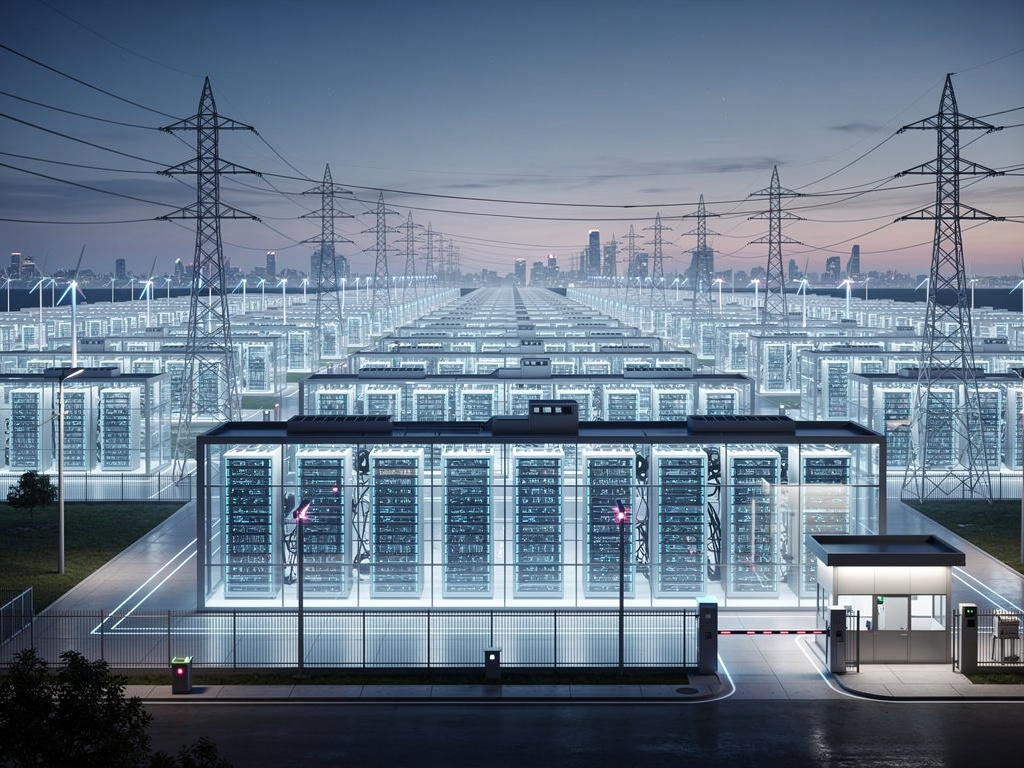
The Stargate Odyssey: Fueling AI’s Next Frontier with Billions in Bold Bets
In the high-stakes world of artificial intelligence, few initiatives have captured the imagination and capital quite like the Stargate Project. Announced in early 2025, this ambitious venture aims to construct a sprawling network of data centers across the United States, powering the next generation of AI models for OpenAI and its partners. Backed by a consortium of tech giants including SoftBank, Oracle, and Microsoft, Stargate represents a monumental push to secure American dominance in AI infrastructure. Recent developments indicate a fresh influx of funding, underscoring the project’s momentum amid escalating global competition.
The project’s origins trace back to January 2025, when President Donald Trump unveiled it alongside executives from OpenAI, Oracle, and SoftBank. Billed as the largest AI infrastructure endeavor in history, Stargate promises to invest up to $500 billion over four years, focusing on building massive data centers in states like Texas, New Mexico, and Ohio. These facilities are designed to handle the immense computational demands of advanced AI systems, which require unprecedented energy and processing power. According to reports, the initiative could create hundreds of thousands of jobs while bolstering national security through technological superiority.
At the heart of Stargate’s appeal is its strategic alignment with broader economic goals. Proponents argue that it will drive re-industrialization in key regions, transforming former oil towns into hubs of digital innovation. For instance, the flagship data center in Abilene, Texas, is already under development through a joint venture involving Blue Owl Capital, Crusoe Energy Systems, and Primary Digital Infrastructure. This site alone is leased to Oracle, highlighting the intricate web of partnerships fueling the project.
Scaling Ambitions Amid Financial Hurdles
Funding for such a colossal undertaking has been a point of intense scrutiny. Initial equity came from SoftBank, OpenAI, Oracle, and MGX, with SoftBank taking the lead on financial responsibilities. Masayoshi Son, SoftBank’s CEO, serves as chairman, bringing his track record of bold investments to the table. However, early reports suggested challenges in raising the full amount, with the Wall Street Journal noting that SoftBank might secure only 10% in equity, relying heavily on debt financing.
Recent updates paint a more optimistic picture. In April 2025, SoftBank announced borrowing $10 billion from Japanese lender Mizuho and others, as detailed in a Wikipedia entry on Stargate LLC. This was followed by JPMorgan Chase’s commitment of $2.3 billion in May for the Abilene project. Bloomberg’s August 2025 coverage revealed delays in starting construction and fundraising shortfalls, but momentum has since picked up.
A pivotal boost came in late 2025, with new funding rounds attracting additional investors. According to a recent article in TechRepublic, Stargate has secured further capital for its “Texas-sized AI factory,” including contributions from energy firms and international backers. In an exclusive interview, Lancium’s CEO discussed the race to build these megacenters, emphasizing the need for innovative energy solutions to power them.
Technological Backbone and Key Players
Stargate’s technical foundation draws on expertise from industry heavyweights. NVIDIA, Arm, and Microsoft are integral to the project’s technology stack, providing chips, architecture, and cloud integration essential for AI workloads. OpenAI, as the operational lead, ensures that the infrastructure aligns with its goals of developing artificial general intelligence (AGI). The project’s scope includes a supercomputer estimated at $100 billion, dwarfing current data centers by a factor of 100, with energy needs in the gigawatts—potentially requiring nuclear power sources.
Stakeholders have expanded since launch. A Reuters piece from October 2025, available at Reuters, lists a growing roster of investors and suppliers, including Samsung and SK Hynix for hardware components. This diversification mitigates risks associated with relying on a few key players, especially amid supply chain vulnerabilities exposed by recent global events.
Public sentiment, as gleaned from posts on X, reflects a mix of excitement and skepticism. Users have hailed the project as a step toward technological singularity, with one noting it could accelerate AI advancements dramatically. Others express concerns over energy consumption and the concentration of power in private hands, echoing broader debates in tech circles.
Energy Challenges and Infrastructure Demands
One of the most daunting aspects of Stargate is its voracious appetite for power. Estimates suggest the full network could require up to 10 gigawatts, equivalent to the output of seven nuclear reactors. This has spurred partnerships with energy providers, including explorations into renewable sources and advanced nuclear options. The White House’s April 2025 post on X celebrated the $500 billion investment, tying it to job creation and security, but critics worry about environmental impacts.
To address these, Stargate collaborators are innovating in sustainable tech. Crusoe Energy Systems, part of the Abilene venture, specializes in using stranded natural gas for power, reducing waste. Meanwhile, discussions with utilities aim to integrate these data centers into the grid without causing disruptions, a topic explored in a Scientific American article from January 2025 at Scientific American.
Geopolitically, Stargate positions the U.S. against rivals like China, where similar AI investments are underway. Trump’s endorsement, as reported in Al Jazeera’s January 2025 coverage at Al Jazeera, frames it as a national imperative, potentially influencing trade policies and alliances.
Economic Ripples and Job Creation
Beyond tech, Stargate’s economic implications are profound. Projections indicate over 100,000 jobs in construction, operations, and related fields, revitalizing Rust Belt areas. The Indian Express reported in February 2025 at The Indian Express on Trump’s announcement, highlighting job promises that could sway political support.
However, funding complexities persist. SoftBank’s recent sale of its Nvidia stake, as noted in Fladgate’s December 2025 AI round-up at Fladgate, freed up $5.8 billion for reallocation toward Stargate, signaling strategic shifts. This move surprised markets, given Nvidia’s AI dominance, but underscores Son’s focus on infrastructure over chip investments.
Industry insiders view Stargate as a bellwether for AI’s future. A Medium post from March 2025 by Sulbha Jain at Medium speculates on its potential to redefine AI capabilities, from enhanced models to real-world applications in healthcare and finance.
Global Expansion and Future Prospects
Looking abroad, Stargate is eyeing international growth. The Financial Times reported in April 2025 at Reuters (citing FT) that the venture is considering UK investments, expanding its footprint to tap into European talent and markets. This could foster transatlantic collaborations, though regulatory hurdles in data privacy loom.
Challenges remain, including timelines. Original plans targeted 2028 for key milestones, but delays reported in Bloomberg’s August update—referenced earlier in the Wikipedia entry—suggest adjustments. Recent funding infusions, as per TechRepublic’s latest piece, aim to accelerate progress, with Lancium emphasizing rapid deployment.
Elon Musk’s criticism, mentioned in a BBC article from January 2025 at BBC, adds a layer of intrigue. Musk, a rival in AI through xAI, has questioned the project’s exclusivity to OpenAI, potentially sparking competitive responses.
Risks and Ethical Considerations
No venture of this scale is without risks. Cybersecurity threats to such critical infrastructure are paramount, with experts warning of vulnerabilities in concentrated data hubs. Ethical debates swirl around AI’s societal impact, from job displacement to bias in algorithms, though Stargate’s backers emphasize safeguards.
Financially, the reliance on debt could strain balance sheets if AI hype cools. Yet, optimism prevails, with IBM’s August 2025 overview at IBM praising the public-private model as a blueprint for innovation.
As Stargate evolves, it embodies the convergence of technology, policy, and capital. Posts on X from December 2025 highlight ongoing buzz, with users debating its implications for energy control and AGI timelines. For industry veterans, this project isn’t just about building data centers—it’s about architecting the future of intelligence itself.
In the coming years, Stargate’s success could redefine global tech dynamics, ensuring U.S. leadership or exposing overambitious gambles. With fresh funding secured, the odyssey continues, promising breakthroughs that could transform industries and societies alike.


 WebProNews is an iEntry Publication