
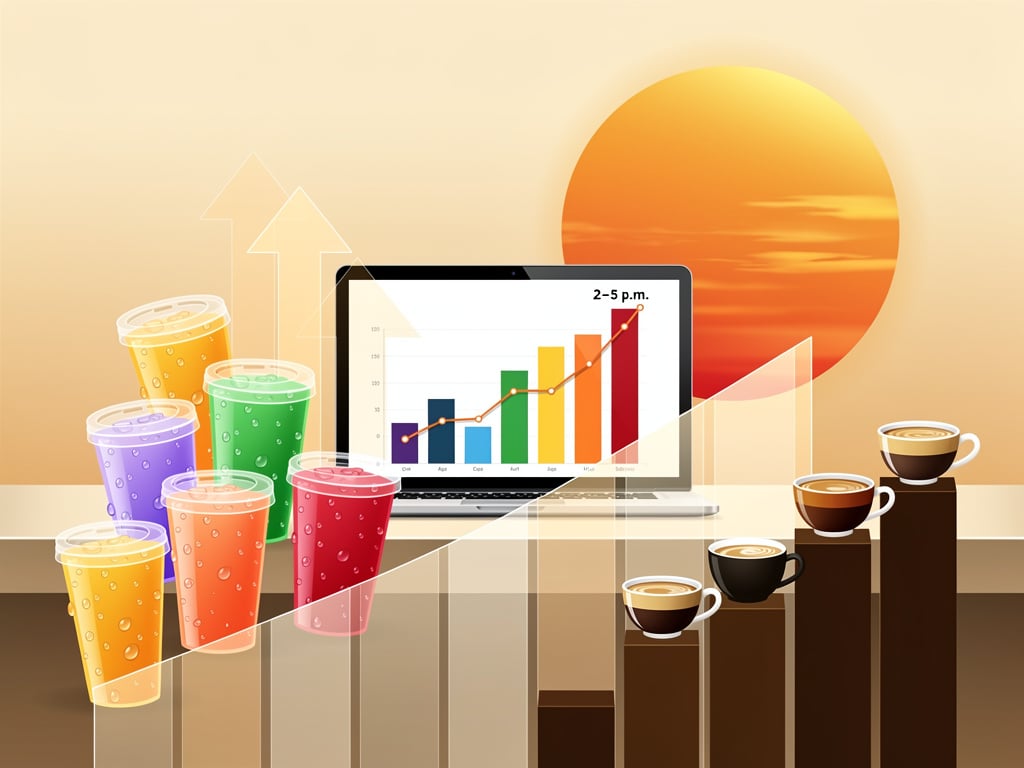
Starbucks once built an empire on the morning rush. Now the company bets its future on what happens after lunch. Recent data shows U.S. stores logging more visits after 2 p.m. The sharpest gains hit between 3 and 5 p.m. Traffic keeps building into early evening. This marks real progress in CEO Brian Niccol’s effort to smooth out the day’s peaks and valleys.
Traffic Gains Take Root
Starbucks coffeehouses across the United States are seeing more customers in the afternoons and into the evenings, with total visits increasing after 2 p.m. The biggest gains are between 3 and 5 p.m., where traffic growth is outpacing the rest of the afternoon. We’re seeing more visits continuing into the early evening, which shows how Starbucks is becoming part of customers’ routines well beyond the morning. That assessment comes directly from the company’s own press release detailing the last 90 days through mid-May.
Refreshers now rank as the company’s second-largest beverage platform, trailing only espresso. They deliver strong afternoon sales. Energy Refreshers, launched in April, let customers dial caffeine levels up or down. The Tropical Butterfly Refresher followed on May 12. Bright citrus notes and a color that shifts when stirred give it instant visual appeal. Both items feed demand for options that feel right at 3 p.m. rather than 8 a.m.
But drinks tell only part of the story. New food items target the same window. Chicken Caesar Wraps and Sesame Ginger Chicken Wraps recently appeared in select California and Washington stores. A Unicorn Cake Pop adds a sweet note that pairs with both hot and cold beverages. These additions aim to lift the average check when customers already hold a drink in hand.
Analysts see plenty of room left. The midday and afternoon periods generate $11 billion in annual sales after 11 a.m., according to company figures cited in a Yahoo Finance article by Brian Sozzi published today. More than half of U.S. company-operated store revenue — roughly $12 billion a year — still arrives by 11 a.m., The Wall Street Journal reported in February. Closing that gap could lift same-store sales and improve unit economics without adding thousands of new locations.
Tressie Lieberman, Starbucks global chief brand officer, framed the shift clearly at the company’s January investor day. “From brewed coffee to macchiatos, our morning loyalists love the rich and wonderful ritual of their Starbucks order. They rely on us to start their day,” she said. “We see an opportunity to own a new occasion in the afternoon. An afternoon reset. A culture-shaping ritual that Starbucks is perfectly poised to define and own.” The company plans to keep winning mornings while it builds this second peak. “We’re not chasing trends,” Lieberman added. “We’re building on a beloved platform and never giving customers a reason to go anywhere else.” Those remarks appear in the official investor day summary.
Execution won’t come without fixes. Bernstein analyst Danilo Gargiulo noted after meetings with management that food attachment in the afternoon remains limited. Only about 60% of U.S. stores operate on a daily replenishment cycle. The rest run on a 72-hour schedule — too slow for fresh, lower-velocity items such as protein bites or small snacks. Management believes the planned food lineup, which includes protein, fiber, chicken, and steak options, can run on existing ovens and kitchen layouts once supply chains catch up. Gargiulo’s observations are detailed in the same Yahoo Finance piece.
So what changed? Niccol’s “Back to Starbucks” plan poured resources into staffing, training, and wages. Those moves pressured North American margins by 170 basis points in the fiscal second quarter. Yet they delivered results. Global comparable store sales rose 6.2%. North America posted 7.1% growth with transactions climbing at the fastest pace in three years. Revenue climbed 8% to $9.5 billion. Adjusted earnings per share hit 50 cents, beating the 43-cent consensus. The company raised its full-year guidance to at least 5% same-store sales growth and $2.25 to $2.45 in adjusted EPS.
Store design plays a supporting role. More than 1,000 locations will receive upgrades this year. Softer seating, better lighting, and larger community tables encourage longer stays. Updated digital menu boards and curated music aim to make the space feel as inviting at 4 p.m. as it does at 7 a.m. A recent company story on afternoon routines highlighted one renovated store where soft seating, plants, and warm lighting already drive more transactions.
Happy hour-style promotions continue in the app. They typically run from 2 p.m. or 3 p.m. into early evening on selected days. Buy-one-get-one offers on select Ventis or discounts on Refreshers give customers an extra reason to stop. These limited-time deals have appeared in various forms for years. Their current emphasis on non-coffee drinks and food pairings reflects the broader afternoon focus.
Investors have taken notice. Shares rose after the latest earnings and the investor-day presentation. The stock had stagnated for five years before Niccol arrived. Wall Street now prices in the possibility that afternoons become as reliable as mornings. But success depends on fixing the supply chain, training enough baristas, and convincing customers that Starbucks fits their 3 p.m. routine the same way it fits their 8 a.m. one.
Refreshers alone won’t carry the load. The beverage pipeline includes blue variants launching soon, sparkling options, zero-sugar versions, and blended drinks. Each layer targets incremental sales rather than simple substitution. Food innovation must follow. Protein-forward items and globally inspired bakery products sit on the drawing board for later this year.
The stakes are straightforward. If Starbucks can lift afternoon traffic to match even half the morning intensity, the math works in its favor. More consistent sales throughout the day reduce reliance on peak-hour staffing. Longer customer dwell times lift the average ticket. And a stronger “third place” experience reinforces the brand against fast-casual competitors and convenience-store coffee.
Early signs look promising. Traffic data from mid-February through mid-May already shows acceleration. Refreshers sales keep climbing. New wraps test well in select markets. The company reports these gains alongside its strongest transaction growth in years. Yet the real test lies ahead — turning pilot success into chain-wide habit.
Starbucks has talked about the afternoon opportunity for years. This time the data, the menu, and the operational investments appear to be moving in the same direction. Whether that momentum holds through the slower summer months and into the critical fall season will decide if the afternoon finally becomes the second pillar the company needs.


 WebProNews is an iEntry Publication