
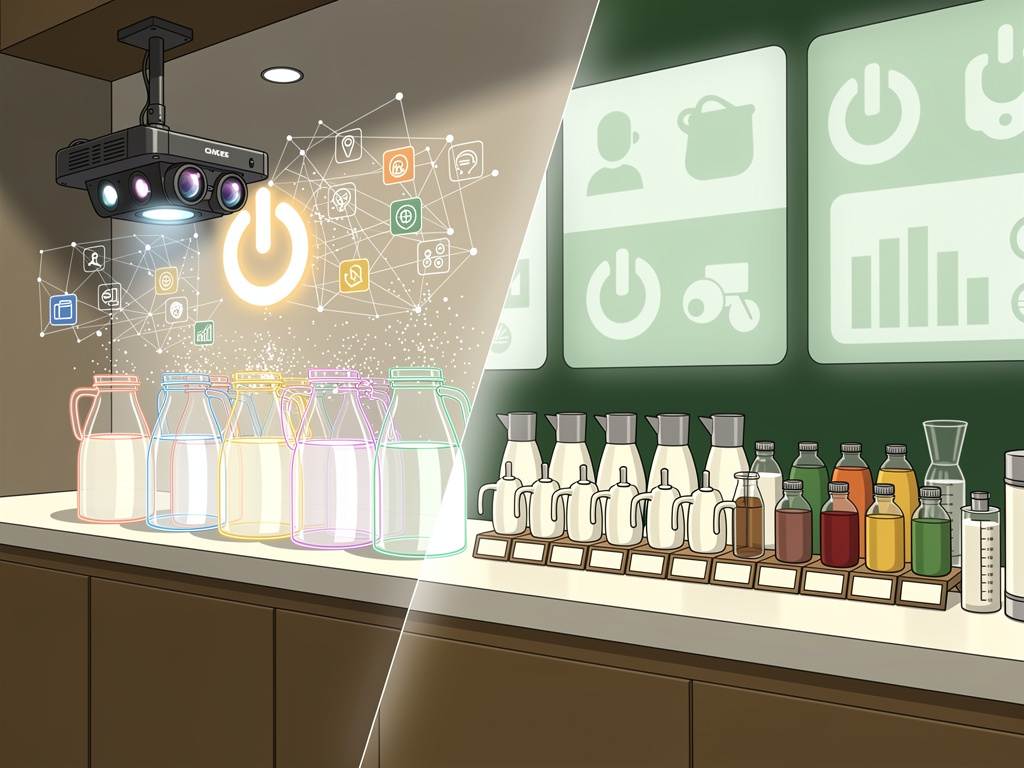
Starbucks just pulled the plug on an ambitious AI inventory tool. The coffee giant ended Automated Counting across North American stores this week. Nine months after rollout, the system that promised to track milk, syrups and other essentials with cameras and sensors fell short.
Workers didn’t mourn the loss. Internal messages reviewed by Reuters showed partners celebrating. One wrote, “Thanks for discontinuing Automatic Counting! The thought behind it was great, but the execution was proving difficult.” Short and direct. The sentiment spread fast among baristas tired of fixing the machine’s mistakes.
The tool arrived as part of CEO Brian Niccol’s “Back to Starbucks” push. He took over a chain plagued by product shortages that hurt sales and frustrated customers. Niccol brought in logistics experts and bet on technology. AI-driven order sequencing. Tools to assist baristas. And this inventory system from partner NomadGo, which used computer vision on tablets equipped with LIDAR to scan shelves automatically.
Starbucks once promoted it heavily. A launch video claimed high accuracy. Yet the same clip captured the tool failing to recognize a peppermint syrup bottle while counting nearby items. An early sign. By early 2026, problems mounted. The system confused different milk types. It missed items entirely. Counts proved unreliable in real stores where lighting changed, packaging looked similar and staff moved quickly.
Baristas kept double-checking. They adjusted orders manually. The AI added steps instead of removing them. Digital Trends reported employees struggled with inaccurate data even after months of use. What started as a fix for out-of-stock drinks became another headache in busy coffeehouses.
Reality Check on AI in Retail Operations
Starbucks didn’t hide the issues when it pulled the plug. An internal newsletter dated Monday stated simply, “Starting today, Automated Counting will be retired.” Beverage components and milk would return to the same manual counting method used for other categories. In a statement to Reuters, the company pointed to a broader focus. “Standardize how inventory is counted across coffeehouses as we continue to focus on consistency and execution at scale.” It also pledged more frequent daily replenishments and supply chain fixes. The goal remains clear. If an item sits on the menu, customers should order it without disappointment.
But the decision reveals limits. Computer vision still trips over variations that human eyes catch instantly. Busy environments introduce variables algorithms struggle to handle without constant retraining. And frontline workers bear the cost of those gaps. They lose time. They lose trust in the system.
This isn’t the chain’s only AI effort. A January 2026 Starbucks press release outlined a different vision. Tools like Green Dot Assist serve as real-time companions for partners. They answer questions on recipes, routines and service standards through conversation. Smart Queue sequences orders during peaks to keep flow smooth. Future applications include forecasting to keep favorites in stock and data-driven scheduling that matches shifts to demand while considering partner needs.
The release struck a consistent tone. “At Starbucks, the moments that matter most come from people. We design AI to strengthen, not replace, the human connection at the heart of every coffeehouse.” Executives position technology as support. Not substitution. Yet the scrapped inventory tool shows the gap between that promise and store-level results. Partners celebrated its exit. That feedback carries weight.
Recent coverage highlights the pattern. Restaurant Dive noted the tool’s unreliability and the shift back to traditional methods. Gizmodo called it a “borked” system that couldn’t count straight despite 99% accuracy claims in marketing. PYMNTS tied the errors directly to mislabeled products and missed counts that undermined the very availability Niccol targeted.
Earlier experiments with AI scheduling drew similar criticism. Systems optimized hours on paper but ignored human realities. They created clopens that exhausted staff. Turnover rose until the company listened and adjusted. One account from 2025 described how prioritizing people over pure automation later cut turnover and lifted engagement. The lesson stuck. Or at least it should.
So what happens now? Starbucks doubles down on standardization. Daily restocking. Supply chain repairs. Manual counts that, while less “smart,” deliver consistency. The company continues testing other AI applications. But deployment will face harder questions. Does this tool improve the partner experience or add friction? Can it handle exceptions as well as a seasoned shift supervisor? Will the data reflect real conditions or require constant human overrides?
Industry watchers note the caution. AI works best when it augments judgment rather than replaces it. Retail operations mix routine tasks with countless edge cases. Weather affects demand. Local events shift traffic. Staff call in sick. A system that miscounts milk creates waste, stockouts and unhappy customers faster than it solves problems.
Niccol’s turnaround hinges on execution at scale. He wants stores that feel reliable again. Clean. Stocked. Welcoming. Technology plays a role. But this week’s move suggests the chain learned that some tasks still demand the human touch. Partners who know their inventory by sight and memory. Managers who adjust on the fly. Baristas who read the room.
The AI inventory experiment lasted nine months. Long enough to gather data. Long enough for frontline feedback to surface. Short enough to cut losses before deeper integration. Starbucks returns to basics on counting while it refines other digital tools. The company says it remains committed to AI that supports partners. The proof will show in stores where the coffee flows without interruption and the team feels equipped rather than encumbered.
That balance matters. For Starbucks. For retailers testing similar systems. And for any organization tempted to deploy AI before it truly outperforms the people it aims to help. The tool failed not because the idea was flawed. But because execution in the real world proved difficult. Partners said it first. The company finally agreed.


 WebProNews is an iEntry Publication