
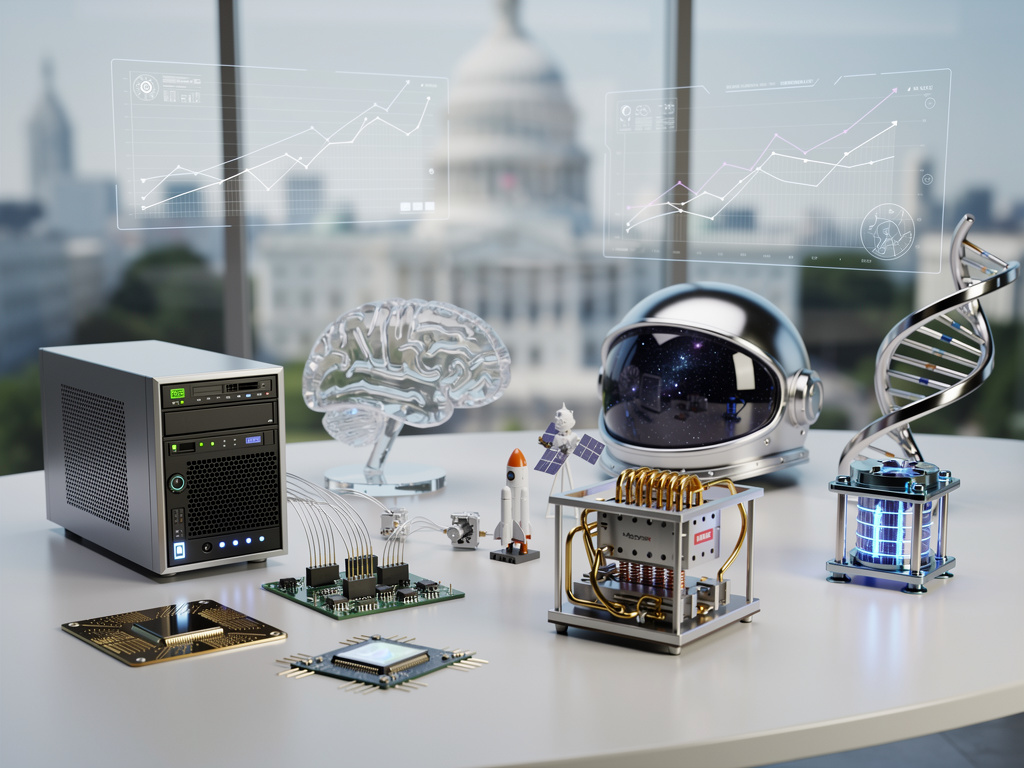
# Decoding the Future: Stanford’s 2026 Tech Review Illuminates Paths for Innovation and Policy
In an era where technological advancements outpace regulatory frameworks, the latest installment of the Stanford Emerging Technology Review (SETR) arrives as a timely compass for decision-makers. Released this month, the 2026 edition delves into the intricacies of frontier technologies, providing American policymakers and business executives with critical analyses of their societal and economic ramifications. Spearheaded by the Hoover Institution at Stanford University, this annual report synthesizes insights from over 100 faculty experts, distilling complex developments into actionable intelligence.
The report’s core mission is to bridge the gap between cutting-edge research and practical application. It covers a spectrum of fields, from artificial intelligence to biotechnology, emphasizing not just the innovations themselves but their broader implications for national security, economic competitiveness, and ethical governance. As global competition intensifies, particularly with rivals like China advancing rapidly in quantum computing and semiconductors, the SETR underscores the urgency for the U.S. to maintain its technological edge.
This year’s edition builds on previous volumes by incorporating real-time data and forward-looking scenarios. Contributors include luminaries such as Condoleezza Rice, who chairs the review, and experts from Stanford’s engineering and policy schools. Their collective expertise paints a vivid picture of how emerging tools could reshape industries, from healthcare to defense.
Navigating AI’s Expanding Horizons
Artificial intelligence remains a focal point, with the report highlighting breakthroughs in generative models and autonomous systems. It warns of potential disruptions in labor markets, where AI-driven automation could displace millions of jobs while creating new opportunities in specialized fields. Policymakers are urged to invest in reskilling programs to mitigate these shifts, drawing parallels to historical technological transitions like the industrial revolution.
Beyond economics, the SETR addresses AI’s role in misinformation and cybersecurity. With deepfakes becoming more sophisticated, the report advocates for robust verification standards and international collaborations to combat digital threats. Business leaders are advised to integrate ethical AI frameworks into their operations, ensuring transparency and accountability to build public trust.
The analysis extends to AI’s integration with other technologies, such as robotics. For instance, advancements in machine learning are enabling more intuitive human-robot interactions, promising revolutions in manufacturing and elder care. However, the report cautions against over-reliance, stressing the need for human oversight to prevent unintended consequences.
Biotechnology’s Promise and Perils
Shifting to biotechnology, the 2026 SETR explores gene editing tools like CRISPR, which continue to evolve at a breakneck pace. These innovations hold immense potential for treating genetic disorders and enhancing agricultural yields, but they also raise ethical dilemmas around designer babies and biodiversity. The report calls for updated regulatory guidelines to balance innovation with safety.
In the realm of personalized medicine, the integration of big data with biotech is accelerating drug discovery. Stanford experts predict that AI-assisted simulations could cut development times for new therapies by half, potentially saving billions in costs. Yet, this progress demands stringent data privacy measures to protect patient information from breaches.
The review also touches on synthetic biology, where engineered organisms could address environmental challenges like plastic degradation. While optimistic about these applications, it highlights risks such as accidental releases into ecosystems, urging interdisciplinary oversight involving scientists, ethicists, and regulators.
Quantum Leaps in Computing Power
Quantum computing emerges as another cornerstone of the report, with projections that practical quantum systems could solve problems intractable for classical computers. This could revolutionize fields like cryptography and materials science, but it also threatens current encryption standards, prompting calls for quantum-resistant protocols.
The SETR notes significant investments by governments and private sectors, including U.S. initiatives under the CHIPS Act. However, it points out that supply chain vulnerabilities, particularly in rare earth materials, could hinder progress. Businesses are encouraged to diversify sourcing and collaborate on international standards to foster a secure quantum ecosystem.
Furthermore, the report discusses quantum sensors’ applications in navigation and medical imaging, offering unprecedented precision. These developments could enhance national defense capabilities, but they require substantial R&D funding to transition from labs to real-world use.
Semiconductors: The Backbone of Tech Dominance
Semiconductors receive detailed scrutiny, given their foundational role in virtually all modern technologies. The 2026 edition analyzes the ongoing chip shortage’s aftermath and the push for domestic manufacturing. It references geopolitical tensions, such as export controls on advanced chips to China, as critical factors influencing global supply chains.
Experts in the report advocate for public-private partnerships to bolster U.S. production capacity, citing examples like Taiwan Semiconductor Manufacturing Company’s expansions in Arizona. This strategic shift aims to reduce dependencies and enhance resilience against disruptions.
On the innovation front, the SETR explores next-generation materials like gallium nitride, which promise more efficient power management in devices. These advancements could drive sustainability efforts, particularly in electric vehicles and renewable energy systems, but they necessitate workforce training in specialized fabrication techniques.
Space Technologies and Global Competition
Venturing into space technologies, the report examines the commercialization of orbit, with private companies like SpaceX leading reusable rocket developments. This democratization of space access is fostering new industries, from satellite communications to asteroid mining, but it also amplifies concerns over orbital debris and spectrum allocation.
The SETR emphasizes the need for updated treaties to govern space activities, preventing conflicts in this increasingly crowded domain. For businesses, opportunities abound in satellite constellations for global internet coverage, potentially bridging digital divides in remote areas.
Additionally, the review covers advancements in propulsion systems, such as ion thrusters, which could enable deeper space exploration. These technologies not only expand scientific frontiers but also hold commercial value in resource extraction from celestial bodies.
Energy Innovations for a Sustainable Era
Energy technologies form a vital chapter, focusing on fusion power’s elusive promise. Recent breakthroughs, like those at Lawrence Livermore National Laboratory, suggest net energy gains are within reach, potentially providing limitless clean power. The report urges accelerated funding to commercialize these systems.
Renewable integrations, including smart grids enhanced by AI, are highlighted for their role in decarbonization. Challenges such as battery storage limitations are addressed, with recommendations for research into solid-state alternatives to improve efficiency and safety.
The SETR also discusses hydrogen as a fuel source, noting its potential in heavy industry and transportation. However, scaling production requires overcoming infrastructural hurdles, including electrolysis advancements powered by renewables.
Policy Imperatives in a Tech-Driven World
Throughout the report, a recurring theme is the imperative for adaptive policy frameworks. It argues that outdated regulations could stifle innovation, using examples from drone usage and autonomous vehicles. Policymakers are advised to adopt agile approaches, incorporating feedback loops from industry stakeholders.
International cooperation is deemed essential, particularly in standard-setting for technologies like 5G and beyond. The review warns against isolationist policies that might cede ground to competitors, advocating instead for alliances that promote shared prosperity.
Moreover, the SETR stresses education’s role in preparing the next generation. Investments in STEM curricula, coupled with ethical training, are seen as crucial for sustaining U.S. leadership.
Insights from Recent Developments
Drawing from broader sources, the report’s findings align with ongoing discussions in the tech sphere. For instance, a recent article in The New York Times explored similar themes in Stanford’s prior editions, noting the institution’s influence on Capitol Hill debates. This continuity underscores the SETR’s growing stature as a policy touchstone.
On social media platform X, formerly Twitter, experts have been buzzing about the 2026 release, with threads from tech analysts highlighting quantum computing’s sections. One post from a Hoover fellow linked to the full report, emphasizing its accessibility for non-experts.
Further afield, Bloomberg reported on the review’s launch event, quoting Rice on the need for bipartisan tech strategies amid election cycles. This coverage reinforces the report’s call for unity in addressing tech challenges.
Business Strategies Amid Uncertainty
For corporate leaders, the SETR offers strategic roadmaps. It recommends scenario planning to anticipate tech disruptions, such as AI’s impact on supply chains. Companies like Google and Microsoft are already adapting, investing in quantum research to stay ahead.
The report also advises on intellectual property protection, especially in collaborative R&D environments. With patent filings surging in biotech, safeguarding innovations is paramount to maintaining competitive advantages.
In terms of risk management, the review suggests incorporating tech foresight into boardroom discussions, ensuring executives are versed in emerging trends to guide investments wisely.
Ethical Considerations at the Forefront
Ethics permeate the SETR’s analyses, urging a human-centered approach to tech deployment. It critiques past oversights, like social media’s role in polarization, and proposes guidelines for responsible innovation.
Diversity in tech development is highlighted as key to avoiding biases, with calls for inclusive teams that reflect societal demographics. This could lead to more equitable outcomes in AI applications, from hiring algorithms to predictive policing.
Finally, the report envisions a future where technology amplifies human potential rather than supplants it. By fostering dialogue between academia, industry, and government, the SETR aims to steer progress toward beneficial ends.
Voices from the Field and Future Trajectories
Interviews embedded in the report feature industry voices, such as venture capitalists betting on neurotechnology startups. These insights reveal funding trends favoring brain-computer interfaces, which could transform healthcare but require careful neuroethical oversight.
Looking ahead, the SETR forecasts accelerating convergence across tech domains, like AI-biotech hybrids for drug design. This interdisciplinary fusion promises exponential gains but demands holistic governance.
Echoing sentiments from TechCrunch, which praised the report’s depth, experts agree that staying informed is non-negotiable for leaders navigating this dynamic arena.
Amplifying Impact Through Collaboration
The report’s dissemination strategy includes webinars and policy briefs, extending its reach beyond academia. Partnerships with think tanks amplify its messages, influencing legislation like potential AI safety bills.
Business adoption is evident in corporate strategies, with firms referencing SETR data in annual reports. This integration underscores the review’s practical value in decision-making processes.
As technologies evolve, the SETR positions itself as an indispensable resource, guiding stakeholders through complexities with clarity and foresight. Its 2026 edition, available via PRNewswire, invites readers to engage deeply with the forces shaping tomorrow.


 WebProNews is an iEntry Publication