
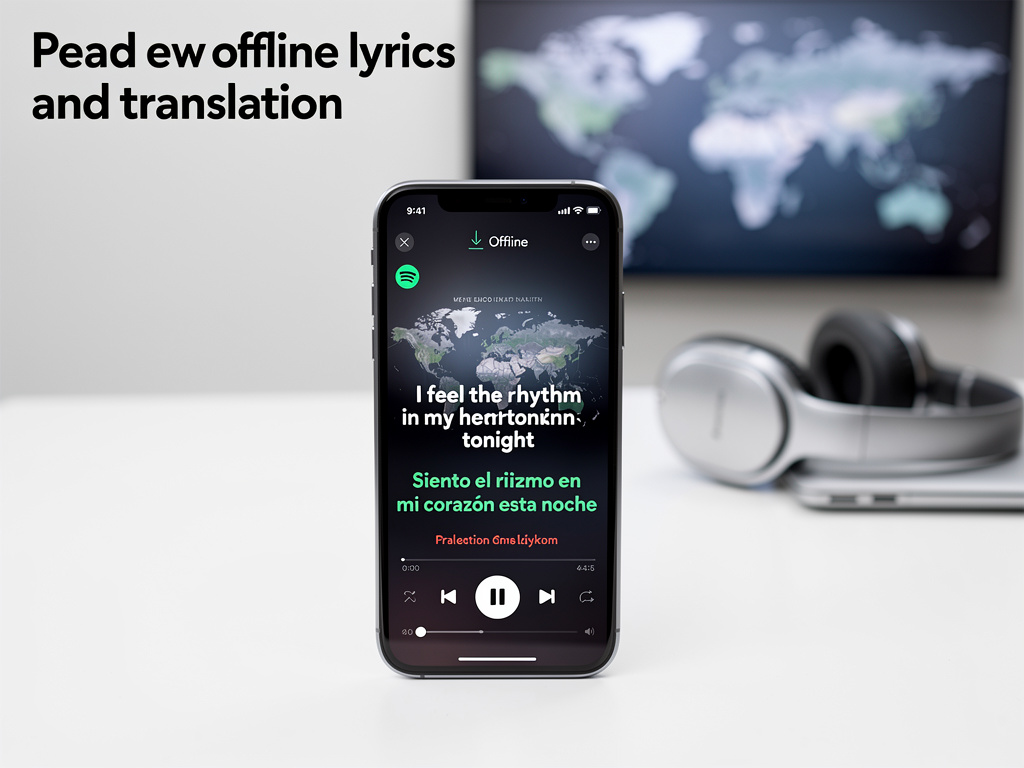
Spotify has unveiled a significant enhancement to its music streaming platform that promises to fundamentally alter how users engage with their favorite songs, particularly during periods without internet connectivity. The Swedish audio giant’s latest update introduces offline lyrics access coupled with real-time translation capabilities, marking a strategic pivot in the increasingly competitive streaming market where differentiation has become paramount.
According to Digital Trends, the new feature allows Premium subscribers to view synchronized lyrics even when their devices lack an internet connection, while simultaneously offering translation options across multiple languages. This dual functionality represents more than mere convenience—it signals Spotify’s recognition that the future of music consumption lies not just in accessibility, but in creating deeper, more meaningful connections between listeners and content across linguistic and geographical boundaries.
The timing of this rollout proves particularly noteworthy as streaming platforms face mounting pressure to justify subscription costs amid economic uncertainty and intensifying competition. While Spotify has long offered lyrics through its partnership with Musixmatch, the offline capability addresses a persistent pain point for users who frequently find themselves in environments with limited or no connectivity—whether on flights, in remote locations, or in areas with poor network infrastructure.
Breaking Down Barriers: The Technical Infrastructure Behind Offline Lyrics
The implementation of offline lyrics functionality required substantial technical architecture modifications. Unlike streaming lyrics in real-time, which pulls data from servers as songs play, offline access necessitates pre-downloading and storing lyrics data locally on user devices. This approach mirrors Spotify’s existing offline listening feature but adds layers of complexity given the need for synchronization timing data and formatting information to ensure lyrics display correctly alongside audio playback.
Industry analysts suggest this move reflects broader trends in how streaming services are rethinking data storage and user experience design. The translation feature, in particular, leverages sophisticated language processing capabilities that must function without constant server communication. By enabling users to toggle between original lyrics and translated versions while offline, Spotify has essentially created a self-contained linguistic ecosystem within its application.
Global Reach and Cultural Implications for Music Discovery
The translation component of Spotify’s update carries profound implications for cross-cultural music discovery and appreciation. As streaming has demolished traditional geographical barriers to music distribution, language has remained one of the final frontiers preventing full global integration of music markets. Artists from non-English speaking countries have increasingly found international audiences, from K-pop sensations to Latin urban artists, yet language comprehension has often lagged behind melodic appreciation.
By providing instant translation capabilities, Spotify empowers listeners to engage more deeply with music from diverse linguistic backgrounds. This functionality could accelerate trends already visible in global streaming charts, where songs in Spanish, Korean, Hindi, and other languages regularly compete with English-language tracks for top positions. The feature democratizes music understanding in ways that could reshape how record labels approach international marketing and how artists craft their global strategies.
Competitive Dynamics in the Streaming Wars
Spotify’s enhancement arrives as the streaming industry enters a mature phase characterized by feature differentiation rather than pure content acquisition. While Apple Music, Amazon Music, YouTube Music, and Tidal all offer lyrics functionality, the combination of offline access and translation positions Spotify uniquely in the market. This strategic positioning becomes especially critical as subscriber growth rates slow in developed markets and platforms seek retention mechanisms beyond content libraries.
The move also represents a calculated response to Apple Music’s recent feature additions and YouTube Music’s integration advantages within Google’s ecosystem. By focusing on utility features that enhance daily user experience rather than exclusive content deals, Spotify appears to be betting on stickiness through superior functionality. Premium subscribers who regularly use offline lyrics and translation features represent a user base less likely to churn to competitors, even if rival services offer similar music catalogs.
Monetization Strategy and Premium Value Proposition
Critically, Spotify has positioned offline lyrics and translation as Premium-exclusive features, reinforcing the value proposition of its paid tier at a time when the company faces pressure to improve profitability. The streaming giant has long struggled with thin margins due to substantial royalty payments to rights holders, making subscriber conversion and retention essential to financial sustainability.
By reserving advanced lyrics functionality for paying subscribers, Spotify creates a tangible differentiation point between free and Premium tiers beyond the traditional ad-free listening and unlimited skips. This strategy aligns with broader industry efforts to convert free users to paid subscriptions through feature gating rather than content exclusivity alone. The educational and practical utility of translated lyrics may prove particularly compelling in emerging markets where Spotify seeks growth but faces price sensitivity challenges.
Technical Challenges and User Experience Considerations
Implementing offline lyrics with translation capabilities presents substantial technical hurdles that extend beyond simple data storage. Synchronization accuracy becomes paramount—lyrics must align precisely with audio playback regardless of network status, requiring robust local timing mechanisms. Translation quality represents another critical consideration, as automated language conversion can struggle with idiomatic expressions, cultural references, and the poetic language common in song lyrics.
Spotify’s approach to these challenges will likely involve a combination of machine learning algorithms for translation and human curation for popular tracks. The storage requirements for multiple language versions of lyrics across a user’s downloaded library could also impact device storage, particularly for users who download extensive offline libraries. How Spotify balances translation accuracy, storage efficiency, and user experience will determine whether this feature becomes genuinely transformative or merely a novelty.
Educational Applications and Unexpected Use Cases
Beyond entertainment, the offline lyrics and translation features open unexpected applications in language learning and cultural education. Language learners have long used music as a tool for improving comprehension and pronunciation, but the friction of switching between music apps and translation services has limited this approach’s effectiveness. Spotify’s integrated solution removes this friction, potentially positioning the platform as an inadvertent educational tool.
This educational dimension could attract partnerships with language learning platforms or educational institutions, creating new revenue streams and user acquisition channels. The ability to see original lyrics alongside translations provides context that pure translation apps cannot offer, helping learners understand how languages function in creative, non-literal contexts. Such applications extend Spotify’s value proposition beyond pure entertainment into personal development territory.
Privacy and Data Considerations in Offline Functionality
The shift toward offline functionality also carries privacy implications that may appeal to increasingly privacy-conscious users. By enabling core features without constant server communication, Spotify reduces the data transmission that some users find concerning. While the platform still collects listening data when devices reconnect to the internet, the ability to enjoy full functionality offline represents a middle ground between complete disconnection and constant data sharing.
This privacy angle could prove advantageous as regulatory scrutiny of data collection practices intensifies globally. Features that function offline inherently collect less real-time behavioral data, potentially simplifying compliance with regulations like GDPR in Europe or emerging privacy frameworks in other jurisdictions. Whether Spotify explicitly markets this privacy benefit remains to be seen, but it represents a subtle advantage in an era of heightened data awareness.
Future Implications for Music Streaming Evolution
Spotify’s offline lyrics and translation update signals a broader evolution in how streaming platforms conceptualize their role in the music ecosystem. Rather than serving merely as distribution channels, platforms increasingly position themselves as comprehensive music engagement environments that facilitate discovery, understanding, and connection. This shift from passive consumption to active engagement represents the next frontier in streaming’s maturation.
The success of these features will likely influence competitor strategies and potentially accelerate innovation in adjacent areas such as artist commentary, behind-the-scenes content, and interactive listening experiences. As artificial intelligence capabilities advance, future iterations might offer even more sophisticated features—perhaps real-time vocal coaching, detailed musical analysis, or personalized annotation systems that let users create their own interpretive layers atop songs.
For Spotify, the offline lyrics and translation rollout represents both an immediate competitive advantage and a long-term strategic bet on utility-driven differentiation. As the streaming market matures and content libraries increasingly converge across platforms, the winners will likely be those that best understand and serve the evolving ways people want to engage with music. By addressing fundamental user needs around accessibility and comprehension, Spotify has taken a meaningful step toward defining what next-generation music streaming should encompass—not just delivering songs, but unlocking the full depth of musical experience regardless of connectivity or linguistic background.


 WebProNews is an iEntry Publication