
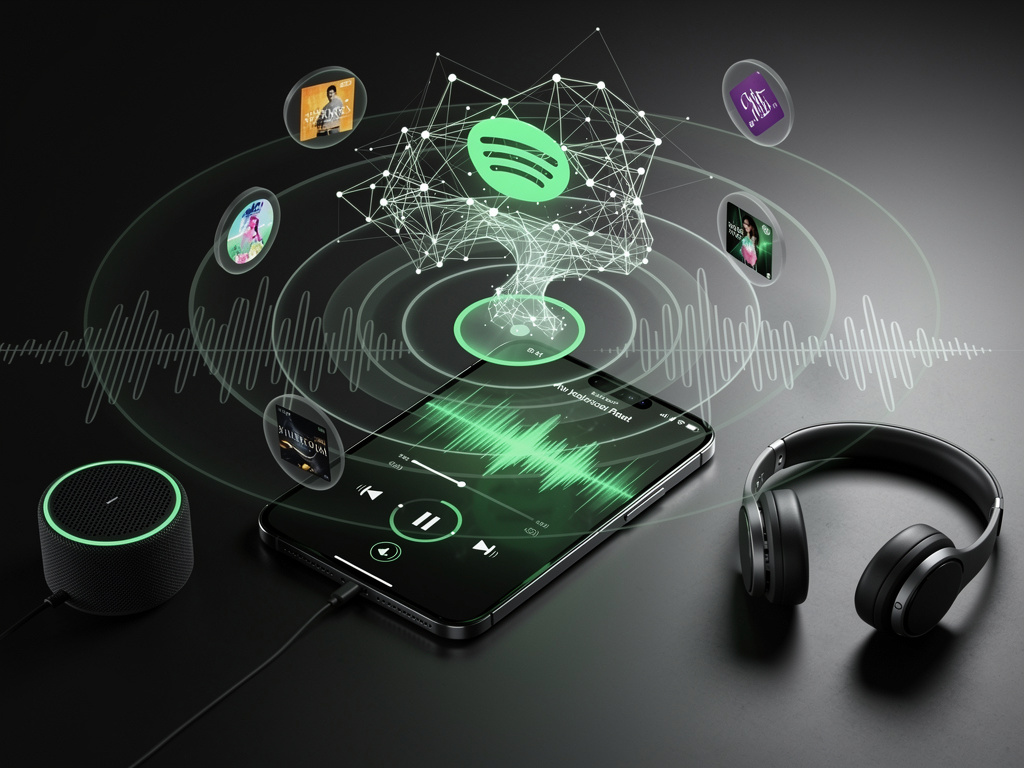
Spotify continues to refine its audio offerings with significant updates to its podcast platform, introducing features that transform how listeners interact with spoken content. The company recently announced enhancements that allow users to pose detailed questions about specific episodes they are hearing, creating a more engaging and informative experience. This development builds on earlier efforts to make podcasts more accessible and interactive, reflecting the service’s ongoing commitment to innovation in audio consumption.
The latest changes center on a new personal podcast feature designed to function as a customized daily briefing. According to a report from TechRadar, this addition aims to position Spotify as a central hub for personalized news and information delivered through voice. Users can now receive tailored summaries drawn from their listening habits, favorite shows, and topics of interest. The system analyzes previous activity to curate content that aligns with individual preferences, potentially replacing traditional smart speaker briefings with a more podcast-centric alternative.
At the heart of these updates lies improved conversational capabilities powered by artificial intelligence. Listeners can interrupt an episode to ask specific questions about the material being discussed. For instance, while hearing an interview with a scientist, a user might inquire about related research papers, historical context, or explanations of complex terminology. The AI responds with relevant details drawn from the episode transcript and broader knowledge bases, enhancing comprehension without forcing the listener to pause and search externally.
This question-and-answer function represents a substantial step forward from basic transcript search features introduced in previous years. Earlier tools allowed users to find keywords within episodes, but the new system understands context and follows up on queries with additional information. Spotify has integrated large language models to process these interactions, ensuring responses remain accurate to the source material while expanding on it appropriately. The technology works across both free and premium accounts, though premium users may experience fewer interruptions from advertisements during these exchanges.
The personal podcast briefing takes this interactivity further by creating a daily audio experience customized for each listener. Rather than a generic news roundup, the feature compiles segments from subscribed shows, relevant clips from popular series, and synthesized summaries of current events filtered through the user’s demonstrated interests. Someone who regularly listens to technology podcasts might receive updates on recent gadget launches mixed with analysis from their preferred commentators. The briefing adapts over time as listening patterns evolve, becoming more precise with continued use.
Implementation of these features required extensive work on Spotify’s backend systems. The company has invested heavily in transcription accuracy, having processed millions of hours of audio to train its models. This data foundation enables the AI to identify speakers, understand different accents, and maintain context across long-form discussions that can exceed two hours. Engineers focused on reducing latency so that responses feel natural rather than delayed, an essential consideration for maintaining the flow of conversation.
Privacy considerations played a central role in the development process. Spotify emphasizes that all personalization occurs on-device where possible, with sensitive data protected through encryption and user-controlled settings. Listeners can review and delete their interaction history at any time, and the system provides clear explanations about how information influences recommendations. This transparent approach addresses growing concerns about data usage in audio platforms while still delivering meaningful customization.
The timing of these announcements coincides with increased competition in the podcasting space. Apple Podcasts has expanded its subscription model and introduced spatial audio enhancements, while YouTube continues to grow its audio offerings through video podcasts. Amazon’s Audible maintains a strong position in premium spoken word content, and emerging platforms like Substack offer direct creator-to-listener models. Against this backdrop, Spotify’s focus on interactivity and personalization serves as a distinctive element in its strategy to retain users within its application rather than losing them to specialized apps.
Early testing of the question feature has generated positive feedback from select users. Beta participants reported that the ability to clarify points during complex episodes significantly improved their understanding of topics ranging from scientific breakthroughs to political analysis. The system handles follow-up questions effectively, allowing users to explore subjects in greater depth without disrupting their primary listening activity. Some testers noted occasional inaccuracies in responses, particularly with very recent episodes or highly specialized terminology, but overall satisfaction levels remained high.
The daily briefing component draws inspiration from smart speaker flash briefings while addressing their limitations. Traditional services often repeat the same stories across different platforms and lack depth in their coverage. Spotify’s version incorporates full context from podcast discussions, providing nuanced perspectives rather than headline summaries. The feature can include segments from multiple shows stitched together with transitions that feel organic, creating a cohesive listening session that might last between fifteen and thirty minutes depending on user preferences.
Integration with existing Spotify tools enhances the value of these new capabilities. The feature works alongside the service’s recommendation algorithms, which already suggest episodes based on listening history. Users can save particularly useful responses for later reference or share them with friends through the application. Voice commands enable hands-free operation, making the system suitable for commuting, exercising, or household tasks where visual interfaces prove impractical.
Content creators stand to benefit from these developments as well. Shows that generate frequent questions may see increased engagement metrics, potentially leading to higher advertising rates or subscription conversions. Spotify provides analytics to podcasters showing which segments trigger the most interactions, offering insights into audience curiosity and comprehension challenges. This data can guide future episode planning and help creators address common questions proactively within their content.
The technology behind these features builds upon previous artificial intelligence investments at Spotify. The company acquired several AI startups in recent years, incorporating their expertise into podcast tools. Natural language processing advancements allow the system to distinguish between different types of questions, from factual inquiries to requests for opinions or predictions. The AI can also identify when a user seems confused by a topic and offer simplified explanations without being prompted.
Looking ahead, Spotify plans to expand these capabilities across more languages and content types. Initial rollout focuses on English-language podcasts in select markets, with additional languages scheduled for later this year. The company also explores integration with video podcasts, where visual elements might enhance explanations of complex subjects. Future updates could include collaborative features allowing multiple users to build shared briefings based on group interests.
Challenges remain in scaling these systems effectively. Processing power requirements for real-time question answering across millions of users present significant technical hurdles. Maintaining response quality as the volume of available podcasts grows requires constant model training and refinement. Additionally, ensuring that AI-generated responses do not misrepresent creator intentions demands careful oversight and feedback mechanisms.
Despite these obstacles, the direction Spotify has chosen aligns with broader trends in audio consumption. Listeners increasingly seek more than passive entertainment from their media; they want tools that facilitate learning, spark curiosity, and adapt to their individual needs. By combining vast content libraries with intelligent interaction capabilities, the platform positions itself to meet these expectations while encouraging longer listening sessions and deeper engagement.
The personal podcast briefing particularly appeals to users who value efficiency in their information consumption. Busy professionals can absorb key insights from multiple sources during morning routines, while students might use the feature to supplement their studies with relevant expert discussions. The system’s ability to filter content according to personal relevance helps combat information overload, presenting only material likely to interest the specific listener.
Technical specifications of the new features include support for most modern devices running the latest Spotify application versions. The question-asking function activates through simple voice commands or on-screen buttons during playback. Responses can be delivered through audio, text, or both, depending on user settings and current activity. Battery consumption remains minimal thanks to efficient processing methods that prioritize local computation when possible.
User adoption will likely determine the long-term success of these initiatives. Spotify has a history of introducing innovative features that sometimes require time to gain traction among its user base. The company typically provides extensive educational materials and in-app prompts to demonstrate new capabilities. Early indicators suggest strong interest in the question feature, particularly among listeners of educational and news content who frequently encounter unfamiliar concepts.
As these tools mature, they may influence how podcasts are produced. Creators might begin structuring their episodes with potential AI interactions in mind, perhaps including more explicit explanations or signposting key information. Some shows could develop companion content specifically designed for interactive consumption, creating new formats that blend traditional podcasting with responsive elements.
The updates demonstrate Spotify’s determination to evolve beyond its origins as a music streaming service. While audio streaming remains the core offering, the company’s podcast investments have grown substantially, with exclusive deals and original productions complementing the vast library of independent shows. These latest features reinforce that strategy by making the platform more valuable for spoken word content specifically.
Listeners interested in trying the new capabilities should ensure their application is updated to the latest version. The features roll out gradually across different regions and account types, so availability may vary. Those without access yet can expect to see the options appear in coming weeks as the deployment continues. Spotify encourages users to provide feedback through the application to help refine the experience based on real-world usage patterns.
This latest chapter in Spotify’s podcast development illustrates the company’s focus on practical enhancements that address genuine user needs. By enabling direct interaction with content and offering personalized daily briefings, the service creates more dynamic relationships between listeners and the material they consume. As artificial intelligence capabilities continue advancing, such features will likely become standard expectations across audio platforms, with Spotify currently holding a notable position at the forefront of these changes. The combination of vast content resources and intelligent tools creates compelling reasons for users to make the application their primary destination for podcast listening and information gathering.


 WebProNews is an iEntry Publication