
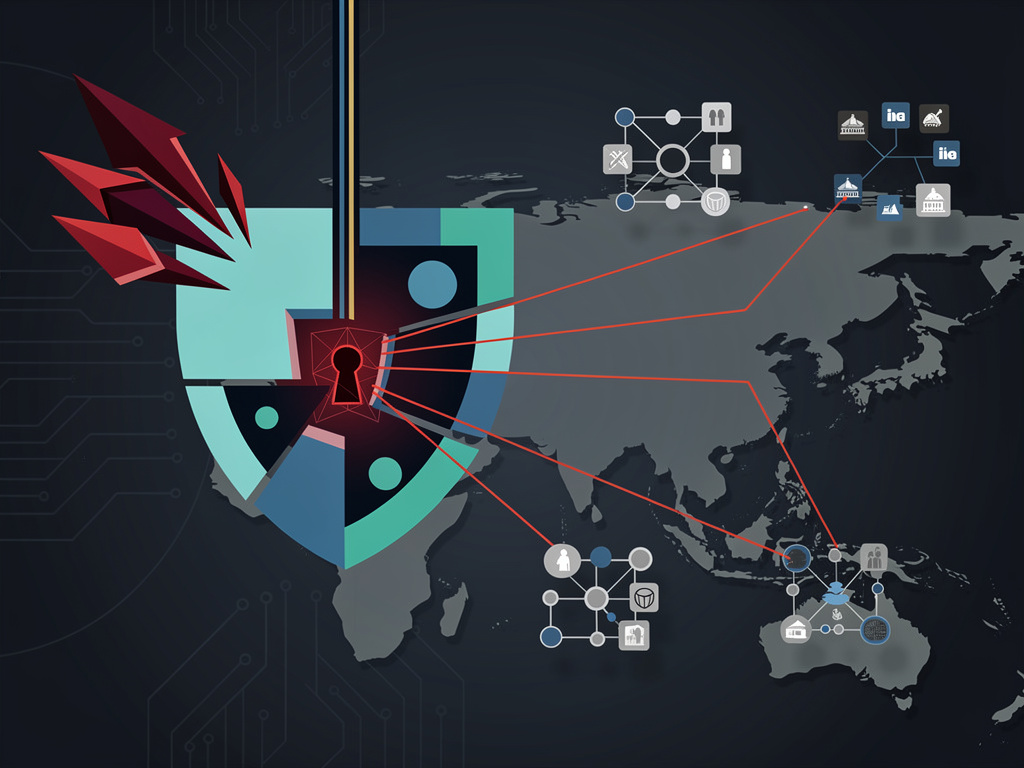
A legitimate software update mechanism — the kind enterprises trust to keep their systems current and protected — has been quietly weaponized. The target: Cobra DocGuard, a document protection client widely deployed across government agencies and corporate networks in East and Southeast Asia. The attacker: a threat group with suspected ties to Chinese state interests. The payload: a sophisticated backdoor called SpeaGle that slips in through a supply chain compromise so clean it barely leaves a trace.
This isn’t hypothetical. It’s happening now.
According to a detailed report from The Hacker News, researchers at ESET have attributed the campaign to a threat actor tracked as TrickySerpens, also known in the broader intelligence community as Earth Lusca or TAG-22. The group has been exploiting the update infrastructure of Cobra DocGuard — a product developed by the Chinese firm EsaFax — to deliver malicious payloads to targeted organizations. The attack chain is textbook supply chain subversion: rather than attacking end users directly, the adversaries compromise the trusted software distribution pipeline, ensuring that their malware arrives wrapped in the appearance of legitimacy.
Cobra DocGuard is not a household name in the West, but across parts of Asia it occupies a critical role. The software provides document encryption, access control, and digital rights management for sensitive files. Government ministries, financial institutions, and large corporations use it to enforce document security policies. That ubiquity is precisely what makes it such an attractive vector. When an update from Cobra DocGuard lands on a machine, security tools are inclined to let it pass. It’s signed. It’s expected. It’s from a vendor the organization already approved.
And that’s the problem.
The SpeaGle backdoor itself is a modular piece of malware engineered for persistence and stealth. Once deployed through the compromised update mechanism, it establishes communication with command-and-control infrastructure, enabling the attackers to exfiltrate data, move laterally through networks, and deploy additional tools as needed. ESET’s analysis, cited by The Hacker News, indicates that SpeaGle uses encrypted communications channels and can dynamically load plugins, making it adaptable to different operational objectives. The malware is designed to blend in with normal network traffic, complicating detection even for organizations with mature security operations centers.
What makes this campaign particularly alarming is the pattern it represents. This is not the first time Cobra DocGuard’s update infrastructure has been abused. ESET and other security firms have previously documented incidents involving the same software supply chain, including the deployment of a different backdoor known as Korplug (also called PlugX) through similar means. The recurrence suggests either that the underlying vulnerability in the update mechanism has not been fully remediated, or that the attackers have maintained persistent access to the distribution infrastructure itself — a far more troubling possibility.
Supply chain attacks have become the preferred method of intrusion for the most capable threat actors on the planet. The SolarWinds breach in 2020 demonstrated the concept at massive scale, compromising thousands of organizations through a single corrupted software update. The Kaseya VSA attack in 2021 followed a similar logic. But those incidents, while devastating, targeted Western software widely covered by English-language media and security researchers. The Cobra DocGuard compromises have received comparatively less attention, despite affecting critical infrastructure in multiple countries.
Part of the reason is geography. The victims are concentrated in Hong Kong, the Philippines, and other parts of Southeast Asia. Part of it is the nature of the software itself — a niche document security product that doesn’t generate the same headlines as a network management platform used by Fortune 500 companies. But the operational sophistication is comparable, and the strategic implications are significant.
TrickySerpens, the group behind the campaign, has a well-documented history. Researchers at Trend Micro, who track the group as Earth Lusca, have linked it to intrusions targeting government agencies, telecommunications firms, and media organizations across Asia. The group’s operations align with Chinese strategic intelligence priorities, focusing on political intelligence collection, technology theft, and surveillance of diaspora communities. Their toolset is diverse, incorporating both custom malware and publicly available offensive security frameworks.
The choice to compromise a supply chain rather than conduct traditional spear-phishing or exploit public-facing vulnerabilities speaks to the group’s operational maturity. Supply chain attacks require patience, technical skill, and often insider access or deep knowledge of the target software’s build and distribution processes. They also offer enormous returns: a single compromise can provide access to hundreds or thousands of downstream targets simultaneously, all while minimizing the attacker’s exposure.
For the organizations affected, the remediation challenge is steep. Simply patching or updating the Cobra DocGuard client doesn’t help if the update mechanism itself is the attack vector. Organizations need to verify the integrity of every update they’ve received, audit their systems for indicators of compromise associated with SpeaGle, and potentially rebuild machines that show signs of infection. That’s expensive, time-consuming work — especially for government agencies and smaller enterprises that may lack dedicated incident response teams.
There’s a broader lesson here too. The implicit trust that organizations place in their software vendors’ update mechanisms is a structural weakness in modern cybersecurity. Code signing, while valuable, is not a silver bullet. If an attacker compromises the build pipeline before signing occurs, the malicious code arrives with a perfectly valid signature. Binary transparency initiatives and reproducible builds offer potential mitigations, but adoption remains limited, particularly among smaller software vendors operating in regional markets.
EsaFax, the developer of Cobra DocGuard, has not publicly commented on the latest findings. The company’s response — or lack thereof — will be closely watched by the security community. Previous incidents involving the same product should have prompted a thorough review of the company’s build and distribution security. Whether that review occurred, and what it found, remains unclear.
So where does this leave defenders? Vigilant, ideally. Organizations deploying any third-party software — particularly products with automatic update capabilities — should implement network segmentation that limits the blast radius of a compromised endpoint. Behavioral monitoring that flags unusual process execution, unexpected network connections, and anomalous file modifications can catch supply chain payloads that signature-based detection misses. And threat intelligence feeds that include indicators specific to campaigns like SpeaGle should be integrated into security information and event management platforms.
But none of that is easy. And none of it is cheap.
The SpeaGle campaign is a reminder that the most dangerous attacks don’t come through the front door. They arrive through the channels you’ve already decided to trust. For organizations across Asia that depend on Cobra DocGuard, that trust has been violated — possibly more than once. The question now is whether the industry’s response will match the sophistication of the threat, or whether we’ll be reading about the next Cobra DocGuard compromise a year from now, shaking our heads at the same familiar pattern.
My guess? History tends to repeat itself. But it doesn’t have to.


 WebProNews is an iEntry Publication